
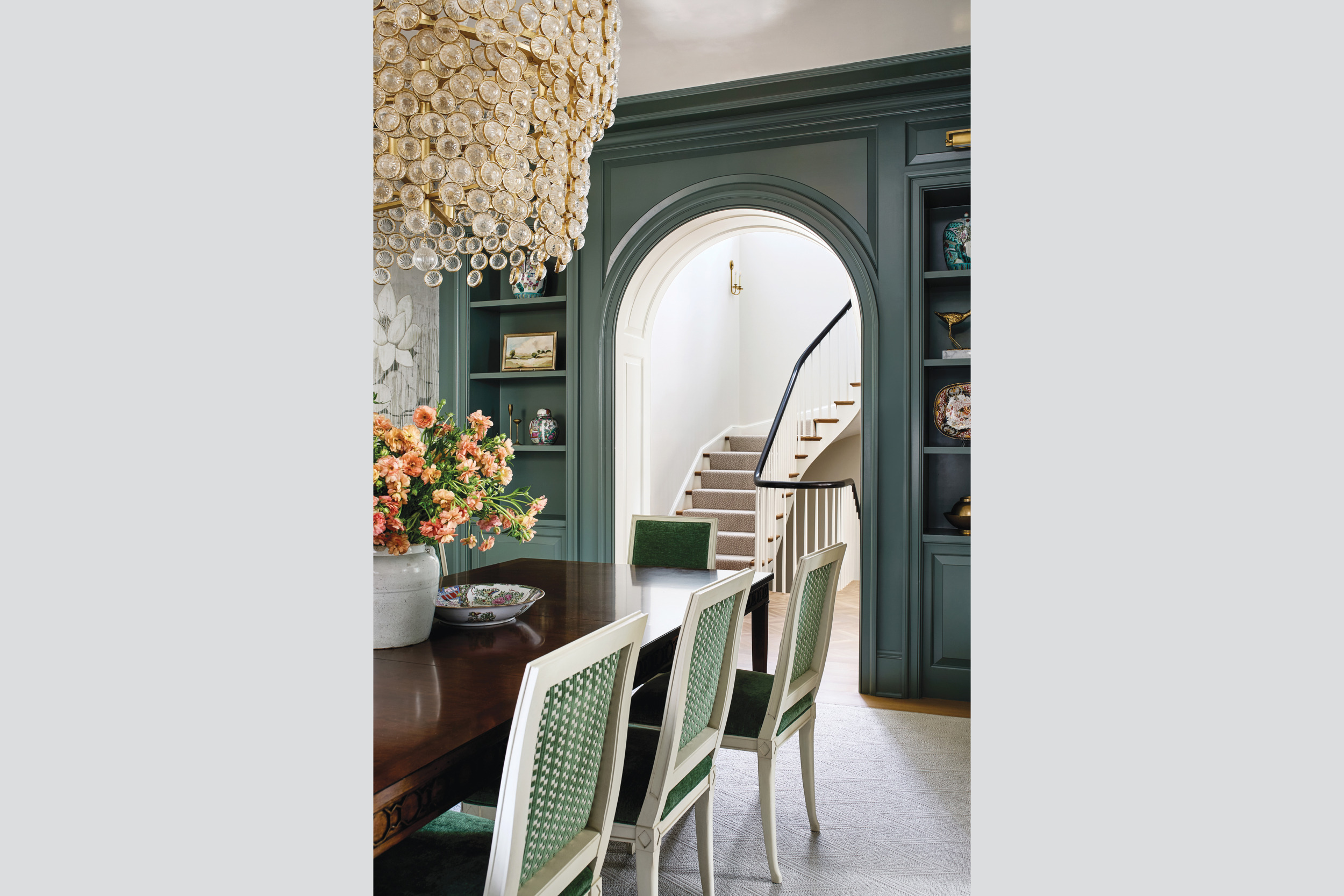
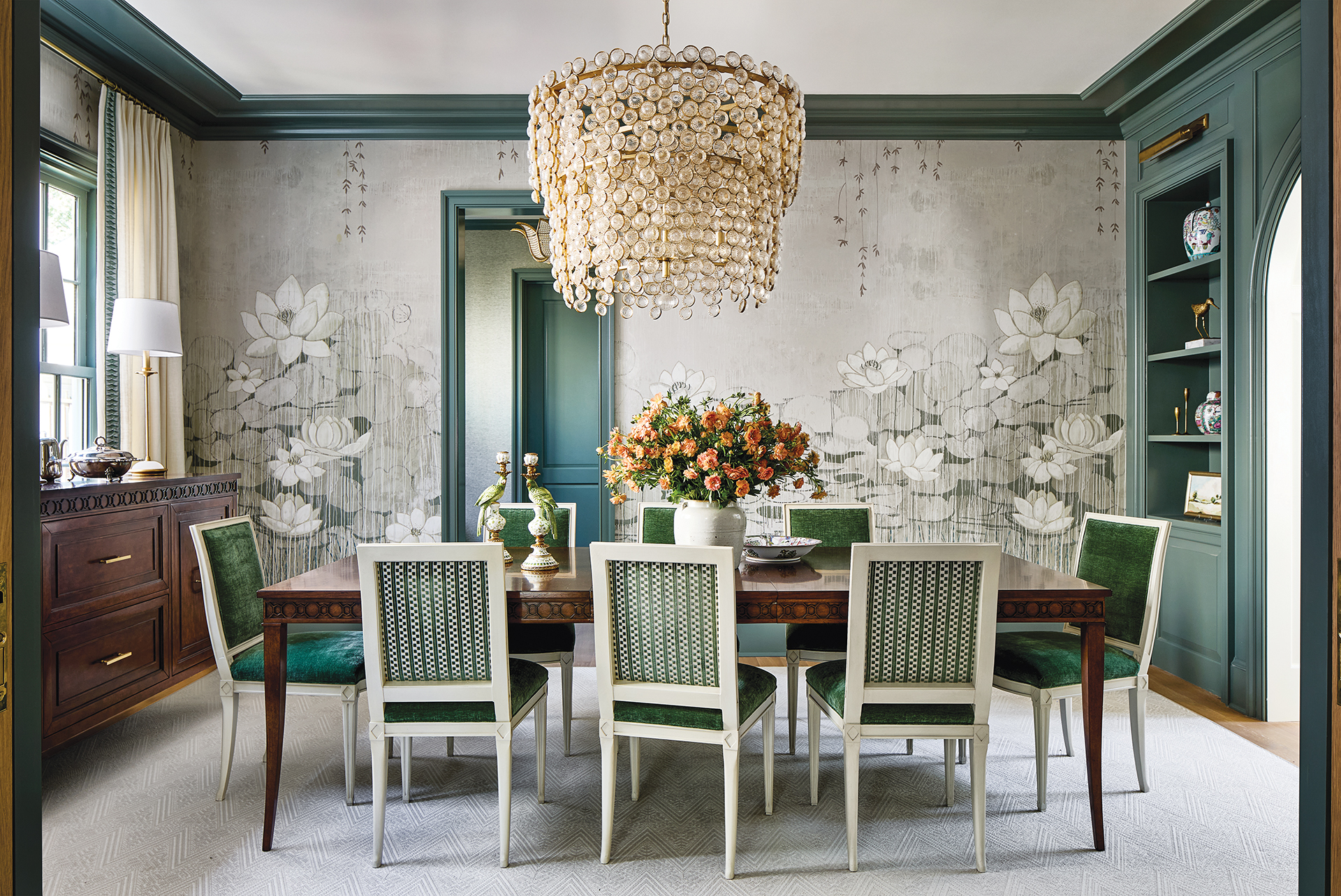
The dining room boasts custom millwork decked out in Farrow & Ball’s Green Smoke.

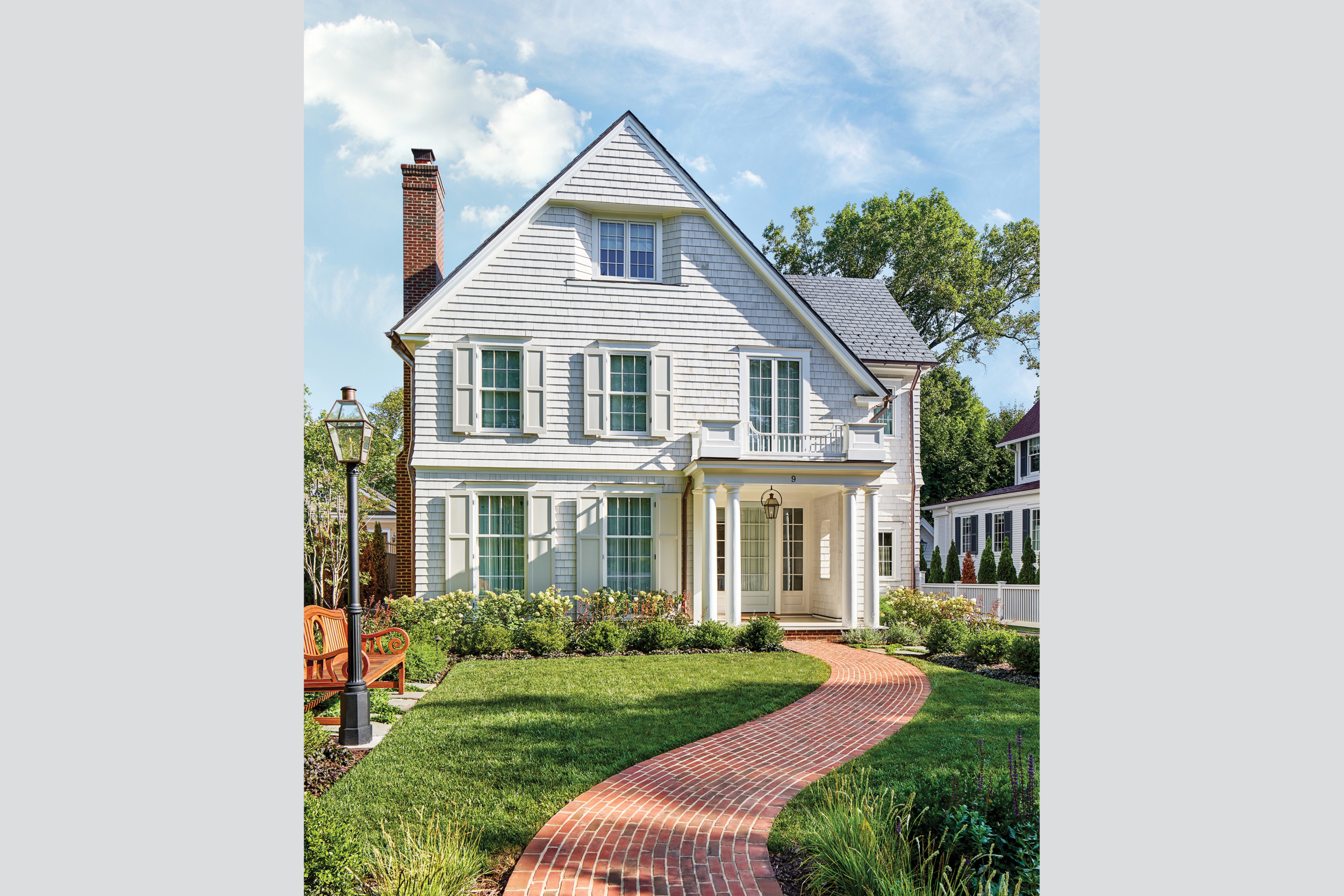
On a tree-lined street in Maryland’s idyllic Chevy Chase Village, a newly constructed residence sits comfortably among storied homes dating back to the early 1900s. It could easily be mistaken as one of the hamlet’s original architectural gems—and that was the goal, both inside and out.
The owners—she’s an attorney and he recently retired from a career in real estate—were searching for new digs to replace the nearby Colonial their family of four had outgrown. When a home that was deemed a “non-contributing resource” within the historic district came on the market, they seized the rare opportunity to tear down and build from scratch. The wife reveals, “We wanted a house that would fit in the neighborhood and look like it could have always been there.”
To define and execute their vision, they enlisted a collaborative team of experts, including designer-turned-friend Katy Anderson, architects Patrick Cooke and Suzie O’Brien, and builder Eric Zuckerman. “Their design brief was to find a way to bring a ‘new old house’ to the street,” relays Cooke. “We hit on the idea of looking to details from the American Shingle style as an influence.” An asymmetrical front elevation, meant to break down the mass a bit, became part and parcel of their plan. For the exterior, the team selected natural materials, including cedar shingles and a slate roof, that would age well.
Fitting a modern-day program into a footprint limited by the narrow, 7,500-square-foot lot—plus historic-district guidelines—took some effort. “From the very beginning, we wanted a house that was going to live like a house today,” says Cooke, citing a big entertaining kitchen that connects to the family room as one must-have. “We had to find a way to get that in a house that feels at scale with the rest of the neighborhood. We wanted to right-size all of the rooms for their function, and Katy really helped us with that.”
O’Brien adds, “We knew what the necessities were and so it was a question of how do we space-plan the house and maximize what we have.” The result is a six-bedroom, roughly 5,600-square-foot abode that fulfills the owners’ every wish.
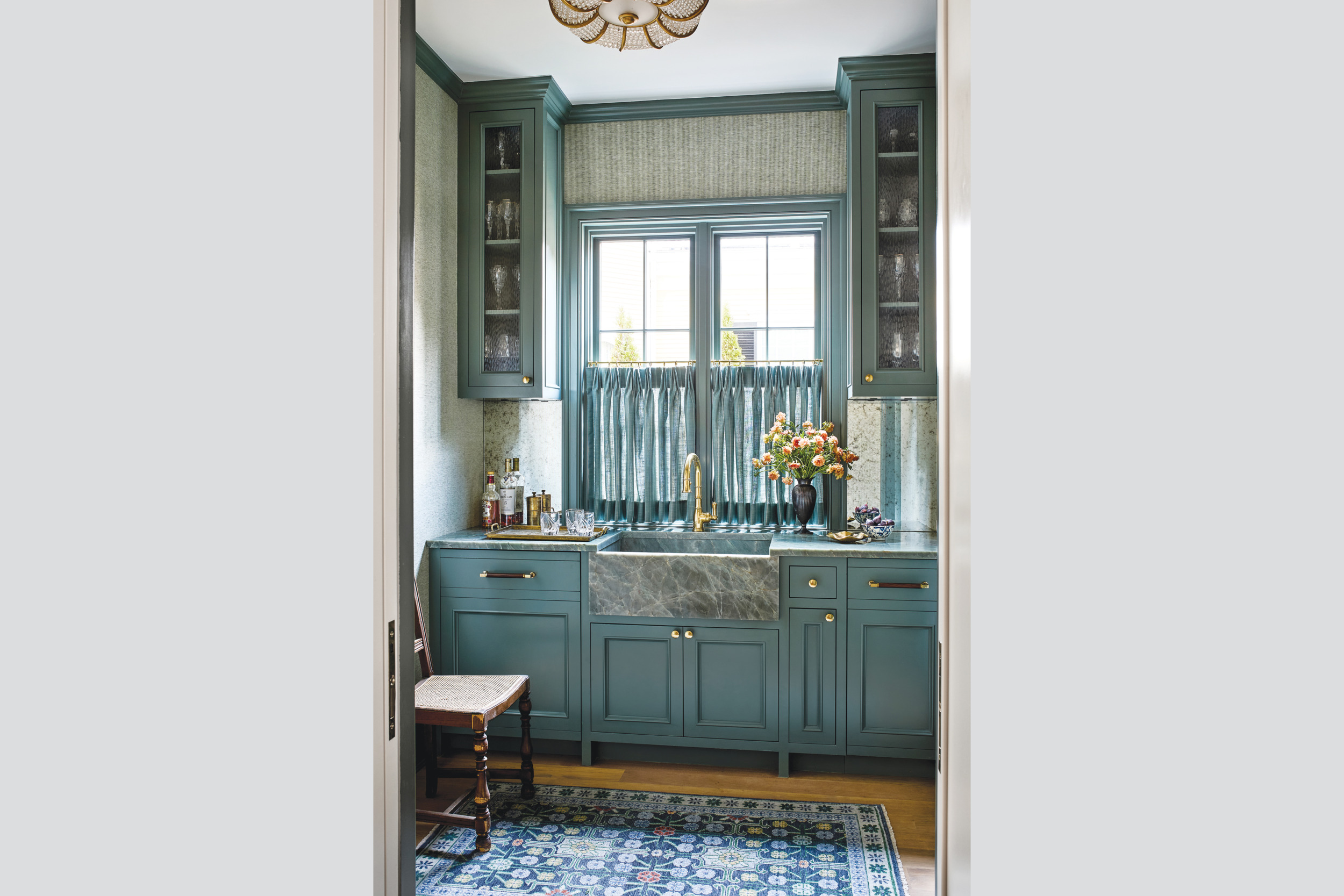
The foyer opens on the left to a study, which flows into the dining room. The adjacent butler’s pantry connects to the kitchen, with a breakfast area behind it, plus a mudroom resting off to one side and a compact office off the other. The family room sits in the rear and accesses the backyard through a French door. The second floor houses the primary suite, the daughters’ two, equal-sized bedrooms, which share a bath, and a guest suite. The third floor comprises additional guest quarters earmarked for nieces who visit often, a library/home office and hall bath. The lower level boasts a recreation area, movie room, gym and mother-in-law/au pair suite.
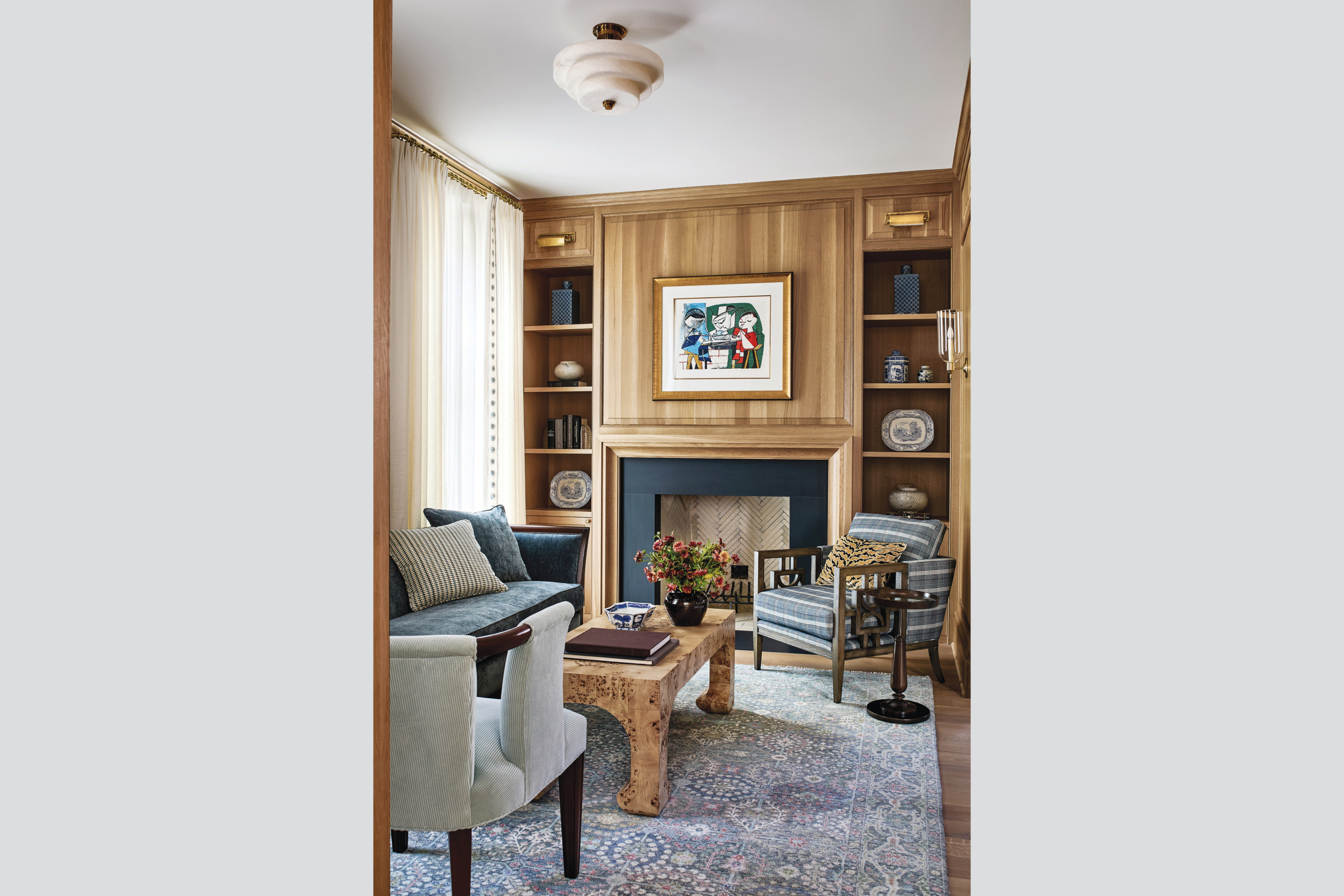
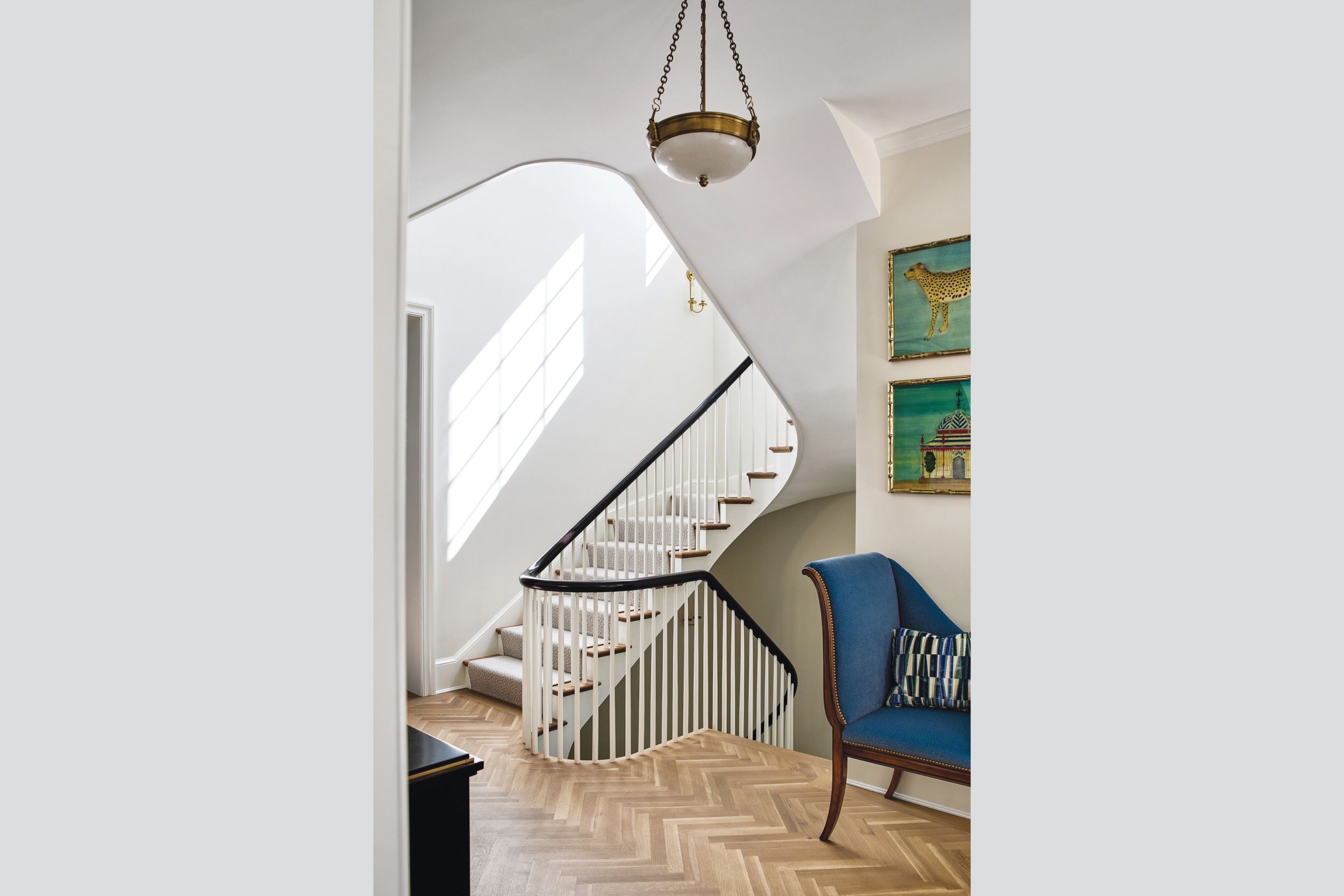
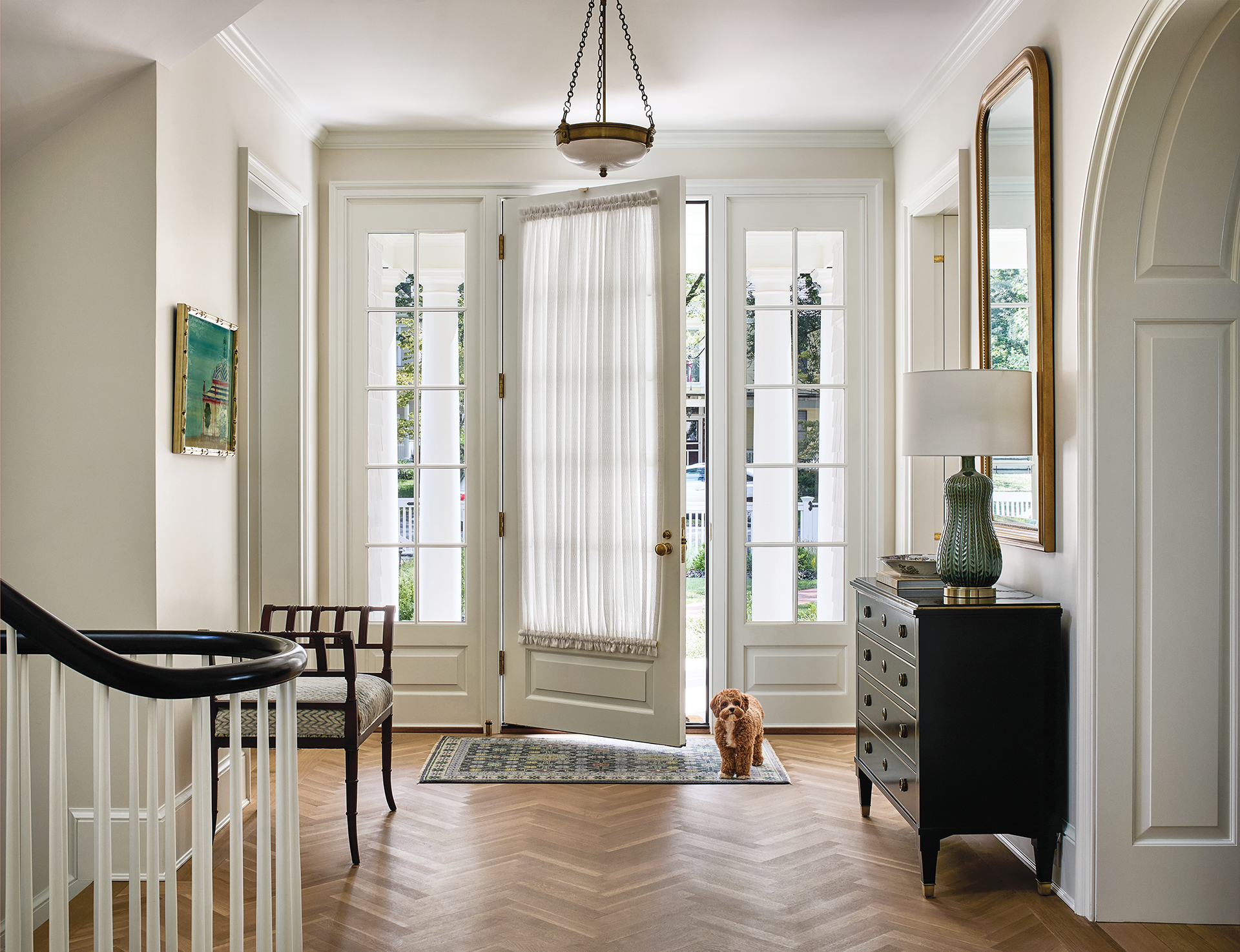
Exquisite architectural details imbue the spaces with a sense of history. A delicate stair with a continuous rail serves as a focal point as guests enter the home. White oak paneling imparts visual warmth to the cozy study, which stands in for a living room. “Our main goal was to make this house look lived-in,” states Anderson. “The white oak gives the room that Old World feeling. We wanted it to be somewhat formal, but not fussy-formal.”
The designer wove a traditional-yet-not-stodgy aesthetic, as well as a cohesive palette of blues and greens, from space to space. Case in point: The boldly patterned, lotus-adorned wallpaper she selected for the dining room is a far cry from the saccharine floral wallpapers of yesteryear. The furnishings throughout are updated classics as well.
“This home is a fresh take on traditional, a fresh take on what a historic home could be today,” she notes. “It still has a lot of the features you’d find in an older house, but it doesn’t feel dated when you come in. I think it’s timeless.”
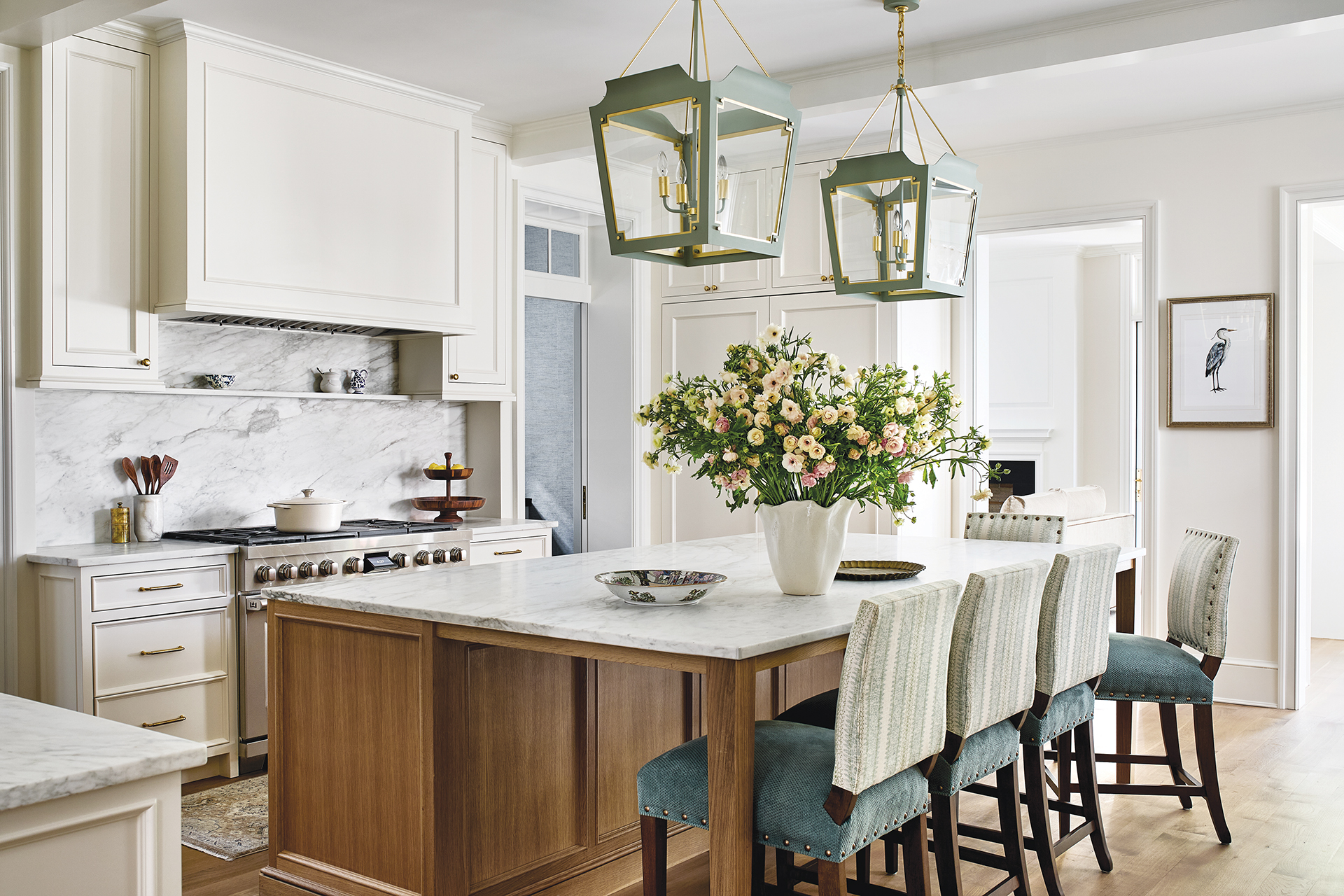
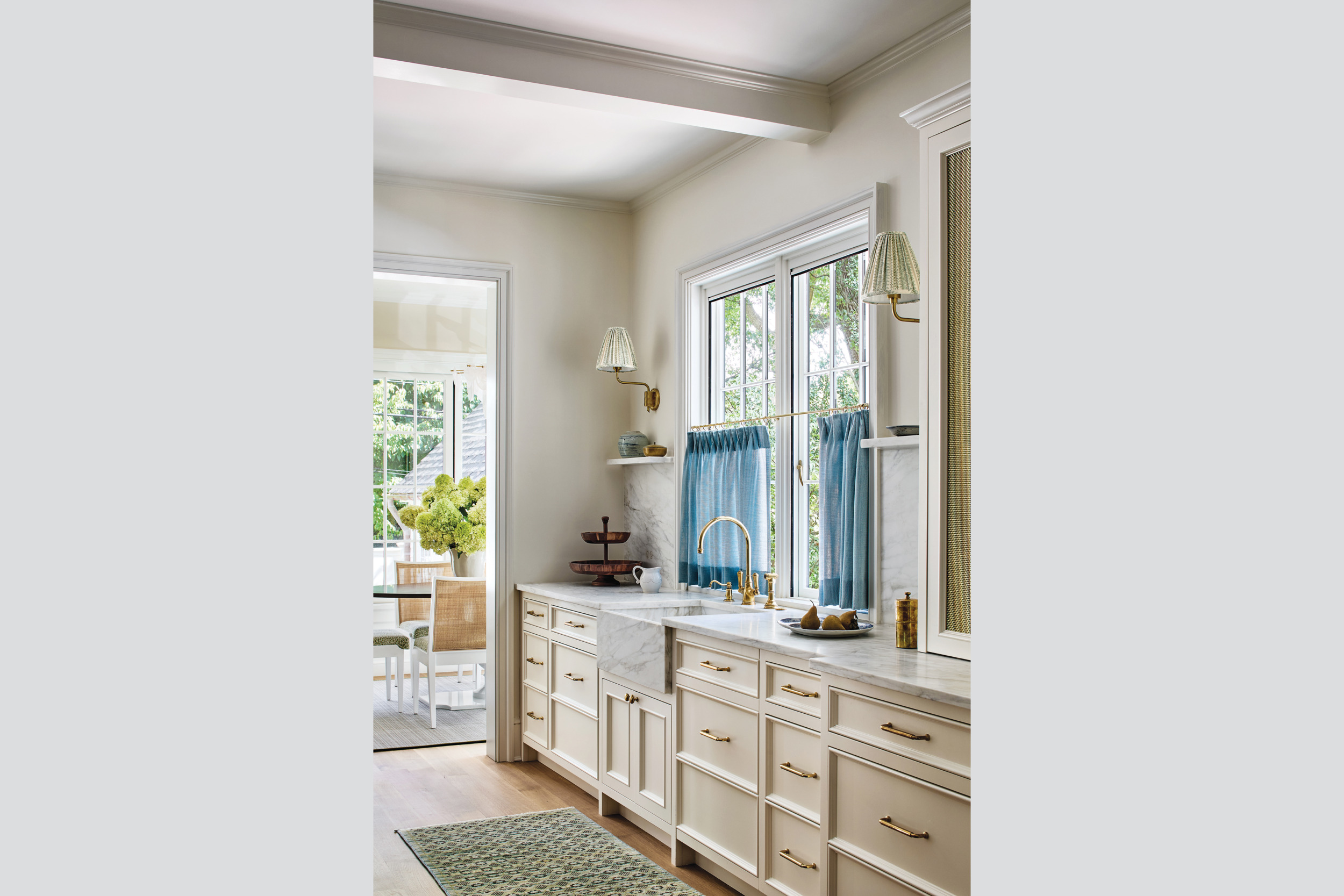
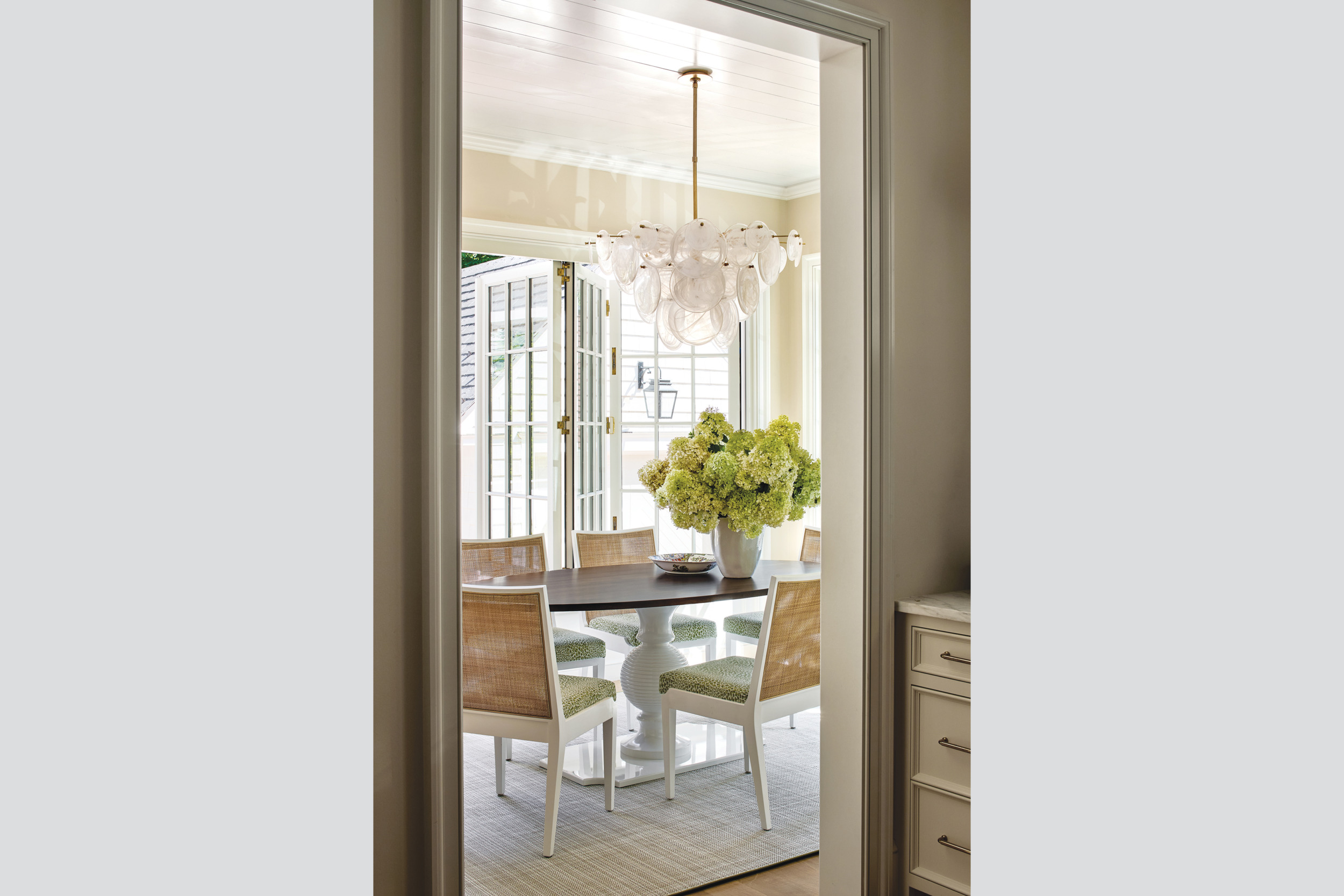
That classic approach carries into the kitchen, which pairs a large, white oak island with creamy painted cabinets, all covered in marble countertops. The island light fixtures are reinterpreted versions of time-honored tole lanterns, while the breakfast-area chandelier—with its cascading, hand-blown glass disks—leans modern.
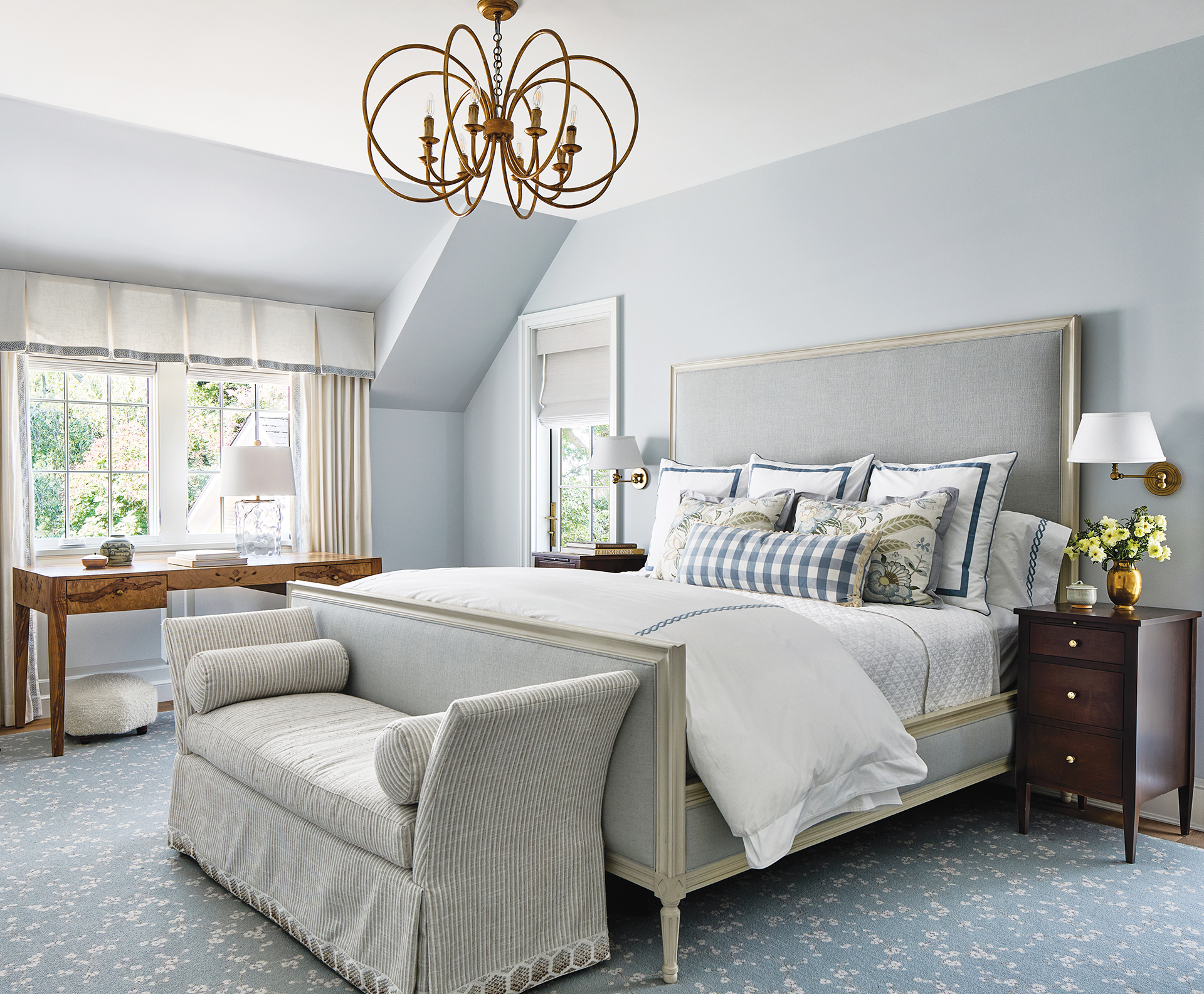
Upstairs in the primary bedroom, Anderson established a spa-like atmosphere per the wife’s request. A blossom-motif rug served as her starting point for the soothing, dusty blue-and-gray scheme.
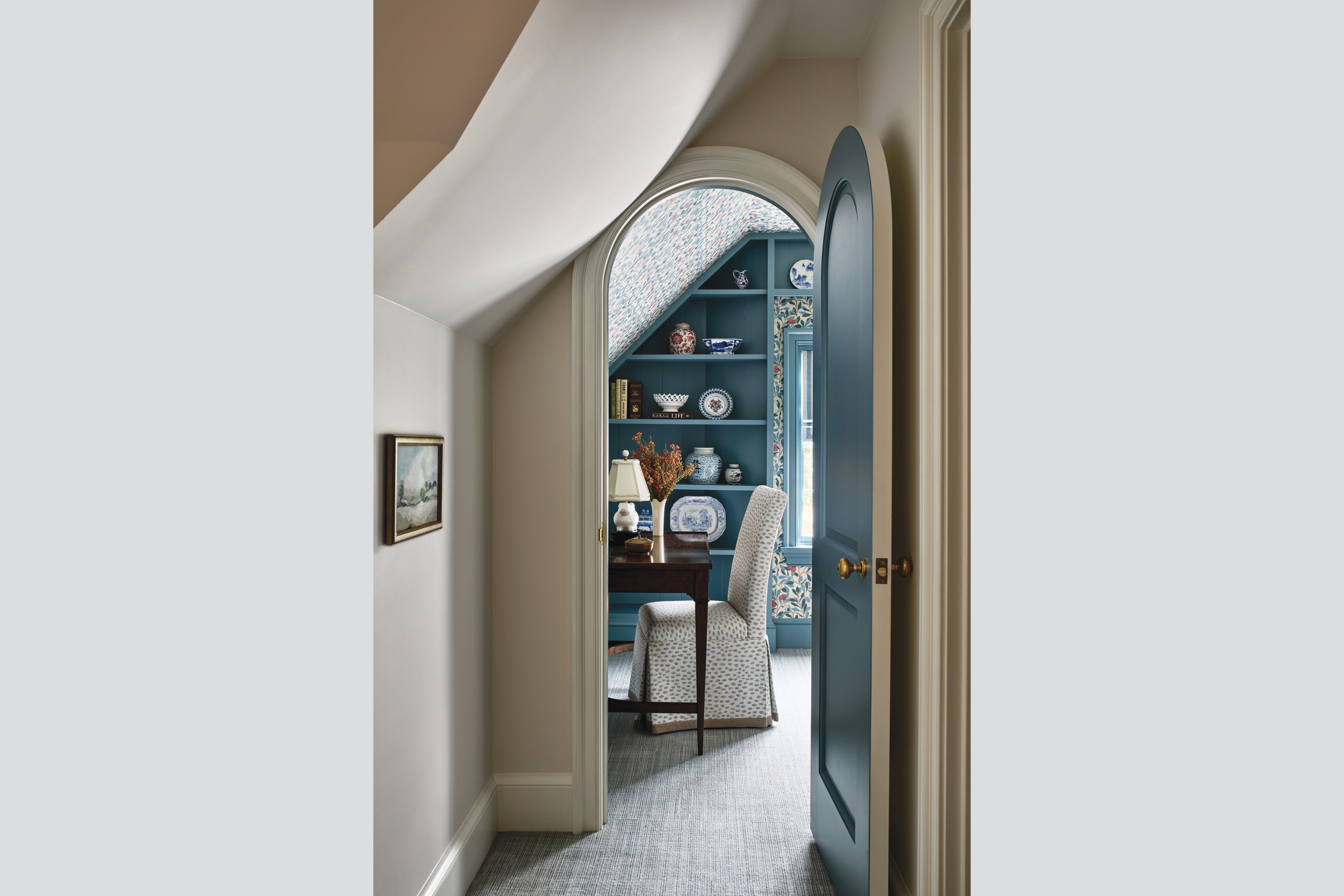
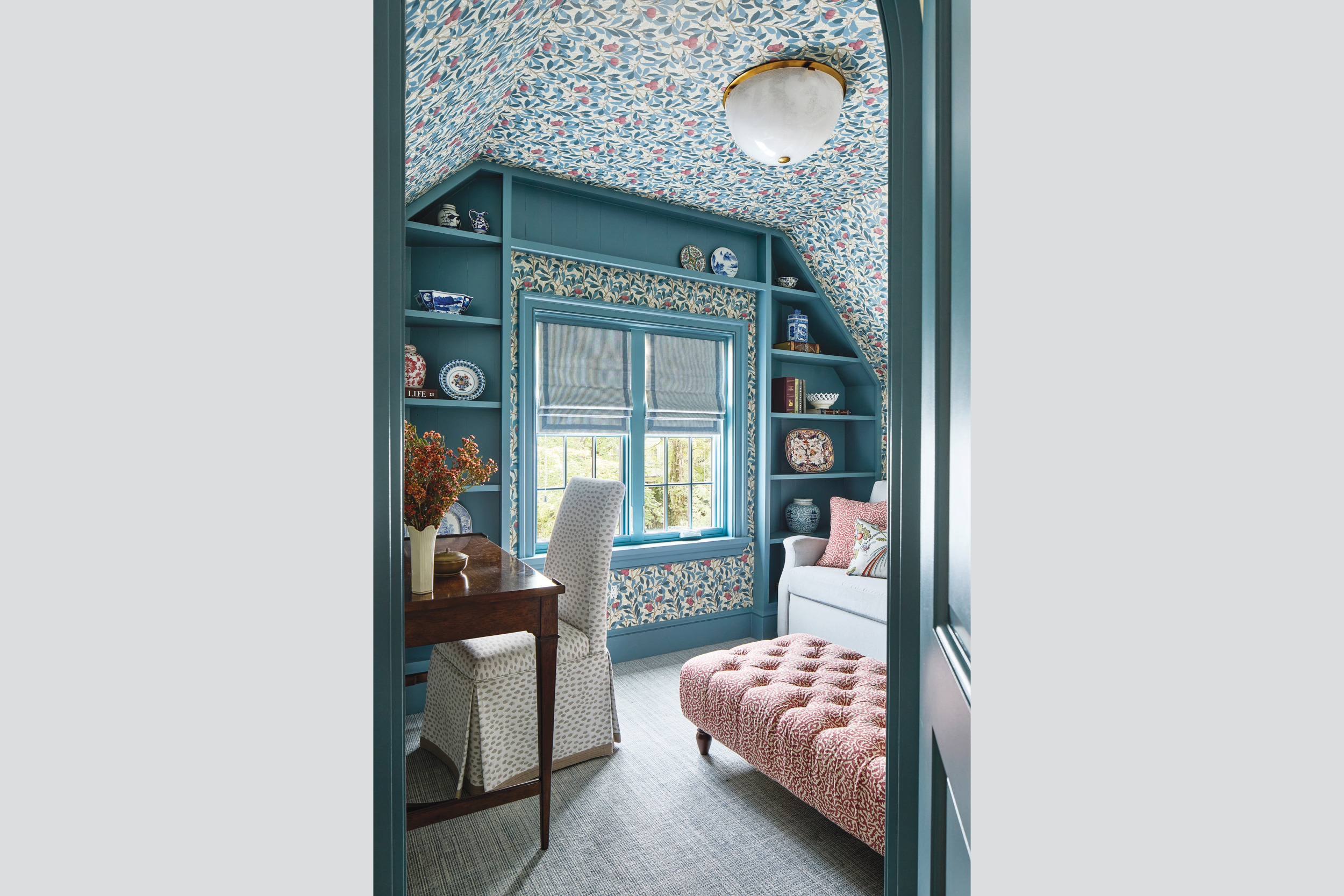
Meanwhile, the third-floor library conveys a nostalgic English sensibility, thanks to berries-and-leaves paper from Morris & Co. covering its walls and sloped ceiling. “Wrapping a room in wallpaper is my favorite thing,” declares Anderson. “There’s charm here.”
The owners relish the heritage feel of their newly completed abode, as well as its modern amenities. “We are such homebodies now,” avows the wife. “We’re just happy in the house and want to be here all the time.”
Architecture: Patrick Cooke, RA, NCARB, principal; Suzie O’Brien, RA, AIA, project architect, Thomson & Cooke Architects, Washington, DC. Interior Design: Katy Anderson, Katy Anderson Interiors, Chevy Chase, Maryland. Builder: Eric Zuckerman, Zuckerman Builders, Bethesda, Maryland. Landscape Design: Kevin Campion, PLA, ASLA, Campion Hruby Landscape Architects, Annapolis, Maryland. Landscape Contractor: McHale Landscape Design, Upper Marlboro, Maryland. Styling: Kristi Hunter.
+++
Quote
“This house is a fresh take on what a historic home could be today.” —Katy Anderson