
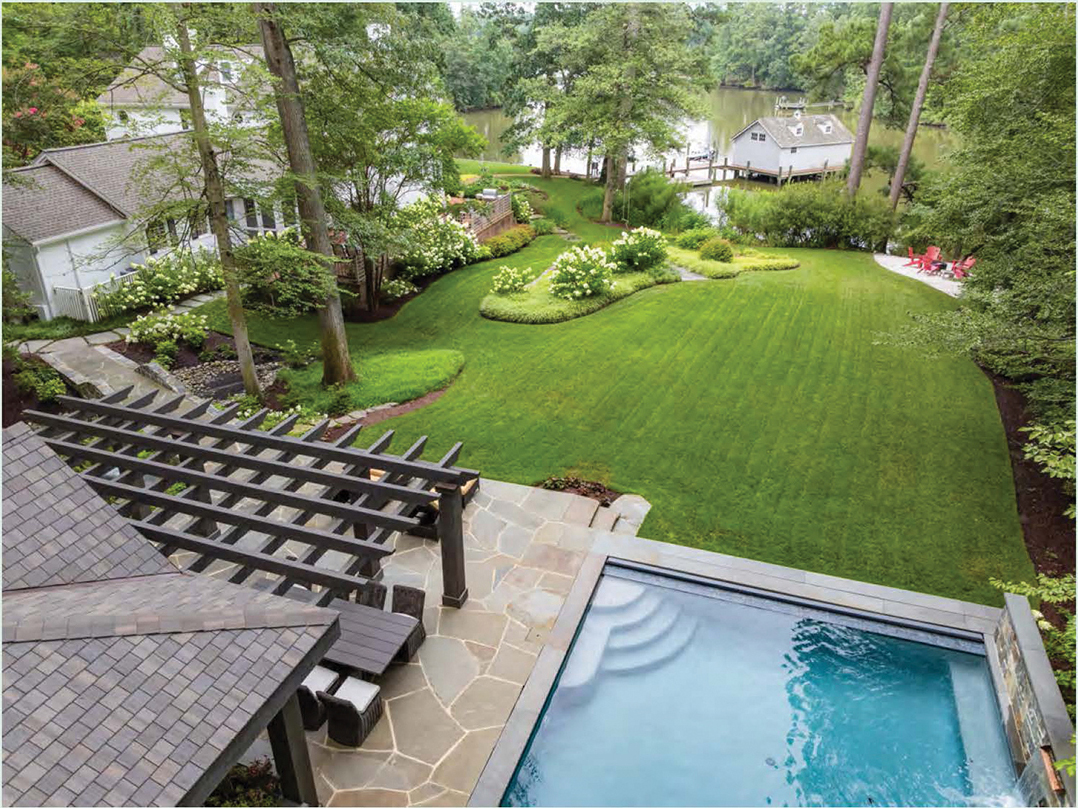
A pergola shelters a bluestone pool surround. Photo: Andrew Deluc

Landscaping on the water presents its own unique challenges—and because each site is different, the impact of myriad county rules and regulations varies. The trick, say the pros, is knowing your property’s requirements before you start. Hiring an expert early is also key; as the dazzling projects below prove, the right plan makes all the difference.
A Strong Connection
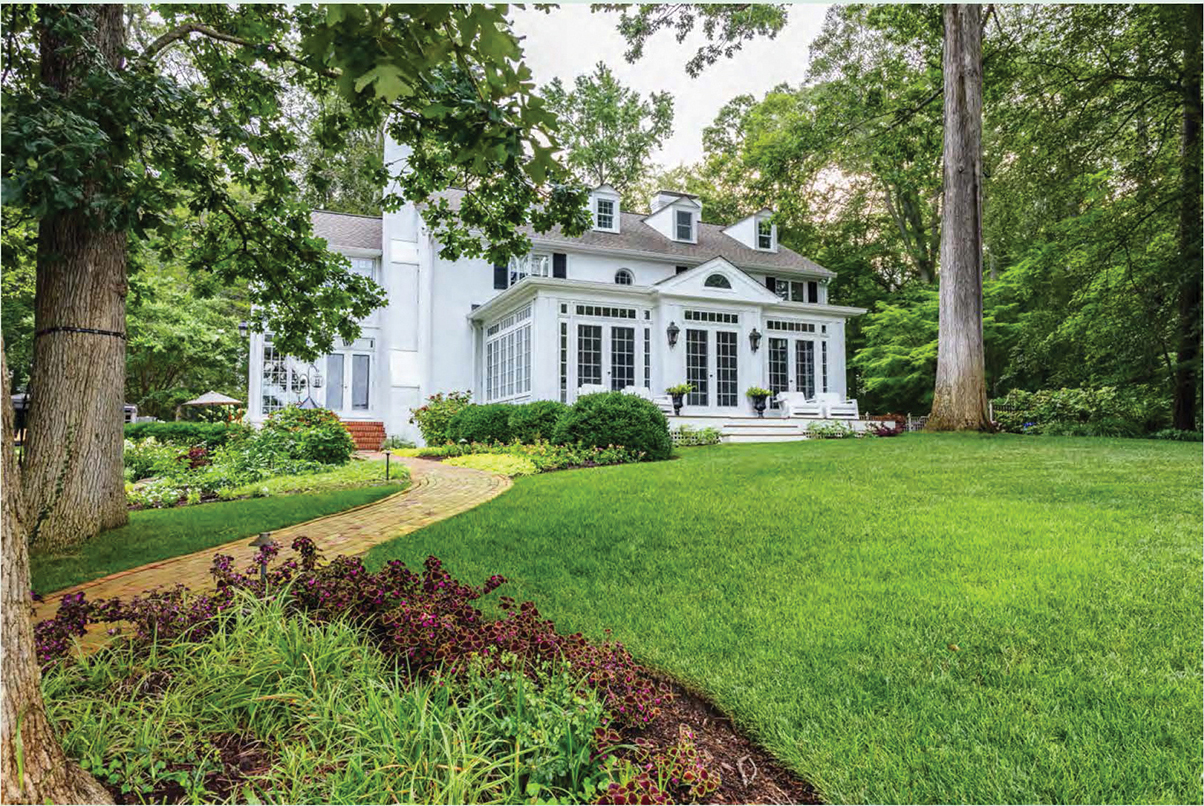
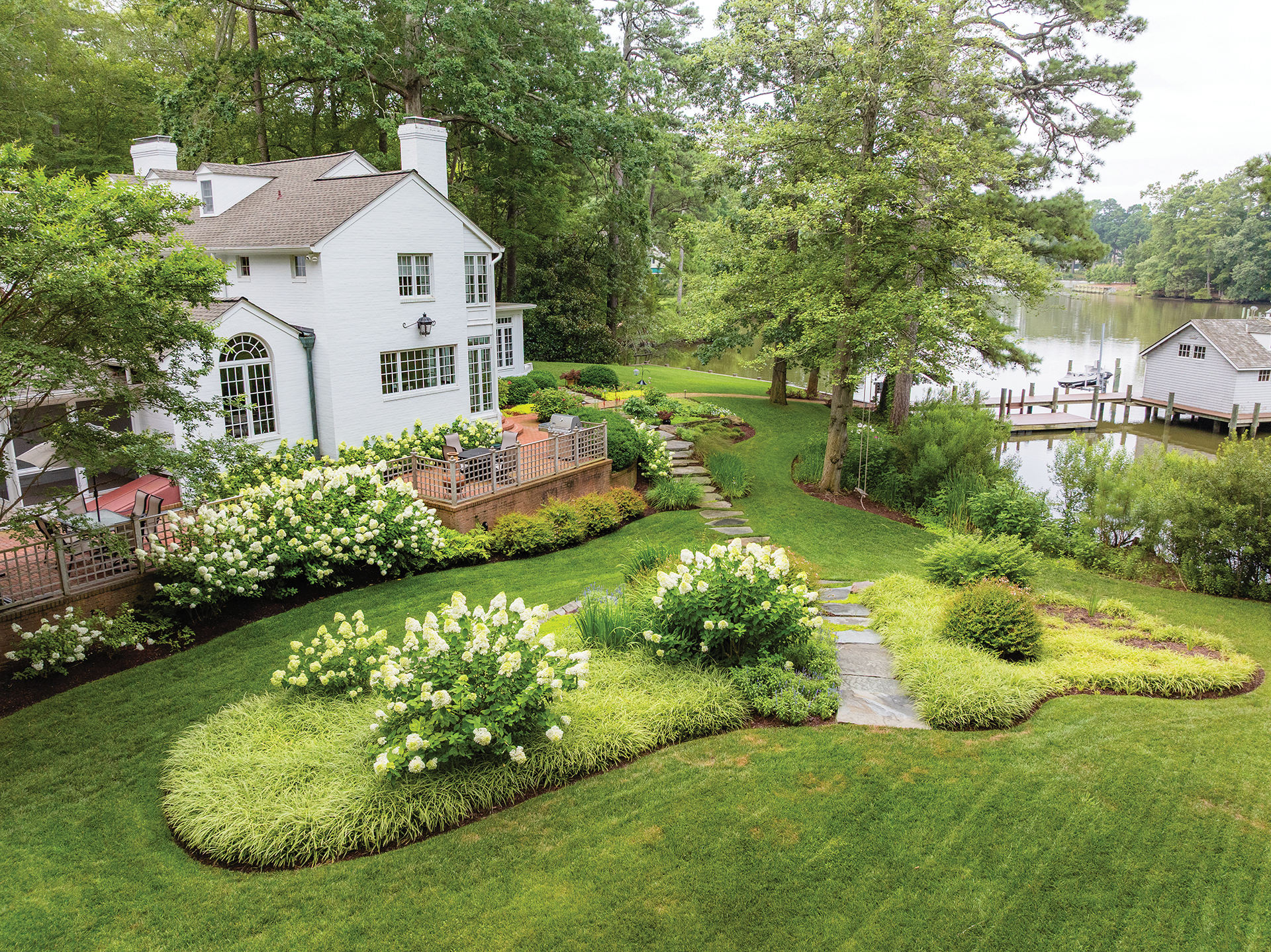
A 1958 residence in Easton perches on a scenic slice of land overlooking Shipshead Creek, a tributary of the Tred Avon River. The 3.75-acre spread is fringed by mature beech and oak trees. The sprawling, white-painted abode gazes upon a picturesque boat house at the end of a dock; a swath of lawn separates the house from the water.
After purchasing the property, its new owner tapped McHale Landscape Design, which already maintained the lot, to improve its functionality while enhancing its connection to the water. “The client wanted a pool and pergola so he could do more outdoor entertaining,” recounts the lead designer and project manager, Chris Joseph. Protecting the surrounding mature forest was also a priority.
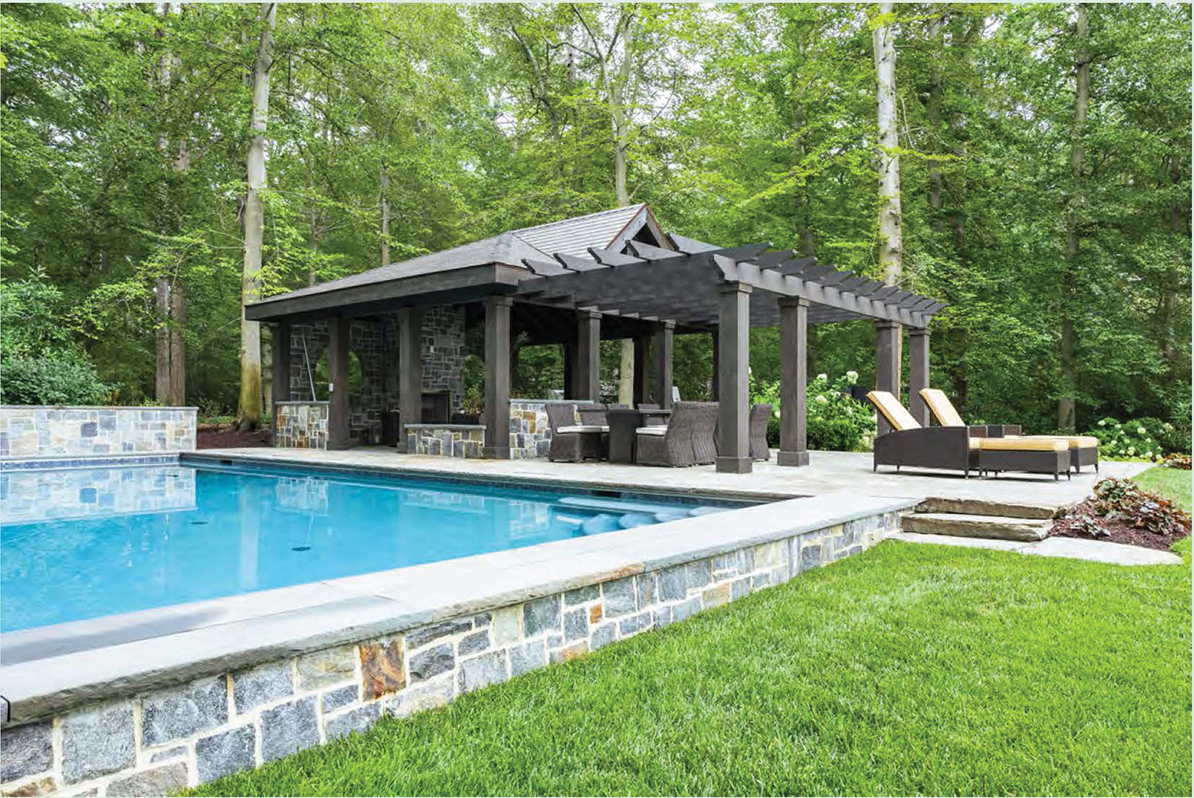
Joseph conceived a plan that sited the pool on the side of the house, anchored by a pavilion complete with a stone fireplace and vaulted ceiling; an attached pergola provides shade while paths link the house, dock and pool/pavilion. Creating those connections required some outside-the-box thinking: A drainage swale between the house and the creek couldn’t be moved and the trees had to remain intact. “We built a 50-foot-long bridge on pilings that goes over the drainage swale and ties into the existing grade,” the designer notes.
Irregular flagstone bordered by stone veneer defines the pool surround, paths and bridge. The same material crops up on the pavilion fireplace and on bluestone-capped retaining walls. “The irregular flagstone makes the landscape look like it’s always been there,” Joseph points out, “and the use of the veneer stone creates a cohesive feel.” The pavilion and pergola are made of dark-stained cedar.
Mature trees on the property dictated a multitude of plantings. “We were gifted this mature forest, but there were very few understory plants,” explains Joseph, who remedied the issue with flowering natives including Virginia sweetspire, spicebush, summersweet and azalea planted below the trees. Banks of hydrangea gracefully frame the house and anchor beds of ornamental grass on the lawn.
According to Joseph, the biggest challenge was the project’s proximity to the many canopy trees, since among other regulations, waterfront counties are strict about mitigation planting in the critical area. “We only took down two small ones,” he says. “But Maryland is the last bastion of environmental protection by the bay, and they take that very seriously.”
Waterfront Oasis
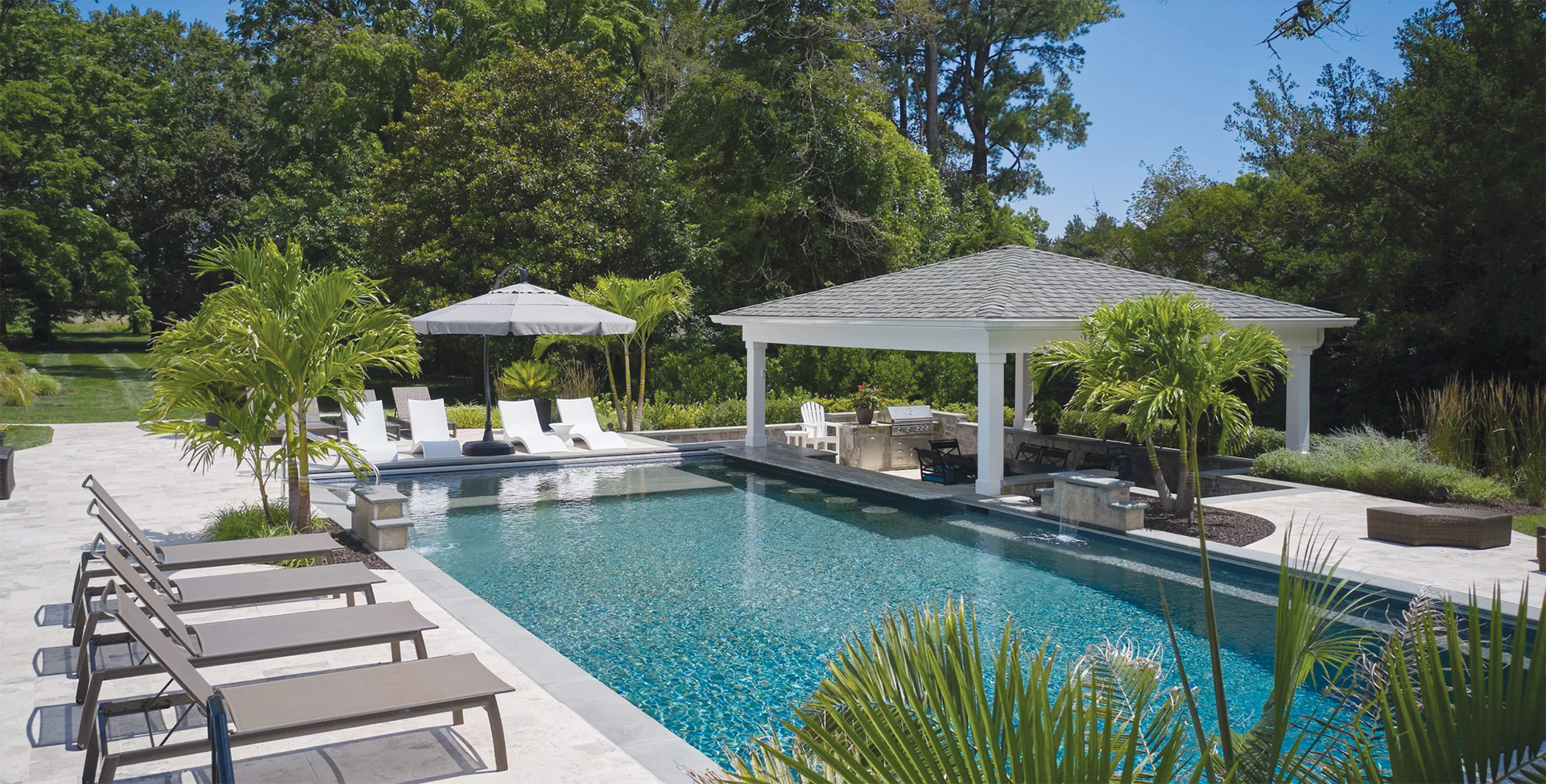
While construction was underway on a custom home nestled beside Whitehall Creek in Annapolis, Scapes was enlisted to transform the blank-slate, three-acre lot. “The owners requested an environment for outdoor entertaining that would take advantage of the property’s water views,” says Scapes principal and designer Jeff Crandell. “They wanted to have a sense of relaxation when they were spending time outside.” They also specified that the outdoor spaces complement their modern abode, designed by architect Stephen Terhune.
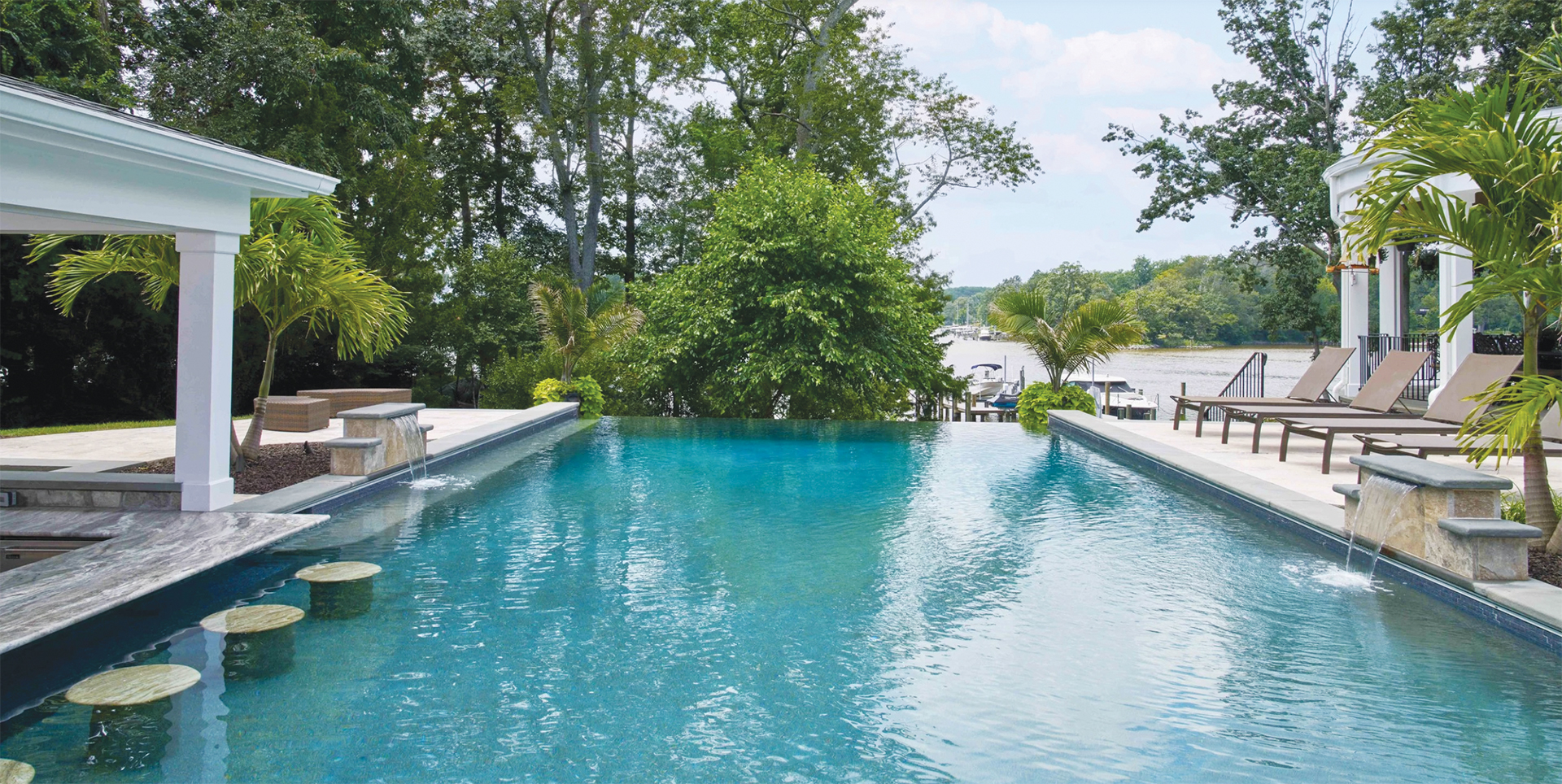
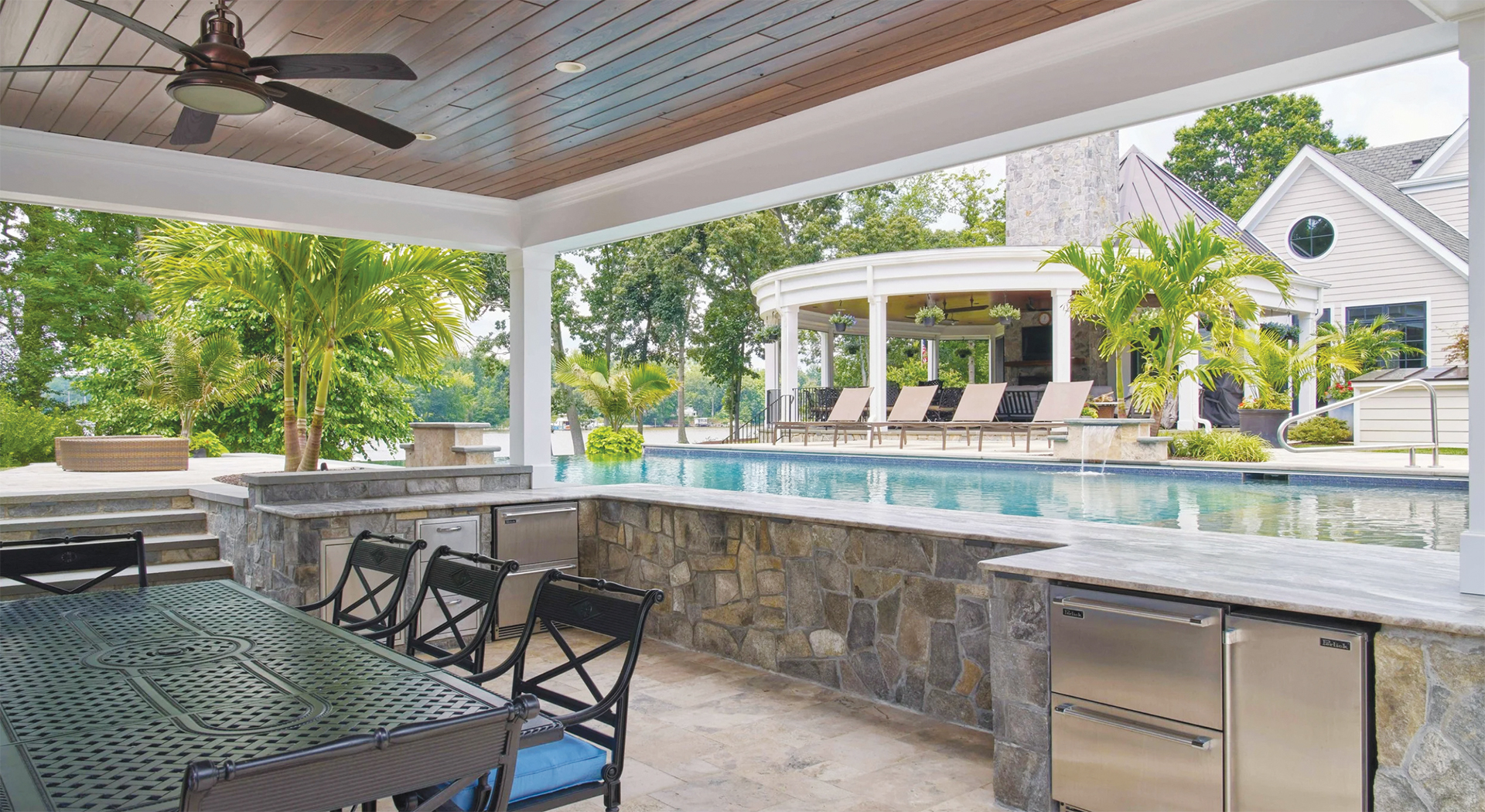
Crandell conceived a luxe landscape centered on an elaborate infinity pool replete with a swim-up bar and barstools; a sundeck and bubblers; and a water feature. Scapes designed and built a composite post-and-beam pavilion on one side of the pool that houses the bar—including a below-counter fridge and storage—plus a grilling station and a dining area. An existing lanai attached to the house spills out to the pool area from the other side, unifying the landscape plan and creating indoor-outdoor connectivity.
Along with the outdoor spaces, Scapes took on the job of cladding parts of the home’s exterior in Lake James veneer stone—including the lanai, where the team also installed a flagstone floor. To visually link the spaces, Crandell employed Lake James stone on the retaining walls, water feature and accents in the pavilion. The same roof shingles were used on both the house and pavilion, making them appear related; travertine decking surrounds the pool, bordered by flagstone coping.
A mix of evergreens, dwarf lilacs, Karl Foerster ornamental grasses and colorful seasonal perennials softens the landscape. At the owners’ request, palm trees are installed each year, then up-lit at night for a resort vibe. When it comes to planting by the water, Crandell recommends native species that can handle the salt in the environment. “We intersperse them with other pretty plantings,” he says.
For the Scapes team, the yard’s elevation turned out to be the project’s main challenge. “The vanishing edge of the pool required a five-foot retaining wall due to the steep grade,” explains Crandell, who turned the difficulty into a plus by creating a small, additional pool at the base of the wall, accessed via seven steps. “It’s an extra pool to hang out in that sits right above the creek. We even put in a bench.”