
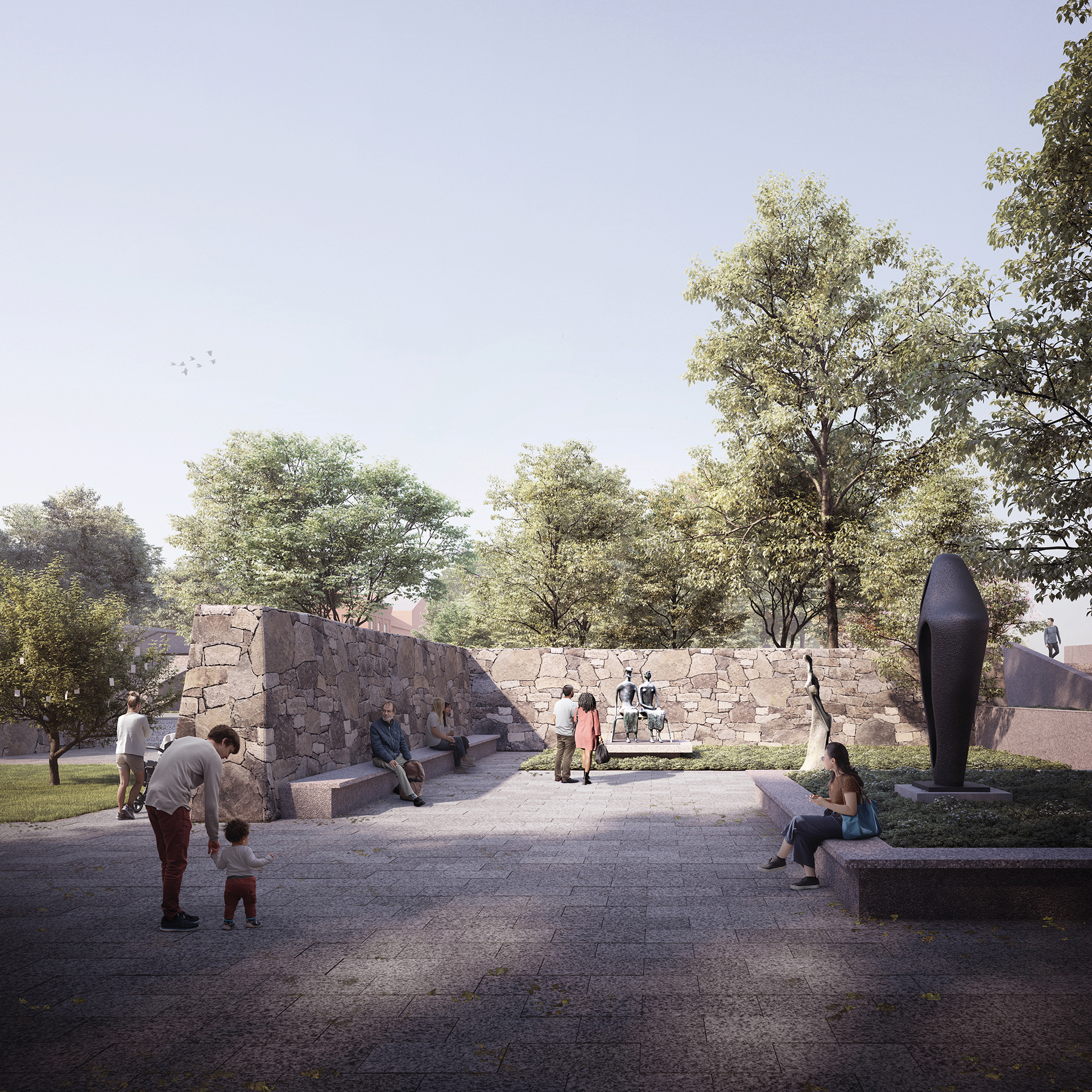
A schematic details the garden’s new, stacked-stone walls. The project is a collaboration among Sugimoto’s New Materials Research Lab, Rhodeside & Harwell and Smithsonian Gardens.


In 2017, the Hirshhorn discovered that it had a numbers problem. Despite a prime position on the National Mall, its Sculpture Garden was attracting a fraction of the visitors who frequented its iconic museum.
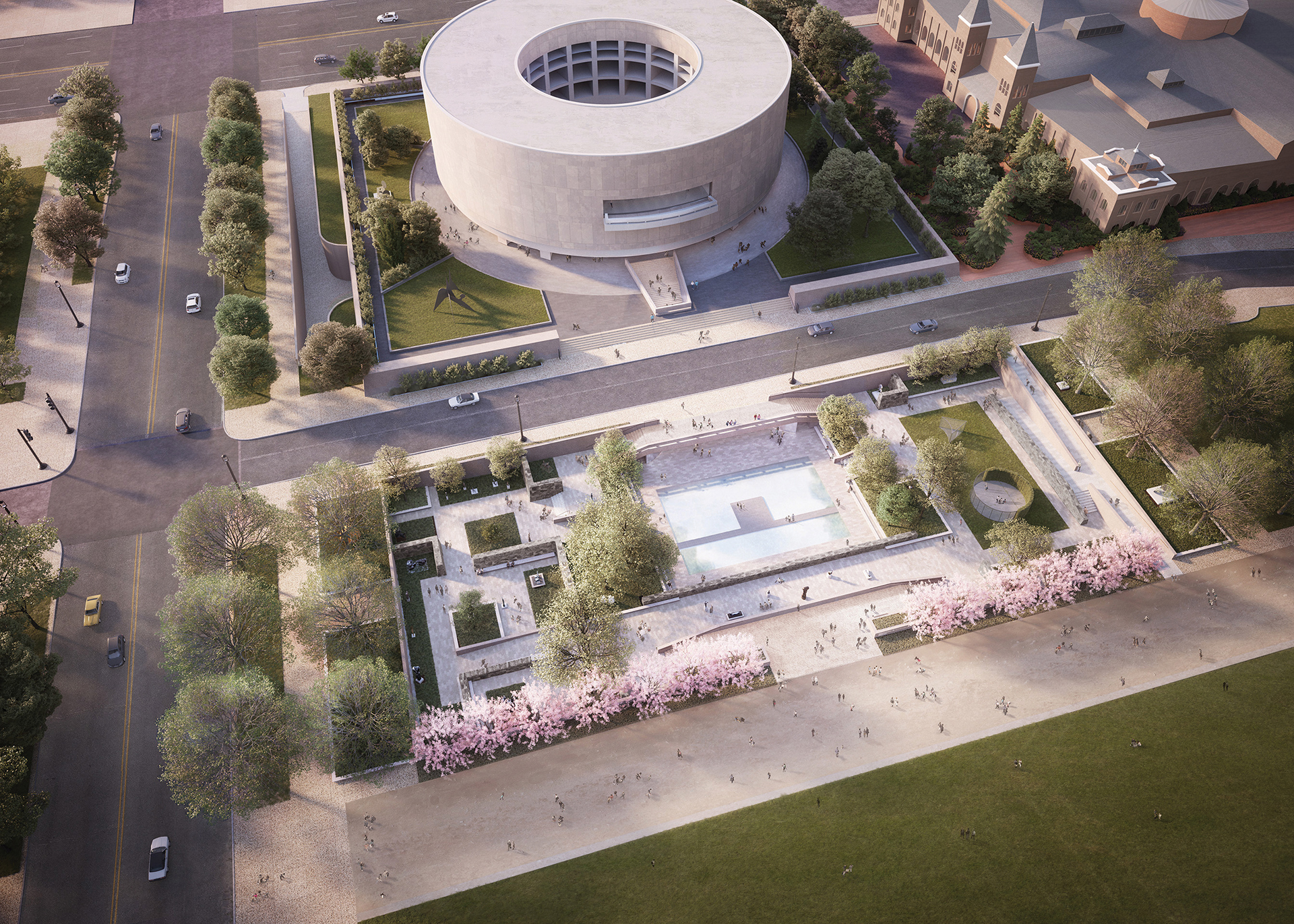
Since its 1974 completion, changes made to the garden had narrowed sightlines and visitor access to the site. So after a lengthy federal review, New York-based artist and architect Hiroshi Sugimoto was selected to reshape the garden for the 21st century. His mission was not only to make it more inviting and accessible but also to create a flexible environment that could host large-scale sculptures as well as time-based and performance art.
After four years of construction, the Sculpture Garden will reopen in late October. A broader entrance from the Mall provides a clear vista of the one-acre refuge, its mezzanine and display areas that unfold 15 feet below ground level. A profusion of native trees and plants provide shade. The plan also restores a once-shuttered underground passage to the museum.
Visitors can lounge on built-in benches and contemplate a wider array of art, from classics by Rodin and Picasso to new arrivals acquired in time for the relaunch. The project revamped an existing water feature so that it can be converted to a stage. A roster of live events will kick off in spring 2027, including the debut of Yoko Ono’s Wish Tree for Washington, DC.
The garden will offer patrons a new experience, says Kate Gibbs, Hirshhorn’s director of communications and marketing. “Visitors will be able to leave the federal city behind and enjoy a magical artscape,” she muses. hirshhorn.si.edu —Sharon Jaffe Dan