
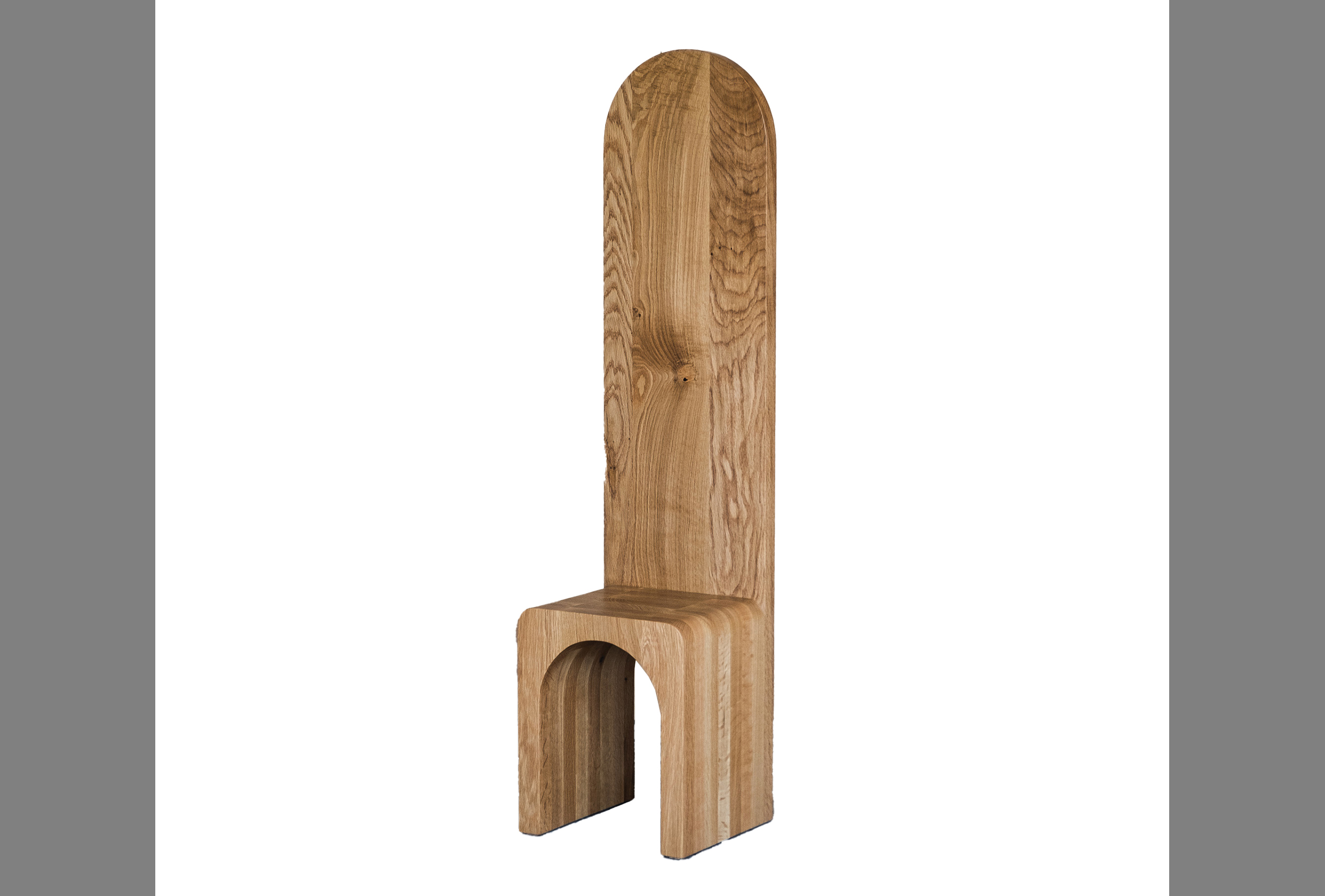
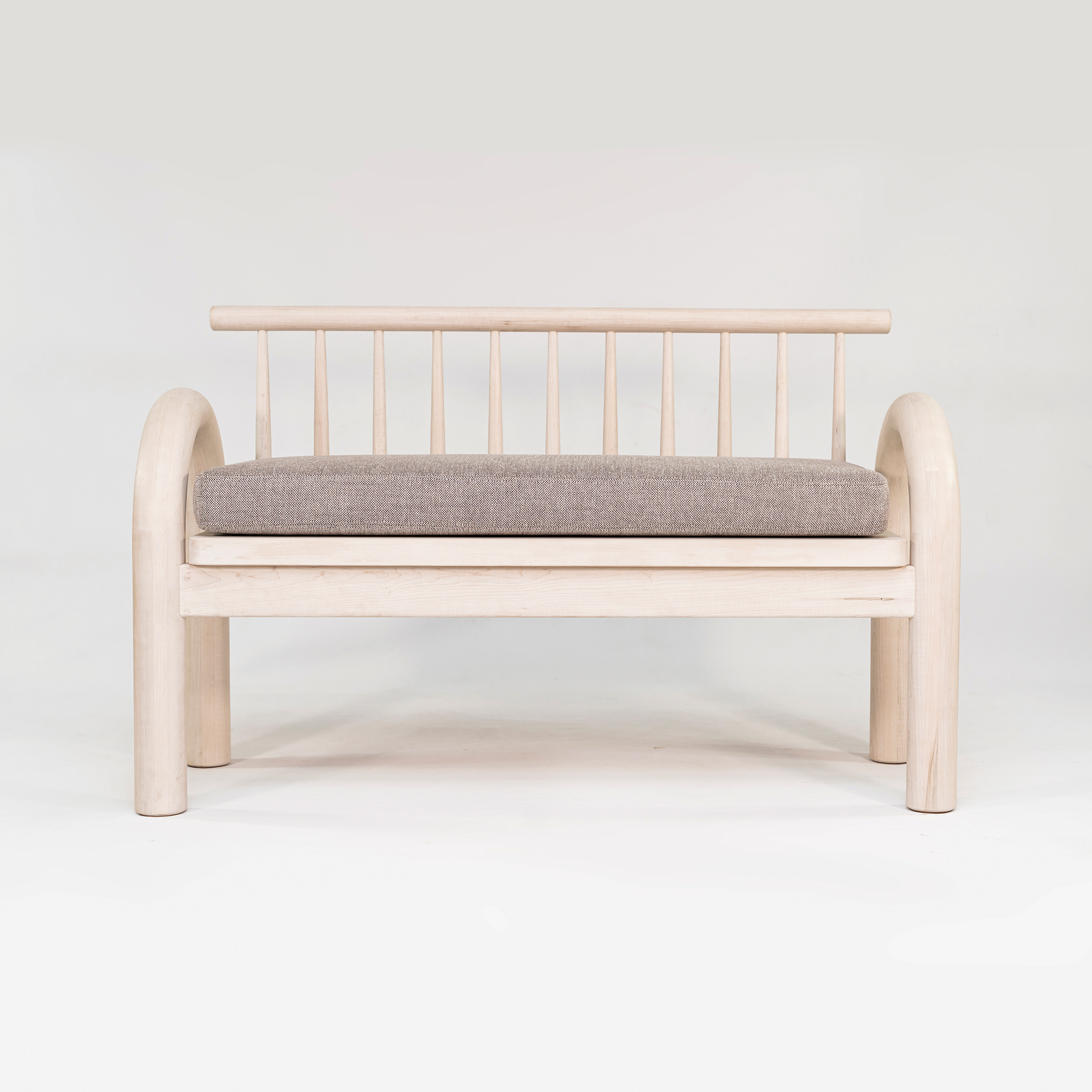
The back of his Cathedral Chair soars in white oak.

About 10 years ago, Daniel Lefkowitz was invited to dinner at the home of close friends. Knowing he liked making things, they wanted him to see a new dining table they had just bought on Etsy. Eyeing the simple farm table, he asked, “How much did you pay for this?” Their response ($1,200) prompted him to think he could make a better one.
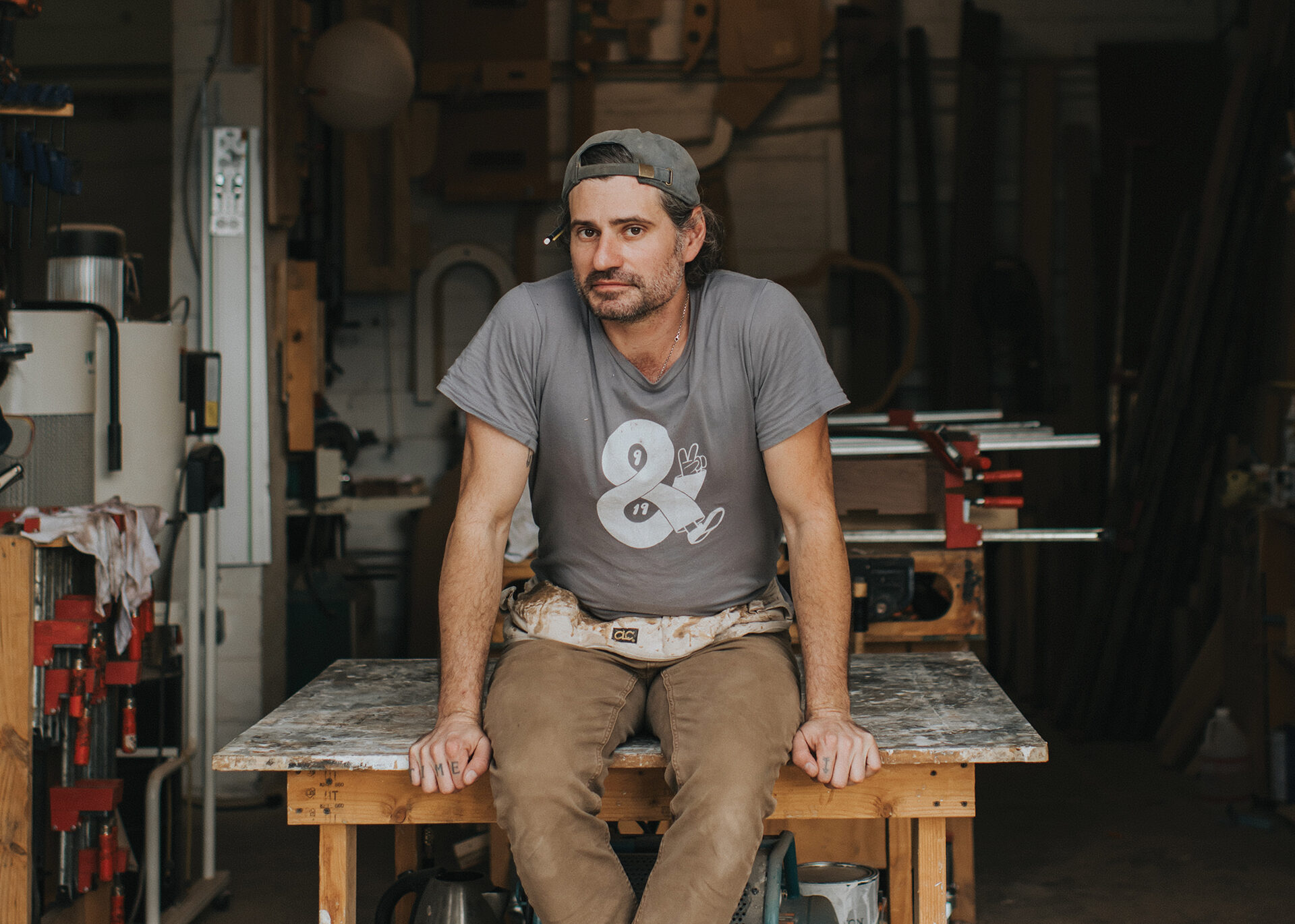
“I spent every day for several years discovering just how much I did not know,” says Lefkowitz, seated in his woodworking shop among the rolling Shenandoah Valley hills of his hometown, Strasburg, Virginia. “Naiveté and overconfidence,” he adds with a hearty laugh.
Through trial and error, within the first year he sold his first dining table. Daniel was fortunate that his father, Jeff Lefkowitz, taught post-and-rung chair-making and had woodworking tools. “He taught me how to sharpen chisels. He knows about wood movement. I learned a lot from him,” Daniel observes. Meanwhile, the mentee also discovered his own talent for woodworking and, “something of an aptitude for design,” he notes. “I had no idea that I had high standards, but apparently I do, and that is helpful.”
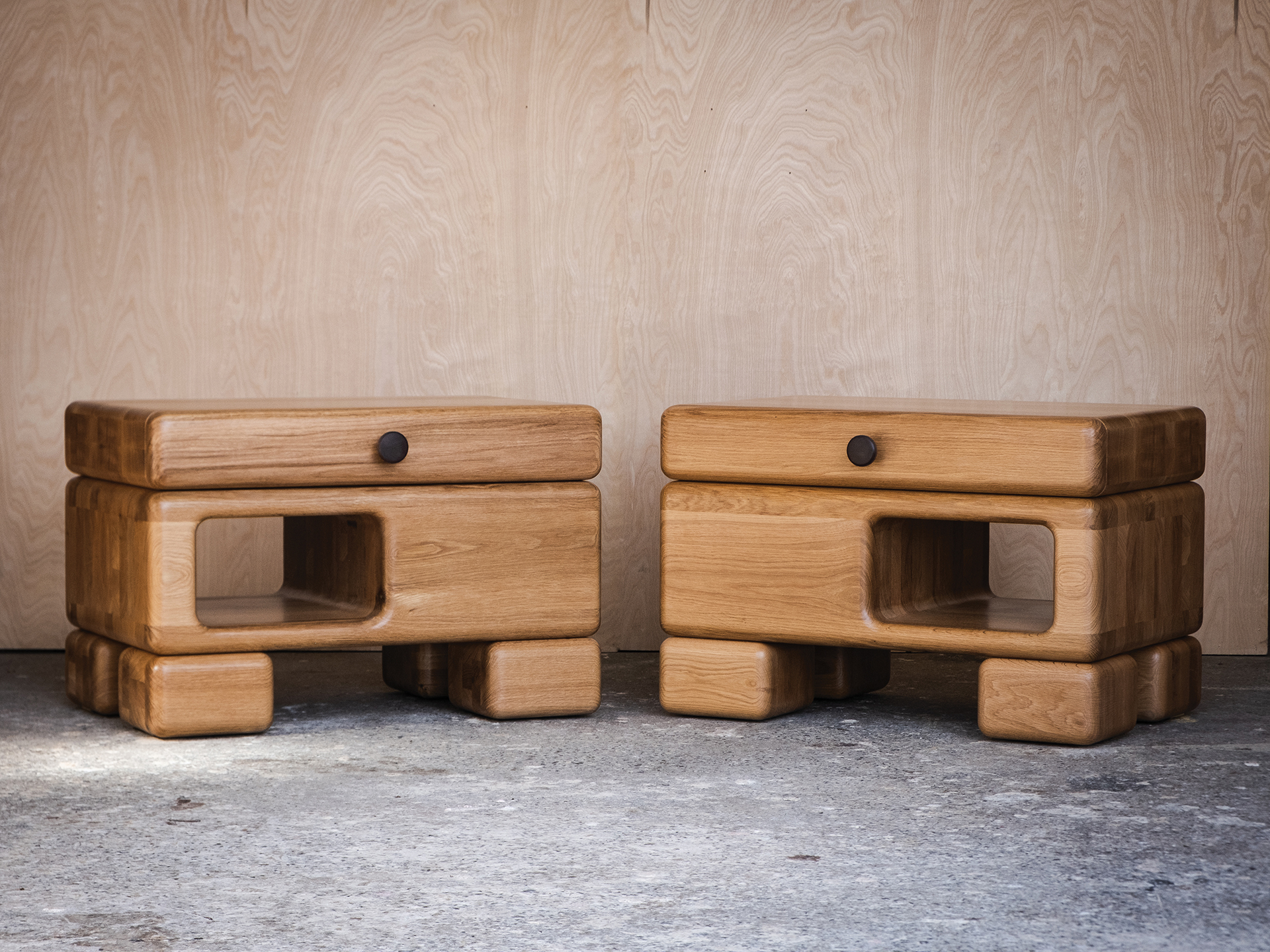
Daniel’s oeuvre progressed from fabricating farm tables to designing playful, contemporary pieces graced with classic proportions and attention to detail. Working solo, the woodworker hand-builds furniture from domestic hardwoods—walnut, oak, maple and cherry—using minimal staining. “I like to highlight the beauty of the material,” he observes.
Ninety percent of his clients choose walnut or white oak, often ebonized or bleached. “Everything’s been black or white for a long time,” he comments. “I personally love cherry. It has an orangey color that, when exposed to light, becomes a richer brown with age.” Today, Lefkowitz works primarily on commissions from interior designers and architects, who typically customize pieces to fit a space. His furniture has been shown at High Point Market in North Carolina and at the International Contemporary Furniture Fair in New York.
Everything is made to order. Starting with hand sketches illustrating proposed dimensions, Lefkowitz develops more detailed drawings using a three-dimensional computer design program, Fusion 360. “I don’t start anything until a drawing has been reviewed and approved,” he says.
Then, wielding basic woodworking tools, he mills the raw boards with a joiner, planer and table saw. Hand tools include chisels, rasps, files and angle grinders—“whatever it takes to get the job done,” he remarks. On one wall of his studio, varied templates are used for cutting pieces that eventually will be laminated together. Hidden within his casework are mortise-and-tenon joints. Corner rabbet joints, secured by brass pins, as well as high-grade drawer slides assure that drawers pull out smoothly.
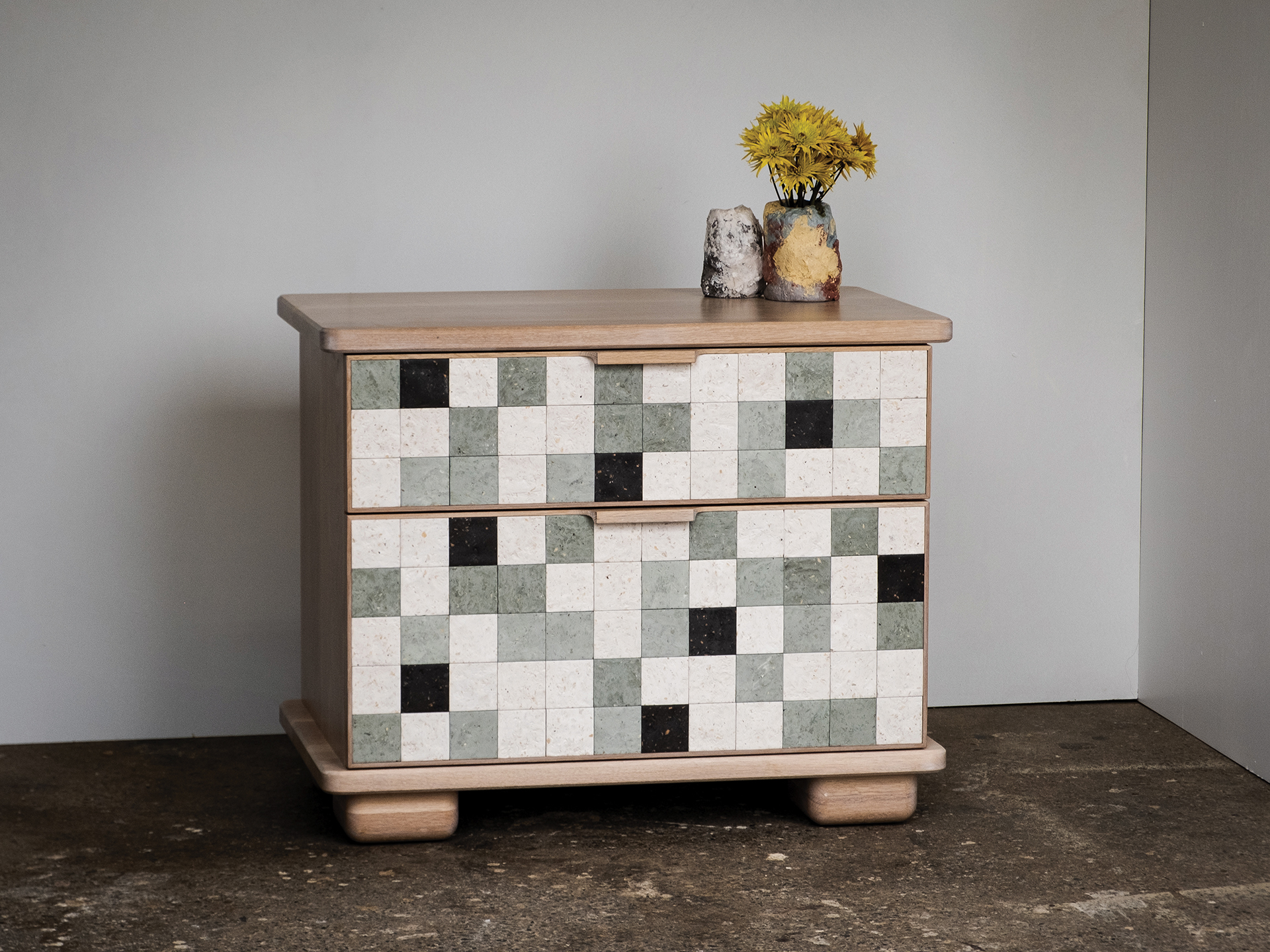
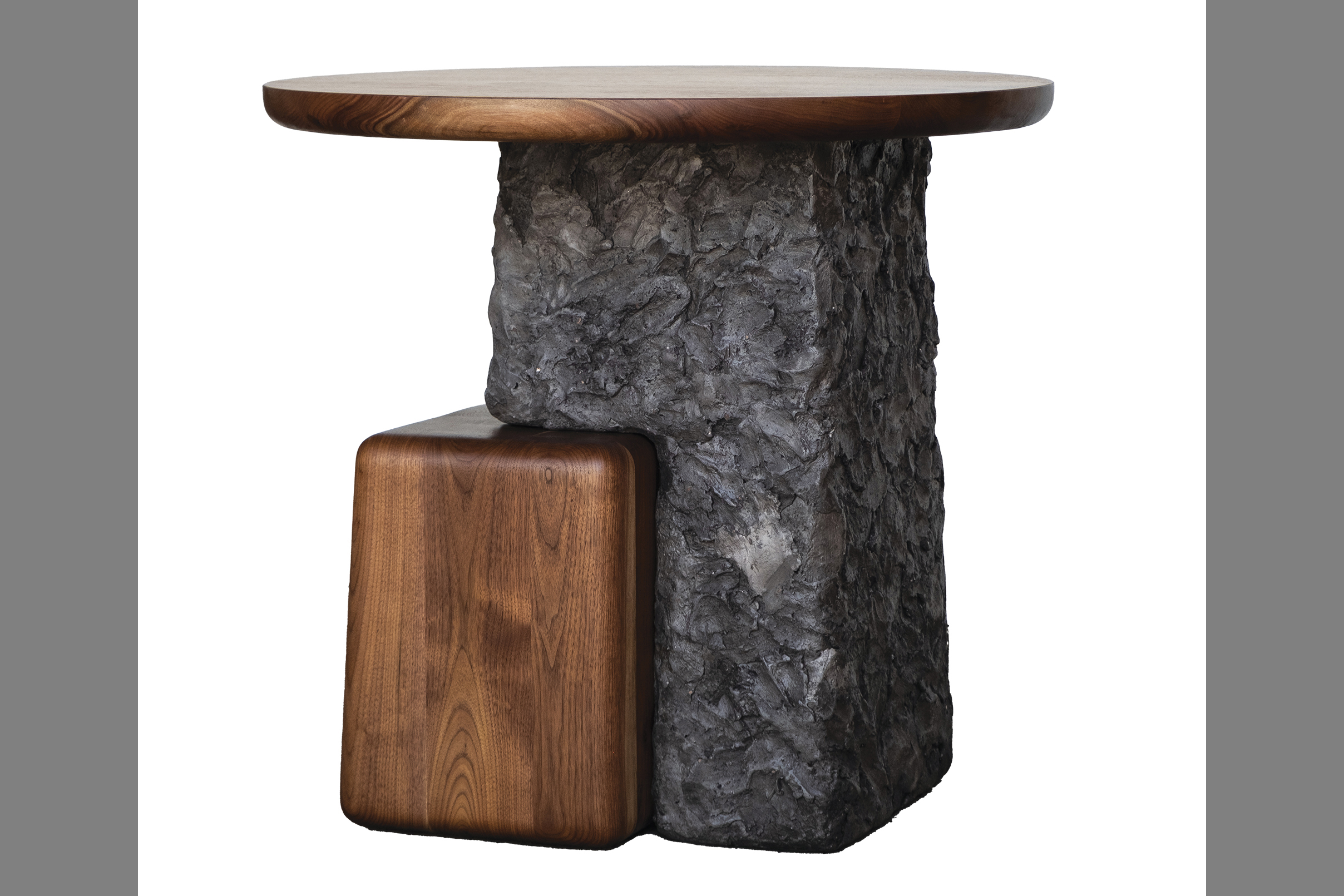
At first glance, the front surfaces of his quilted pieces appear to be metal. Yet these handmade tiles are actually composed of cement, which Lefkowitz treats like malleable clay. The uniform sections, measuring two-and-a-half-inches square, may be mixed with subtly colored pigments, then left to cure in a flexible silicone holder. Completed in his workshop, a side table fits together varied volumes; its rough-hewn cement base solidly connects to satiny elements of walnut. For some pieces, Lefkowitz applies metalworking skills for structural support. His Crete chair, for example, has an internal steel frame.
Home from college one summer, Daniel recalls, his father suggested he check out “a guy up the road who has a warehouse full of all kinds of stuff.’” Within 10 minutes that collector—sculptor and metalworker Kris Biemeister—was showing his new apprentice how to weld. “He was doing restaurant interiors in DC at the time,” notes Lefkowitz. “I learned a lot from him about metal work and making things.” For the transition to woodworking, he credits his dad: “Basically he made me teach myself. I’ve learned a ton from him.”
Asked why he named his studio 9 & 19, the furniture maker replies, “It has a meaning in numerology: nine-one-nine means ‘success in business.’ But I found that out after the fact. Some names are too evocative of a specific thing. I was looking for something that was a blank slate. You can fill it however you wish.”
For more information, visit 9and19.com.