When Pristine Acres first met with the owners of this McLean, Virginia, property to discuss the clients’ vision, they encountered a steep, undulating hillside dotted with craters and stumps where massive trees once grew. The homeowners hoped to take the unusable yard and turn it into the outdoor entertaining area of their dreams, culling inspiration from their own Chilean heritage. “We knew there had to be a boldness to the design while remaining warm and inviting with an underlying sense of being natural,” relays landscape architect Kevin Kurdziolek.
The master plan included the addition of a large infinity pool overlooking the forested environs. Pretty and practical, the design utilized white marble coping for the border of the pool that provides contrast in the design but also stays cool to the touch during those hot summer days. An oversized pavilion and expanded deck that can hold up to 180 people round out the plan. Open and airy, the modern pavilion features a unique cantilevered roofline, giving the appearance of almost floating over an entertaining hub that includes a kitchen, bar, sitting area with a television and a gas fire feature. Says Kurdziolek, “We knew from the beginning that the structure needed to be a very special anchor in the design for the space to work as a whole.”
Award: Residential Landscape Design over $250,000. Landscape Architecture & Construction: Kevin Kurdziolek, PLA, ASLA; Rambod Mirbaha, Pristine Acres. Automation: Trizone Automation.
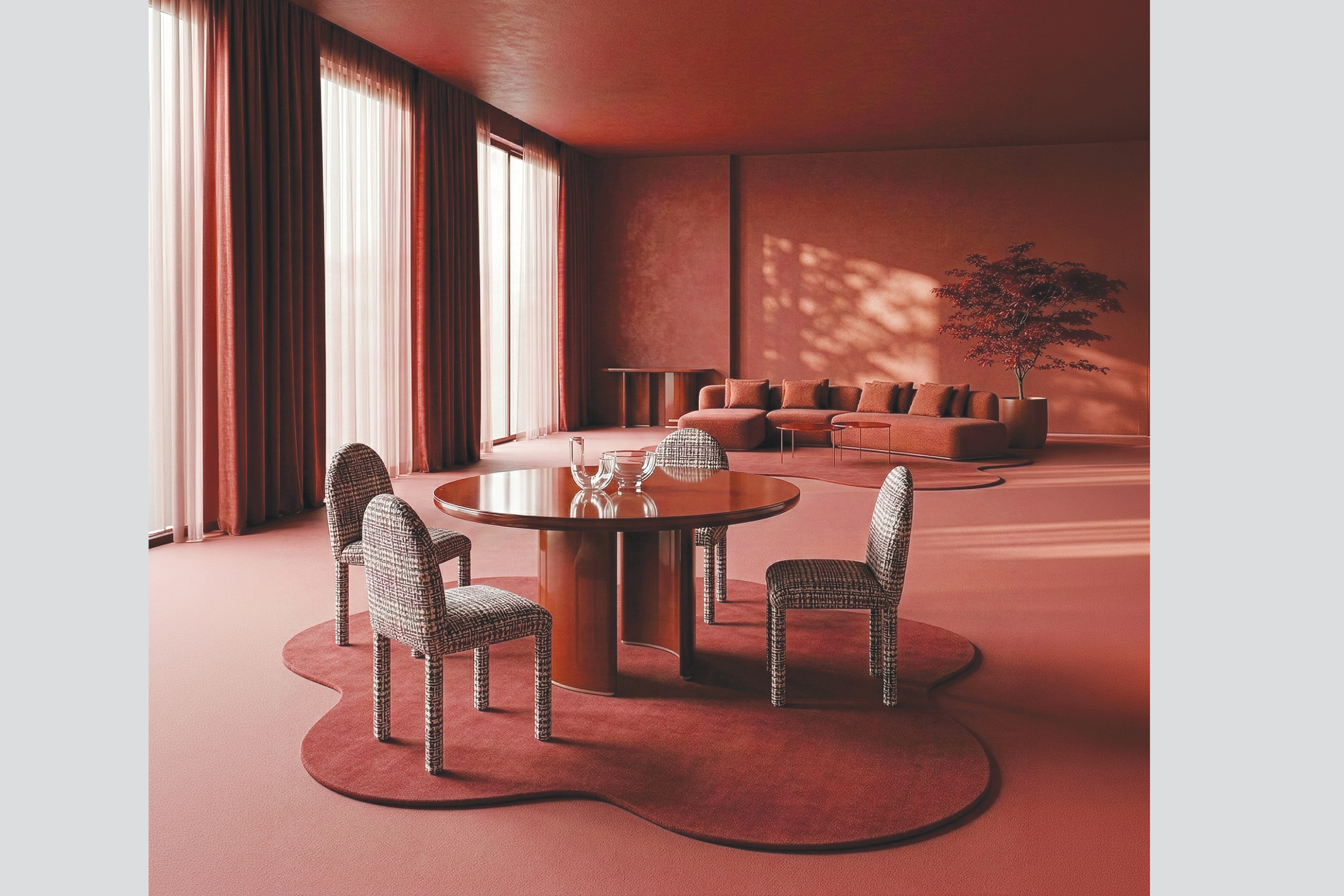 | HUES FLASH! Saturated berry tones take center stage in Caracole’s latest furniture collection. Designed by Claudio Bellini, the pieces shun neutrality in favor of rich shades of azure, saffron and rouge, the latter seen here in the Tobie table and the Archie dining chair. caracole.com |
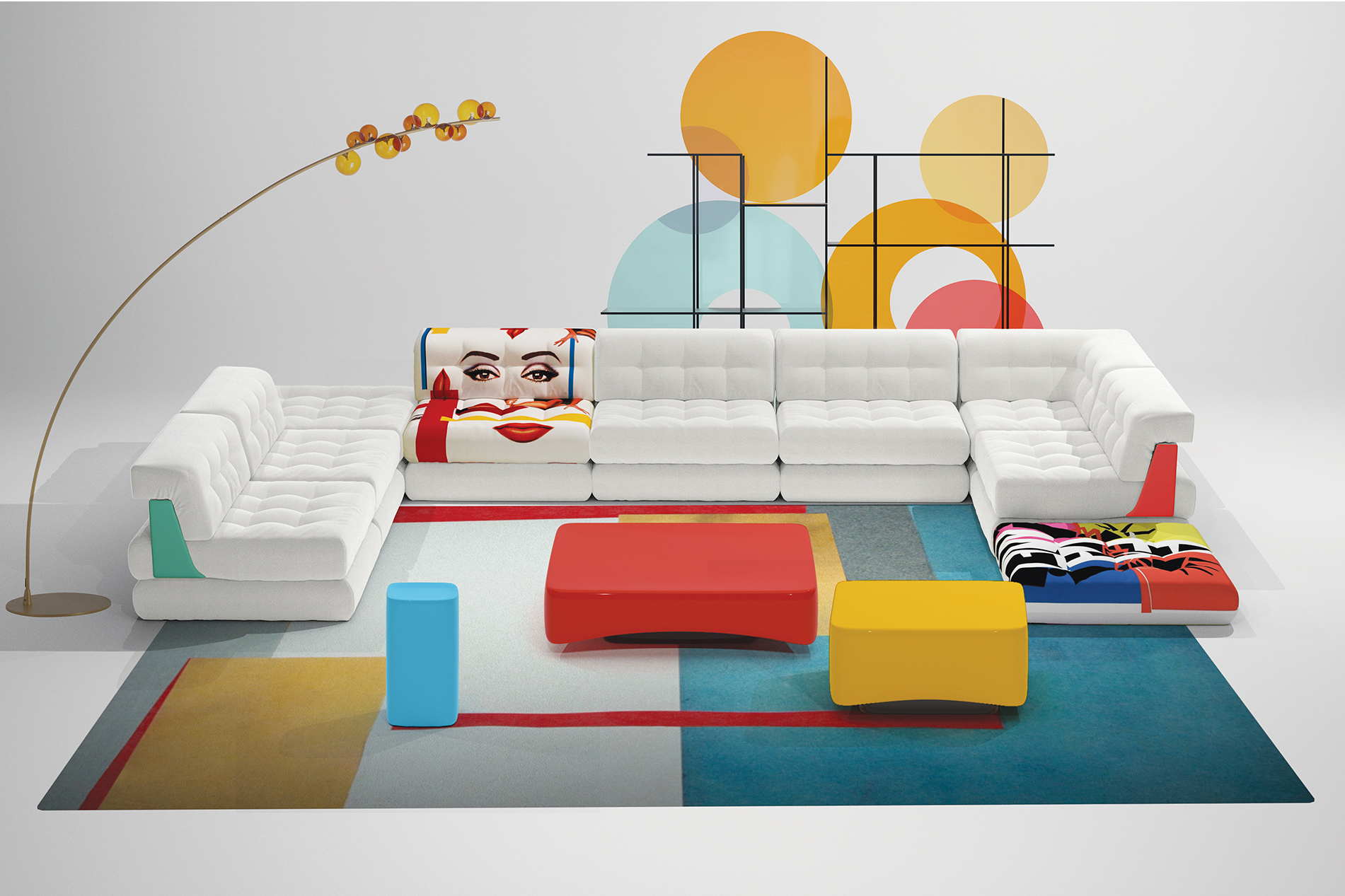 | CINEMATIC SEAT Roche Bobois’ reissue of the Lounge sofa is part of a collaboration with acclaimed director Pedro Almodóvar. It comes in two versions, one of which has a limited run of 50 pieces signed by the Spanish auteur. roche-bobois.com |
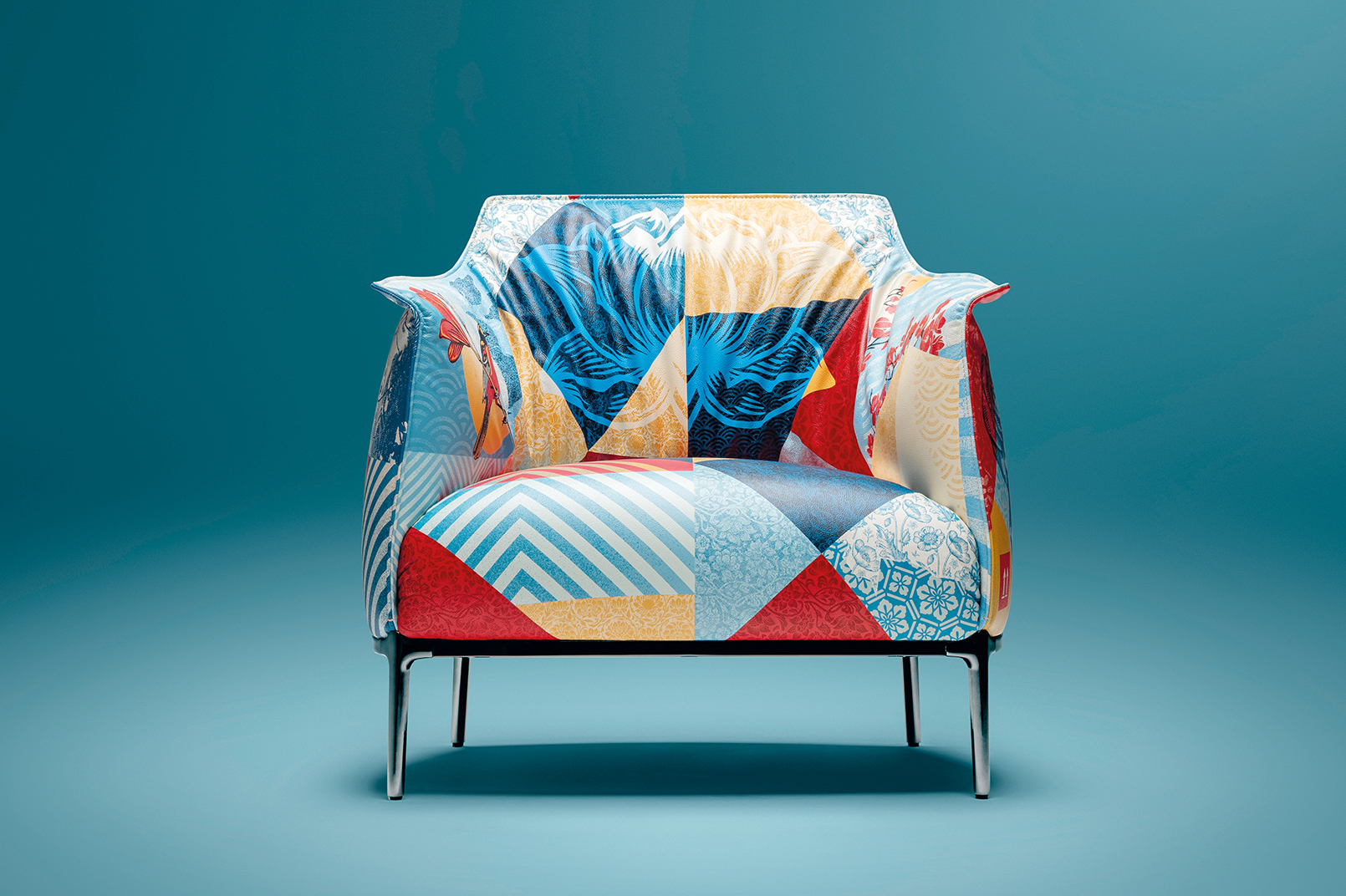 | ARTFUL PRINT Poltrona Frau has teamed up with artist and activist Shepard Fairey to produce 200 numbered interpretations of the Italian brand’s iconic Archibald armchair using some of Fairey’s most recognizable motifs. poltronafrau.com |
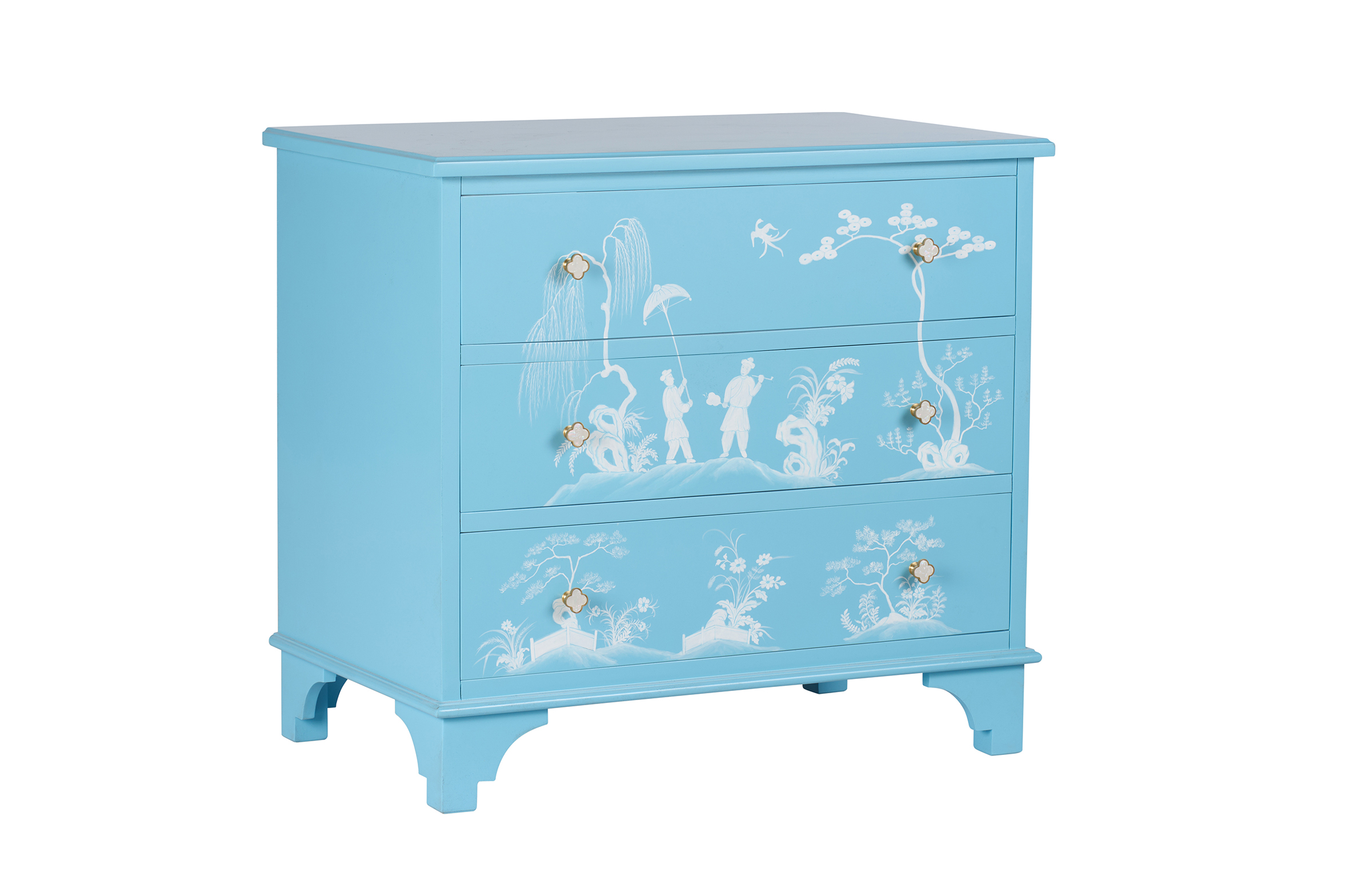 | BUREAU OF WHIMSY A new collection by Easton designer Jamie Merida for Chelsea House celebrates artistry and storytelling as seen in the Chinoiserie-inspired Willow Garden Chest, which features bespoke touches such as a painted-bird detail hidden inside a drawer. chelseahouseinc.com |
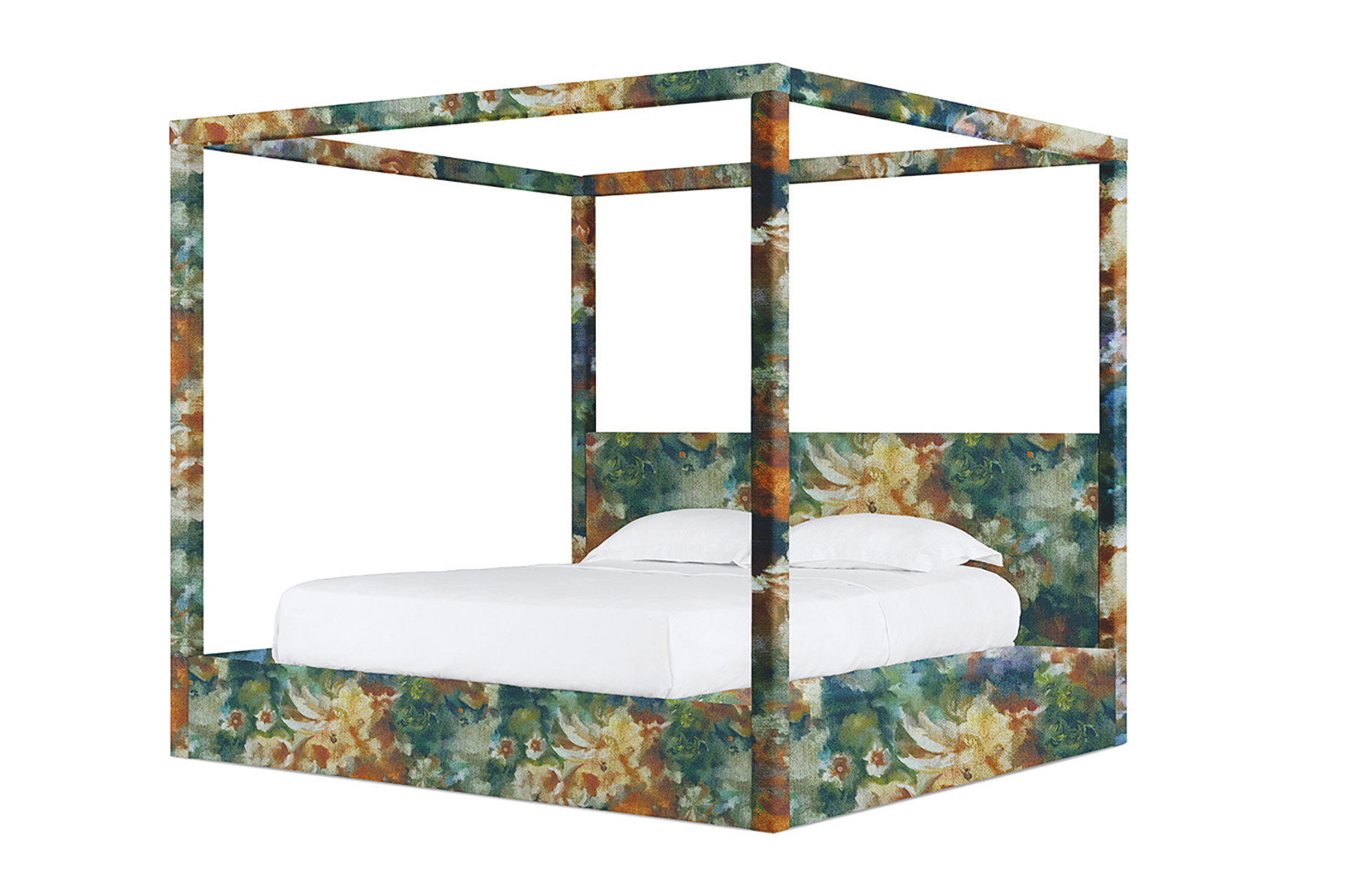 | NATURAL SLUMBER Sixpenny describes the Florette bed’s moody floral upholstery as “an impressionistic memory of a day spent in nature,” for a sleep experience that offers lush foliage views without fear of rain or mosquitoes. sixpenny.com |
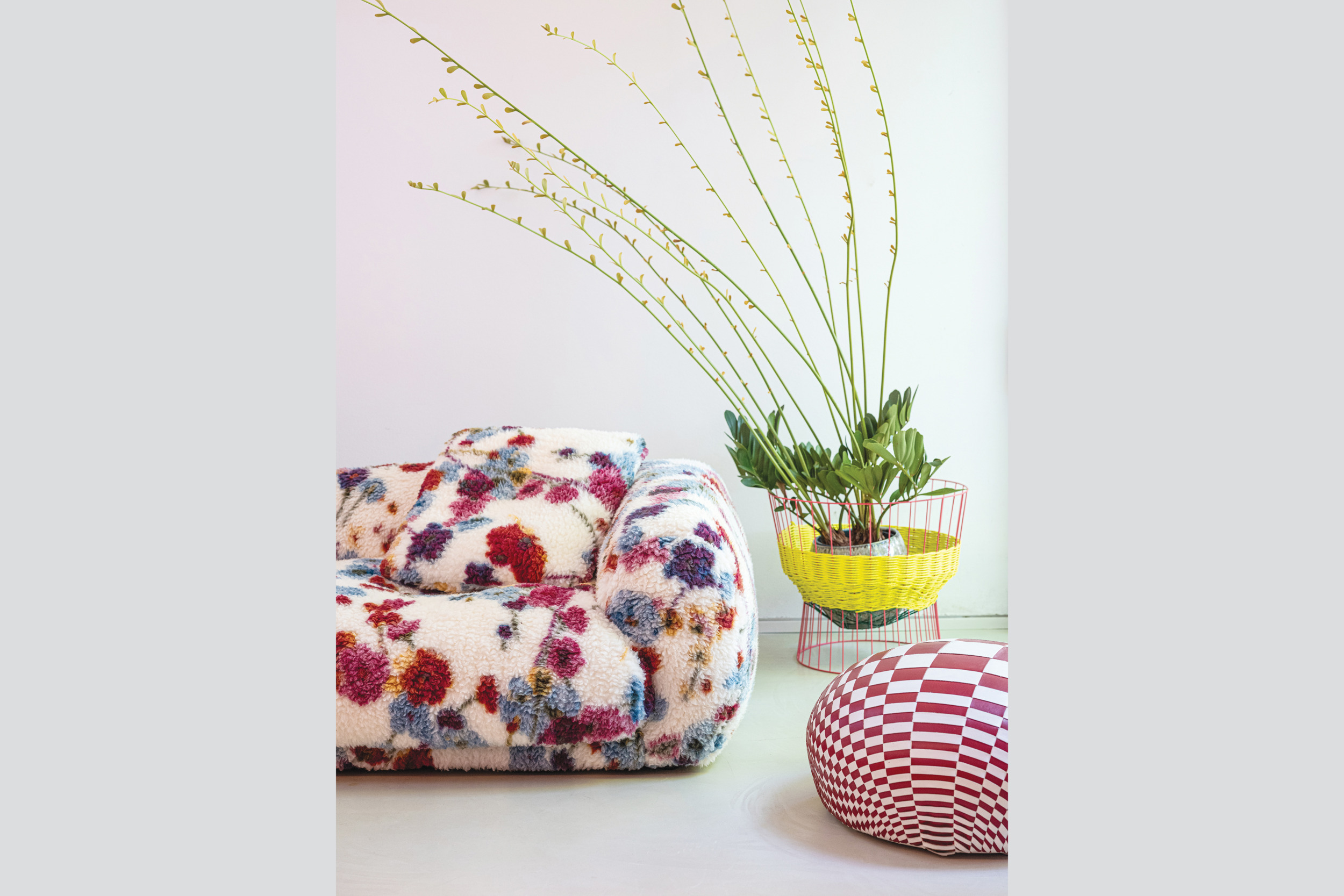 | STATEMENT FLOWERS Designed to feel like the equivalent of a soft embrace, Moroso’s cloudlike Me Time sofa is a seat you want to melt into for movie night. Festooned with branches in bloom, its tactile fabric resembles the coziest fleece. moroso.it |
Fromental has long been an arbiter of artisanal works for the interiors world, so it should come as no surprise that they’ve paired with British-American fashion designer Harris Reed for a couture-inspired decorative arts collection. They’ve translated 14 dramatic looks from Reed’s SS26 runway show into signature hand-painted and -embroidered wallcoverings, alongside cushions, bolsters and throws. The collaboration unites the worlds of fashion and interior design for eight sumptuous, maximalist-leaning designs that will bring an air of romance and opulence to any space. Starting at $789 for cushions. fromental.com
In a town that boasts plenty of temples to carnivorism, a newcomer hopes to stand out with a dash of Iberian flair. Bully Spanish Steakhouse arrives at the Eurostars St Gregory Dupont Circle Georgetown Hotel, blending traditional fare with flame-kissed Continental flavors and starring premium cuts and humble ingredients alike. Dishes such as pudín de pan and pasta a la plancha are bolstered by an ambitious cocktail program. Herringbone wood floors, emerald walls and ebony-beamed ceilings evoke the vibe of a sexy gentleman’s club, appropriate for both business lunches and intimate dinners. 2033 M Street, NW; bullywdc.com
Built in 1918 as the Seattle Engineering School for students of automaker Henry Ford, the MarQueen Hotel has been reimagined with interiors that nod to its industrial past while capturing the elegance and joie de vivre of the Jazz Age. An extensive renovation by Cusack & Co. Design preserved architectural details and historic wood floors while drawing on the hues of the 1966 Ford Motor Company automobile palette for its public spaces and 59 guest rooms. Baths were modernized while celebrating vintage-inspired fixtures. An onsite speakeasy, christened the Tin Lizzie Lounge for Ford’s Model T nickname, offers Prohibition-era cocktails and light bites. Rates start at $225; marqueen.com
Tudor-style houses often get a bad rap for being drab and fusty affairs. Not so for this English-inspired manor in Northwest DC. “A lot of them are sited in such a way that they’re surrounded by trees and are dark inside, but this house is on a hill so it gets a ton of light,” shares Wayne Adams of BarnesVanze Architects. Still, the house required a freshening up for its new inhabitants, a young family of five relocating from the West Coast who sought to bring a bit of that sunnier sensibility east. “Basically, we de-Tudorized it,” says Adams, who led the renovation. “Getting rid of some of the stained wood, simplifying the trim work and reducing some of the heavy beams recast it in a new light.”
With its limewashed stone exterior, quarried from granite in nearby Rock Creek Park, the house has a long, storied past. Built in 1927 by architect George N. Ray, the manse has played host to dignitaries and Hollywood royalty—Elizabeth Taylor and Vincent Price dined there—and notable former inhabitants include an ambassador and a senator. This marks the third time in 30 years that BVA has worked on the abode; the last renovation in 2012 included the addition of a back stair tower and was documented in this magazine.
This time around the 10,350-square-foot main house saw only minor modifications: The kitchen and bathrooms were reconfigured and the primary suite was reimagined to better suit the needs of the couple; she’s a tech executive and he works in finance. The attic was also transformed into a guest suite with a kitchenette and a media room for their three children.
To dress the rooms, the clients called on Lillian Byers of Jackson Platt Interiors, based in North Carolina. Byers, who worked on their San Francisco home, had recently moved east. Because the family barely had time to enjoy those furnishings before uprooting to DC, they wanted to repurpose many of the selections. From the dining room’s striking floral wallpaper to the kids’ bedroom furniture and finishes, most of the spaces are near-exact facsimiles of what was in their former abode. “As a mom, she wanted the kids to feel immediately at home; repeating those schemes gave them a sense of familiarity so they would have an easier transition,” relays Byers.
Bringing their Cali style to the Washington residence didn’t just create continuity, it also brightened the mood. “The house is about 100 years old; there was a lot of brown and it had an older generation vibe,” observes Byers. “The wife has a colorful, whimsical style which she brought to the project. Together, we enlivened nearly every surface.” Take the family room’s wood paneling, which got a coat of Benjamin Moore’s Knoxville Gray. “Originally, the architects thought, ‘You’re going to paint this beautiful stained molding?’ But in the end, it became one of their favorite things we did to the house,” shares Byers. “Painting it created this whole new room, but the beauty of the wood shines through because you still see the carved details.”
A similarly thoughtful approach was carried outdoors where the family desired a new swimming pool and carriage house. At nearly an acre, the property combines three lots with extremely hilly topography. Needing a space that could do triple duty on a challenging plot of land, BVA designed a 2,028-square-foot, three-story structure that contains an entertaining space with pool accessibility via large bifold doors on the lower level, a two-car garage on the second and a guest suite/studio on the top.
As a complement to the stone house, the architects tapped into a charming English vernacular, dressing the auxiliary structure in a stucco finish, slate roof and thin-profile casement windows to mimic the fenestration of the main building. “We wanted to play up this idea of an old Tudor estate, where the carriage houses were often a different, less grand material,” explains Adams.
Landscape architect Richard Arentz shaped the grounds, restructuring the stone steps leading to the pool area. By paring back overgrowth, reinvigorating existing plantings and adding Pennisetum to the central slope, he created more of a visual connection between the upper terrace and the lower lawn. Multiple play areas were carved out for the kids, including a climbing wall, a half-basketball court and an in-ground trampoline. “We wanted to make this a place where children could have plenty of opportunities to play, but that would still be an elegant, mature garden for adults,” says Arentz. Reflecting on the project, he adds, “In the end, we took something that had many lives over the years and resuscitated it for this young family.”
Adams concurs: “Everyone brought their best ideas about how to enhance this already magnificent property, plus the clients were lovely. Sometimes you just get lucky.”
Architecture: Wayne Adams, principal, BarnesVanze Architects, Washington, DC. Interior Design: Kate Jackson, principal; Lillian Byers, project designer, Jackson Platt Interiors, Brevard, North Carolina. Contractor: Horizon Builders, Annapolis, Maryland. Landscape Architecture: Richard Arentz, Arentz Landscape Architects, Washington, DC. Landscape Contractor: Planted Earth, Sykesville, Maryland.
RESOURCES
THROUGHOUT
Engineer: casengineering.com. Carriage House Canopy Metalsmith: archivedesigns.com. Plumbing: naumannplumbing.com. HVAC: owenscomfortsystems.com. Stair Railings: ironmastersinc.com. Tile Work & Interior Stone Restoration: Boatman & Magnani; 301-336-7700. Pool House Stucco: mcaconstructioninc.com. Exterior Patios: serrastone.com. Smart Home Technology: atlcontrol.com.
FAMILY ROOM
Wall Paint: Knoxville Gray by benjaminmoore.com. Ceiling Light: arteriorshome.com. Curtain Fabric: kerryjoyce.com. Sofa: Custom through sonomafurniturestore.com. Sofa Fabric: rogersandgoffigon.com; cowtan.com. Armchair: caracole.com. Armchair Fabric: cowtan.com. Side Table: serenaandlily.com. Coffee Tables: mgbw.com. Sheep: gardeshop.com. Rug: starkcarpet.com. Art: chairish.com. Bookcase Shelf Paint: Knoxville Gray by benjaminmoore.com.
POWDER ROOM
Wallpaper: scalamandre.com. Sink & Faucet: rh.com. Mirror: cb2.com. Wall Lights: curreyandcompany.com.
LIVING ROOM
Wall Covering: phillipjeffries.com. Wall Light: serenaandlily.com. Ceiling Light: visualcomfort.com. Rug: antique through agajohnrugssf.com. Armchairs: jaysonhome.com. Mirror: carversguild.com. Fireplace Vases: globalviews.com. Floor Lamp: gregoriuspineo.com. Sofa & Cushions: Custom through sonomafurniturestore.com. Side Table: cb2.com. Flower Urn: ateliervime.com. Curtains: elitis.fr/en; schumacher.com. Chairs: vintage through chairish.com. Chair Fabric: dedar.com; manuelcanovas.com. Pillows: anngish.com. Side Table: perigold.com. Console: ironies.com. Pineapple Lamps: vintage. Poufs: munnadesign.com. Dog: jeffkoons.com.
FOYER
Wall Paint: Alabaster by benjaminmoore.com. Ceiling Light: shadesoflight.com. Curtains: elitis.fr/en; schumacher.com. Art: elisemorris.net. Wall Lamps: sanderslightingco.com. Chairs: coleyhome.com. Chair Fabric: rogersandgoffigon.com. Sideboard & Poufs: madegoods.com. Pouf Fabric: manuelcanovas.com. Lamp: hvlgroup.com. Collection of Plates: John Derian through astierdevillatte.com/en.
DINING ROOM
Wallpaper: osborneandlittle.com. Dining Table: custom through newelldesignstudio.com. Bowl: globalviews.com. Chairs: hollywoodathome.com. Ceiling Light: visualcomfort.com. Rug: starkcarpet.com.
STAIRCASE
Paint: Alabaster by benjaminmoore.com. Stair Runner: starkcarpet.com. Floor: crossville.com. Green Door: Secret Path by benjaminmoore.com. Rattan Table: serenaandlily.com.
BREAKFAST ROOM
Ceiling Light: arteriorshome.com. Door Paint: High Park by benjaminmoore.com. Seating: Custom through sonomafurniturestore.com. Table: suefisherking.com.
KITCHEN
Cabinetry Paint: High Park by benjaminmoore.com. Countertops: caesarstoneus.com. Wall Lights: reginaandrew.com. Sink: houseofrohl.com. Faucet: newportbrass.com. Roman Shade Fabric: katieleede.com. Ceiling Lights: visualcomfort.com. Runner: riflepaperco.com. Green Bowl: jillrosenwald.com. Range: bluestarcooking.com.
PRIMARY BEDROOM
Wallpaper: phillipjeffries.com. Ceiling Paint: Blue Lace by benjaminmoore.com. Curtains: sandrajordan.com; scalamandre.com. Bed: custom through sonomafurniturestore.com. Bed Pillows: matouk.com. Bedspread + Bolster: garnethill.com; schumacher.com. Art: petroskoublis.com. Ceiling Light & Floor Lamp: visualcomfort.com. Armchair Fabric: cowtan.com. Side Table: powellandbonnell.com. Rug: custom through meridastudio.com.
OLDER DAUGHTER’S BEDROOM
Ceiling Wallpaper: osborneandlittle.com. Ceiling Light: visualcomfort.com. Wall Paint: Pensacola Pink by benjaminmoore.com. Bed: crateandbarrel.com. Art: etsy.com. Curtain Fabric: kravet.com. Rug: Lee Jofa for kravet.com. Bedside Table: anthropologie.com. Daybed Cushion: elitis.fr/en.
YOUNGEST SON’S ROOM
Ceiling Wallpaper: colefax.com. Wall Paint: Silver Cloud by benjaminmoore.com. Ceiling Light & Floor Lamp: arteriorshome.com. Daybed: serenaandlily.com. Mirror: potterybarn.com. Roman Shade Fabric: cowtan.com. Rug: Lee Jofa for kravet.com.
MAIN FLOOR REAR TERRACE
Sofas: sila-design.com. Sofa Fabric: sunbrella.com. Table: zacharyadesign.com.
EXTERIOR FAÇADE
Windows & Door Paint: Secret Path by benjaminmoore.com. Wall Lamps: coleenandcompany.com.
When the owner of this Alexandria townhouse contacted interior designer Paul Corrie for an update, he had one stipulation—that it not look like a typical Alexandria townhouse with white walls and a traditional vibe. The client was the entertainment director for a luxury cruise line and had something a little less conventional in mind. In addition, the 1977 brick abode “looked like it was last updated in the 1980s,” shares Corrie. “Because a full gut renovation wasn’t in the cards, we focused on modernizing and elevating the overall look and feel of the space—it was a total cosmetic overhaul.”
While the bathrooms were reconfigured, smaller changes yielded impactful results throughout the rest of the home: Fresh paint brightened the kitchen’s mahogany cabinets, wallpaper enlivened walls and a moody palette with menswear-inspired fabrics gave the home a sophisticated, masculine feel. A Q&A chronicles the transformation.
Describe the details that make this home unique.
Starting at the front door, the cubic flooring from Ann Sacks was a modern flourish that we used to update the space and set it apart. The geometric wallpaper in the kitchen, the dining room mural and the lighting choices throughout the house, which feel like unexpected jewelry, all seem atypical for the neighborhood.
How did the client’s personal style inspire the palette?
Sometimes if you look at a person’s wardrobe or what appears to be a color story within their lifestyle you can translate that in terms of interior design. This client has a very tailored, consistent aesthetic, yet his work environment was incredibly colorful. We brought in a lot of charcoal gray paired with some beiges and camels, then layered in some fun pops of color to reflect that.
What was the key to creating continuity throughout this home?
We always tell potential clients that a great designer is able to weave elements from room to room so that when you look at a project in its entirety, all of the pieces of the puzzle fit together. In this particular home, we were very mindful of either carrying particular color stories forward, or finding a nice balance where we interject something modern and then pair it with some traditional patterns so it feels like a collected, cohesive story as you move through the space.
How did you build drama in the dining room?
The existing space was quite challenging. We were constrained by the fact that it awkwardly overlooks the living room and has a traditional railing and chair rail. We wanted to pump up the overall visual so we brought in the Iksel decorative mural from Schumacher, which we were able to scale perfectly to the wall dimensions. The table and chairs were existing, but the chairs had a dated mid-century fabric so we reupholstered them in a plaid.
What role did antiques and vintage pieces play in this project?
Antiques are one of the best ways to add character and patina to any room. They tell an unusual story that can’t really be replicated with store-bought mainstream furnishings from places like Restoration Hardware, which sometimes are too oversized for a project like this. Antiques are reminiscent of a time when there was more of an appreciation for scale. Also, this was a collaborative process with a client who has exceptional taste, so searching for these particular items and having him appreciate them was truly wonderful.
Finally, talk to me about the elephant, er, giant bust in the room.
I love interjecting things into interiors that are whimsical or that stoke conversation. I want to create comfortable environments that reflect the client; a space should never feel fussy or unrelatable. This particular piece resonated with the owner. It came from a local antiques dealer, and reminded my client of his travels. We felt like it made a statement and added a level of unexpectedness and fun to the living room.
Ask PAUL
Spring is upon us! Where do you like to travel?
I’m always partial to Provincetown, where I have a home. I’m inspired by its coastal vibe and artistic environment.
Tell us about your most treasured heirloom.
Anything from my grandmother, whether it be dishes or sterling silver. She included little notes with stories about their provenance. It’s really special seeing her handwriting and knowing that she took the time to document these things for me.
What’s your favorite local place to score unique accents?
Federal & Black in Middleburg has elegant home accessories and one-of-a-kind pieces.
Interior Design: Paul Corrie, Paul Corrie Interiors, Washington, DC. Upholstery Fabrication: Knightsbridge Interiors Inc., Alexandria, Virginia.
French Twist Rue Cler Colette brings Gallic country style to your kitchen or bath. The six-by-six-inch hand-painted porcelain tiles sport a crackle glaze and are rated for both indoor and outdoor projects. renaissancetileandbath.com
Color Blocking For the Spill subway tile collection, artist Vik Muniz reimagines porcelain blocks using expressive watercolors as inspiration, giving walls and floors the potential of an empty canvas. architessa.com
New Wave This hand-cut, waterjet mosaic, shown with a combination of tumbled Cloud Nine, Botticino, Gascogne Blue, Palomar and Bianco Antico marble and stone, is part of the Tidal Collection celebrating the fluidity of water’s movement. newravenna.com
Artisanal Choice Handcrafted of stoneware ceramic in Portland, Oregon, the MADE Billow collaboration with designer Kelly Wearstler features a polished finish that’s either fluted or smooth, for a dimensional tile that subtly plays with light and shadow. annsacks.com
Pattern Play Deep jewel tones in shades of burgundy, emerald and charcoal combine with soft neutrals in the Alaris tile collection. With heavy veining throughout, octagonal and square shapes allow for creative compositions that skew classical or modern. tilebar.com
BRITISH CHARM Gild your own pad with this whimsical wallcovering, part of In the Garden, Little Greene’s collaboration with the UK's National Trust. Inspired by 100 acres of lakes on a lush Welsh estate, Lily Pads (previous page) stars the aquatic plants, playfully interspersed with butterflies, kingfishers and even tiny boatmen. In four colorways. littlegreene.us
CHINOISERIE CHIC The first-ever printed collection from Fromental features five of the brand’s beloved murals, including Millefleurs (above, left) which began life as a hand-painted work on silk panels before being scanned and digitally rendered on paper. The result delivers artistry in a fraction of the time.
fromental.com
FOREST FETE A new collection, Sandberg Heritage, toasts the Swedish brand’s 50th anniversary while reinterpreting classic designs from its archive. Eden Mural (above, right) showcases the wild essence and beauty of Scandinavian flora and fauna in a mythical woodland with delightful details that emerge as your eye takes in the scene. sandbergwallpaper.com
ARBOR DAZE Delicately embroidered branches sway and leaves dance across a sisal paper background on Holly Hunt’s Malti wallcovering (right). Featuring a palette of muted tones, the pattern incorporates fine stitching that adds dimension, allowing for the interplay of light and creating a sense of movement. hollyhunt.com
Whether it’s the granite cobblestone streets where trolleys once roamed or the Federal-style row houses that line many a block, Georgetown exudes historic charm in almost every direction. But for a West Coast-based couple, a penthouse in the Ritz-Carlton fell short on delivering the kind of character that’s synonymous with the neighborhood. While the 6,145-square-foot, high-rise abode offered covetable views of the Potomac, the interior offered little architectural detail to match the scene outside.
“What was there felt very dated and early 2000s,” shares designer Zoë Feldman, whom the couple brought on for the renovation. “There were a lot of odd elements that needed to be smoothed out, such as columns that weren’t load-bearing and lots of undulation in the ceilings. There were large spaces, but they didn’t flow together well architecturally.”
Working with architects Thomson & Cooke and Pyramid Builders, Feldman went about crafting an artful pied-à-terre for the clients to use as an entertaining base when they’re in town. The husband and wife, who have two grown children, desired a DC residence to gather with friends and watch nearby Georgetown athletic events. The husband is an alum and one of the children currently attends the school.
But first the team had to right the penthouse’s shortcomings. Dropped ceilings were raised and cased openings were realigned to create a sense of separation between the mostly open-plan spaces. “A big part of the project was very subtly creating beautiful rooms that unfold into each other,” notes architect Patrick Cooke. “When it was one long run-on space, there was nowhere to stop and change color and materials. These spaces were tricky to make sense of until we created some separation.”
Careful consideration was paid to the how the apartment should flow with an eye on cohesion and a high level of customization top of mind. To start, the entry was reconceived valuing the principles of compression and expansion. A cozy vestibule, sporting new wood paneling painted in Farrow & Ball’s Carriage Green, was built out with a walnut alcove to welcome guests. “We thought it would be fun to create a dramatic jewel-box moment in the entry,” relays Feldman.
That vestibule leads to a hall, which ushers you into a bright, central gallery open to the living room and study on one side and the den, kitchen and dining space on the other. The primary suite resides just beyond the public living spaces for optimum privacy; three additional guest rooms, all with ensuite baths, are tucked away off the entry at the opposite end of the apartment.
To give the home a unifying visual language, the Brazilian cherry floors were refinished to downplay natural red undertones, and walnut door jambs were incorporated at the thresholds. Special attention was paid to the sequencing of rooms through the use of color. “They wanted it to feel more in line with a typical Georgetown home which might have moodier hues,” says Feldman. “A lot of the spaces have earthy jewel tones, so if you line them all up, they would complement each other.”
The cooler side of the color wheel—think grays, blues and greens—dominates the palette; the charcoal study has blueish undertones, and the powder room’s DeGournay wall covering boasts a forest motif in emerald and teal. One exception is the den, bathed in a rich, atmospheric terracotta hue. Other spaces feature crisp white walls to let the clients’ top-shelf art collection, which includes pieces by Sam Gilliam, Sabine Moritz and Mark Bradford, sing.
In the kitchen, Feldman freshened up existing cabinets with a coat of Farrow & Ball’s De Nimes blue and new honed marble countertops. “We weren’t able to fully renovate the kitchen because of the tight time constraint, so we had to put a band-aid on some of it and the easiest thing to do when you need a band-aid is paint,” she explains. The entire project went down in the course of five months from start to finish.
“Zoë had a clear vision for transforming this residence into a home that reflects both the building’s refined setting and the clients’ modern lifestyle,” reflects Jerry Jubb, vice president of Pyramid Builders. “It was a comprehensive renovation that touched nearly every space in the residence. The combination of finish-sensitive work, a vertical urban setting and strict schedule demands made this project challenging, but also one of the most rewarding.”
Architecture: Patrick Cooke, Thomson & Cooke Architects, Washington, DC. Interior Design: Zoë Feldman, Zoë Feldman Design, Washington, DC. Builder: Pyramid Builders, Annapolis, Maryland.
RESOURCES
Window Treatments: gretcheneverett.com. Home Automation: iniav.com.
ENTRY
Wall and Trim paint: Carriage Green by farrow-ball.com. Ceiling Light: hvlgroup.com. Table Lamp: incommonwith.com. Rug: vintage through mattcamron.com. Mirror: racheldonath.com through theexpert.com. Hardware: oandgstudio.com. Ottoman: 1stdibs.com.
POWDER ROOM
Wallpaper: degournay.com. Trim Paint: Titmouse Blue by farrow-ball.com. Sconces & mirror: 1stdibs.com. Faucet: waterworks.com. Sink: rocktopsfabrication.com. Towel Bar: nickeykehoe.com.
GALLERY
Wall & Trim Paint: All White by farrow-ball.com. Ceiling Light: trueing.com. Monopoint Light: mplighting.com. Art: Sabine Moritz. Art/Mirror: Jim Lambie through gouldartadvisory.com. Center Table: Vintage through 1stdibs.com. Console Table: vancollier.com. Sideboard: shopquarters.com. Door Knob: soane.co.uk.
STUDY
Wall & Trim Paint: Beetle Black by farrow-ball.com. Ceiling Light: 1stdibs.com. Table Lamp: incommonwith.com. Desk: lawsonfenning.com through theexpert.com. Chair: ruemmler.us. Art: Federico de Francesco through gouldartadvisory.com. Rug: starkcarpet.com.
LIVING ROOM
Wall & Trim Paint: All White by farrow-ball.com. Ceiling Light: achillesalvagni.com. Table Lamps: theexpert.com; incommonwith.com. Floor Lamp: 1stdibs.com. Sofa: dmitriyco.com. Sofa Fabric: schumacher.com. Lounge Chairs: lawsonfenning.com through 1stdibs.com. Lounge Chair Fabric: rosemaryhallgarten.com through ruefour.com. Coffee Table: 1stdibs.com. Side Tables: foromshop.com; lawsonfenning.com. Library Table & pillows: shopquarters.com. Large Pillows: jennikayne.com. Ottomans: lsupholstery.com. Ottoman Fabric: misia-paris.com. Rug: tibetano.com. Drapery & Roman Shade Fabric: hollandandsherry.com.
DEN
Wall Paint: Etruscan Red by farrow-ball.com. Ceiling Light: apparatusstudio.com. Floor Lamp: 1stdibs.com. Rug: crosbystreetstudios.com. Art: Gene Davis through irenahochman.com. Sofa: lawsonfenning.com. Sofa Fabric: us.loropiana.com. Lounge Chair: aneesupholstery.com through hinescompany.com. Lounge Chair Fabric: roseuniacke.com through mattcamron.com. Side Chair: nydc.com/showroom/the-gallery-at-200-lex. Sideboard: wudfurniture.com. Coffee Table & Side Table by Sofa: 1stdibs.com. Side Table: shopquarters.com. Bench: mattermatters.com. Ottoman: 1stdibs.com. Pillow Fabric: metaphors.com/en. Drapery Fabric: rogersandgoffigon.com. Roman Shade Fabric: hollandandsherry.com.
KITCHEN
Wall, Cabinetry & Trim Paint: De Nimes by farrow-ball.com. Ceiling Lights: urbanelectric.com. Sconces: alliedmaker.com. Rug: mattcamron.com. Hood: lenorewinters.com. Dining Chairs: 1stdibs.com. Hardware: waterworks.com. Range: bluestarcooking.com.
DINING ROOM
Wall & Trim Paint: De Nimes by farrow-ball.com. Ceiling Light: 1stdibs.com. Dining Table: sunatsix.com through theexpert.com. Dining Chairs: 1stdibs.com. Art: Charles Gaines. Roman Shade Fabric: hollandandsherry.com.
PRIMARY BEDROOM
Wallpaper: schumacher.com. Trim Paint: Slipper Satin by farrow-ball.com. Ceiling Light & Sconces: 1stdibs.com. Table Lamps: dumaismade.com through theexpert.com. Floor Lamp: us.audiocph.com through theexpert.com. Small Table Lamp: soane.co.uk. Art: Sam Gilliam through gouldartadvisory.com. Carpet: starkcarpet.com. Lounge Chairs: 1stdibs.com. Lounge Chair Fabric: rogersandgoffigon.com. Bed: fajenbrown.com. Bed Fabric: us.loropiana.com. Nightstands & Side Table: 1stdibs.com. Console: vancollier.com. Bench: mattermatters.com. Bed Blanket: jennikayne.com. Bedding: sferra.com. Lumbar Pillow on Bed: us.loropiana.com. Chair Lumbar Pillow: sandrajordan.com. Roman Shade Fabric: hollandandsherry.com.
GUEST BEDROOM
Wallcovering: hollandandsherry.com. Trim Paint: Slipper Satin by farrow-ball.com. Bed & Nightstands: fajenbrown.com. Bedside Lamps & Sconces: 1stdibs.com. Floor Lamp: incommonwith.com. Chair: theexpert.com. Chair Fabric: us.loropiana.com. Desk Chair: pillarandpost.com. Desk Lamp: sohohome.com. Rug: starkcarpet.com. Bed Blanket: jennikayne.com. Bedding: sferra.com. Lumbar Pillow, Drapery, & Roman Shade Fabric: hollandandsherry.com.
The owners of this Cleveland Park center hall Colonial, architect Megan Downey and her journalist husband, found that its best asset—an expansive backyard that looks onto a ravine—was unfortunately blocked by a rear attached garage. “It’s an amazing forested wonderland with a creek, but you wouldn’t have known it from the way the house was laid out,” she explains. Desiring a family-friendly kitchen that felt connected to nature and to the rest of the house so they could keep an eye on their two young daughters, Downey devised a plan to eliminate the wall between the abode and the garage and relocate the kitchen to the former garage on the home’s posterior.
Wanting the cook space to feel modern and uncluttered, she conjured a porcelain-clad monolithic island that would look like a floating marble sculpture and full-height cabinets that would blend into the wall and keep appliances, pantry items and dishes out of sight. Aurora Ferrari of Innately Italy helmed fabrication of the cabinetry and countertops. With an eye on safety and sustainability, Downey opted for minimal-VOC paint and sheep’s wool insulation. Reclaimed historic red oak boards were matched to the existing floors and topped with an all-natural coating partially made from cheese whey, making the space as eco-friendly as it is sleek.
PROJECT TEAM
Architecture & Kitchen Design: Megan Downey, Megan Downey Studio. Interior Contractor: Smith & Daughter.
KITCHEN DETAILS
Cabinetry: innatelyitaly.com. Appliances: miele.com through ajmadison.com. Windows: loewen.com through thesanderscompany.com. Pendant Lighting: flos.com. Stools: dwr.com.
When a young family bought a Queen Anne row house on Capitol Hill, they found a literal cornucopia of period details: Plasterwork featuring pea pods, flowers and corn cobs were among the interior’s perfectly preserved treasures. The kitchen, however, offered a different kind of time capsule. Situated at the rear of the house, “it had plastic laminate cabinets and a blue 1980s glazed tile backsplash; it felt very DIY,” relays project architect Nicholas Potts. Flipping the location of the dining room and kitchen made the cook space feel more like the heart of the home. A deep, paneled archway connects the two spaces and artfully conceals a new powder room.
The owners, an advertising executive and a writer, initially thought they’d paint the space green, the wife’s favorite color. But, according to Potts, “it was feeling cave-like, so we started leaning toward warmer tones,” landing on Farrow & Ball’s Tailor Tack. An oversized Carrara and Bardiglio marble floor makes the space read larger, while vintage Czech flush mounts and a mid-century orbital pendant telegraph an elevated eclecticism. A sunny yellow larder and green custom doors on the back of the house, crafted by a Vermont artisan and family friend, only add to the kitchen’s one-of-a-kind character.
PROJECT TEAM
Architecture & Kitchen Design: Nicholas Potts, AIA, Nicholas Potts Studio. Contractor: Impact Construction. Styling: Kristi Hunter.
KITCHEN DETAILS
Cabinets: bremtown.com. Larder & Rear Windows: arcadiarestorations.com. Floor: artistictile.com. Range: agarangeusa.com through abwappliances.com. Refrigerator: liebherr.com through adu.com. Plumbing: houseofrohl.com.
1/ Sunny Wardrobe
For a newlywed couple in Annapolis, ample closets solved a myriad of storage issues, especially for the wife. “She loves to color-coordinate her glasses with her outfits, so having a place where she could easily see her eyewear collection was a must,” relays interior designer Katalin Farnady of Farnady Interiors, who worked on the project with architect Peter Miles of The Drawing Board. A large, central island contains space for spectacles and jewelry, while pull-down bars for hanging clothes make the most of the 10-foot ceilings. The dressing room’s cheery hue coordinates with the adjacent primary bath and Winfield Thybony wallpaper on the ceiling provides the perfect complement to his closet, which is gray.
2/ Pet-perfect Mudroom
Empty nesters with a blended family in Easton, Maryland, needed a mudroom that would stand up to the wear and tear of dogs and company. “The clients travel through this room each time they enter or leave their home, so we aimed to make it a calming, but durable space,” says designer Laura Butler of Butler Interior Design, who worked on the new build with Focus Construction. Arto brick veneer flooring, laid in a herringbone pattern, provides a base for cabinetry with dark granite counters and breathable lattice on the cubby doors. Built-in niches house dog beds and brass mesh gates contain pups to the utility area. All in all, it’s a high-functioning spot for foot traffic from people and little paws alike.
3/ Moody Mod Pantry
Rill Architects had renovated this midcentury modern home in Chevy Chase, Maryland, prior to tackling the kitchen and pantry, so the clients had time to think about their non-negotiables. Desiring an entertaining-ready kitchen meant needing a place to keep everything out of sight. Behind the walk-in pantry’s pocket door, custom maple cabinetry, painted Farrow & Ball’s Salon Drab, hides everything from dry goods to blenders and crockpots. Honed Reliance Bellini Quartz countertops lit by under-cabinet lights offer extra prep space. “There are almost as many functional needs for the pantry as there are for the kitchen,” says architect Jim Rill. “Then of course, you want to make it pretty, too.”
4/ Power Study
A young family of six in Arlington needed to pack a ton of function into this flex space, which is used for homework, casual dining and arts-and-crafts. Designer Suzanne Carlough of Carlough & Co. “incorporated hidden storage as well as a desk for working from home.” A wall of built-ins conceals lower drawers for files and stationery, while upper cabinets with brass wire-mesh doors hold art supplies and board games. Up top, open display shelves show off pottery and decorative objets. The cabinetry and trim are painted a soft sage green, and the walls sport a windowpane grasscloth from Schumacher that lends the space a timeless, tailored look.
5/ A Serving of Whimsy
Interior designer Lauren Hurlbrink had a blast designing this small but mighty butler’s pantry for a couple with four pre-teen kids in Owings Mills, Maryland. Open shelving holds labeled baskets that corral snacks and other staples, while the microwave and coffee machine are discretely tucked away. “As a designer, I love having stuff like small appliances out of sight,” she shares. A colorful bird-print Caitlin Wilson wallpaper and cabinetry painted Farrow & Ball’s Stiffkey Blue convey a joyful vibe. Says Hurlbrink, “It used to be that the powder room was the place we had fun designing, but these days the pantry has become the new powder room.”
Enduring Gardens: The Tame and the Wild (Images Publishing, September 2025) showcases breathtaking gardens designed by Annapolis-based Campion Hruby Landscape Architects. The monograph reveals the thoughtfulness, skill and intention that goes into creating meaningful outdoor spaces that connect with architecture and use nature to engage all of the senses.
The latest tome from Schumacher explores the design world’s unwavering affair with a timeless motif. In Everybody Loves Stripes: Decorating Between the Lines (Monacelli, October 2025), writers Alexandra Flint and Emma Bazilian dig into the pattern’s history and offer inspiration and ideas for incorporating the bold bands into your own home—no matter your style.
1/ Paper Perfection Crafted by a 90-year-old chochin lantern atelier in Japan’s Fukuoka Prefecture, the Maru light features abstract brushstrokes on a hand-dyed, washi-paper shade shielding an opal glass globe with brass-and-wood components. cedarandmoss.com
2/ Fine Fluting The Nolan nine-inch flush mount has a reeded alabaster collar with brass accents and a globe diffuser. Ideal for illuminating hallways, landings or even a dressing room, the design feels both classical and modern at once. visualcomfort.com
3/ Big-top Fun Sporting hand-painted bands in blue or pink on its canopy, the West Elm X PBK Striped Ceramic Flush Mount light brings flair to a kid’s bedroom or play area, but also adds whimsy to more grown-up spaces, such as a mudroom or powder room. westelm.com
4/ Major Impact Blending Art Deco and mid-century style, the Vernazza stars a ring of ribbed glass globes set in an oversized brass frame. Perfect for a low-ceiling living room, it’s the rare flush mount that has the visual weight of a chandelier. hvlgroup.com
5/ Minty Fresh A gridded hexagonal crown combines with a softly curved shade to define the Hooper, shown here in a custom painted finish with a hewn-brass lacquered interior. urbanelectric.com
6/ Soft Shading Designed by Jake Arnold, the Allegra fixture lends a warm glow to medium-sized spaces such as entryways or butler’s pantries, thanks to its linen blend shade which is stretched over a flared dome frame. crateandbarrel.com
7/ Antique Appeal Vintage Austrian lighting inspired the design of Lamina, which resembles a treasure you might find wandering around a Parisian flea market. An unlacquered brass base holds delicate textured glass florets casting the loveliest of shadows. cb2.com
Reflecting timeless sophistication, CH Carolina Herrera’s winter collection delights in the rich hues of gemstones. A topaz midi-length dress in a tone-on-tone floral brocade features a dramatic silhouette with a ruffled neckline (left). Here, it’s paired with the black leather Initials Insignia bag. Or grab a Scala Insignia small clutch in tourmaline pink or emerald green (above) for an extra pop of color. Dress, $1,435; leather clutch, $1,225; Scala clutches, $735. Find at the CityCenterDC boutique. chcarolinaherrera.com