
Decorative painter Tania Seabock creates an intricate mosaic ceiling in McLean comprised of 55,000 faux tiles
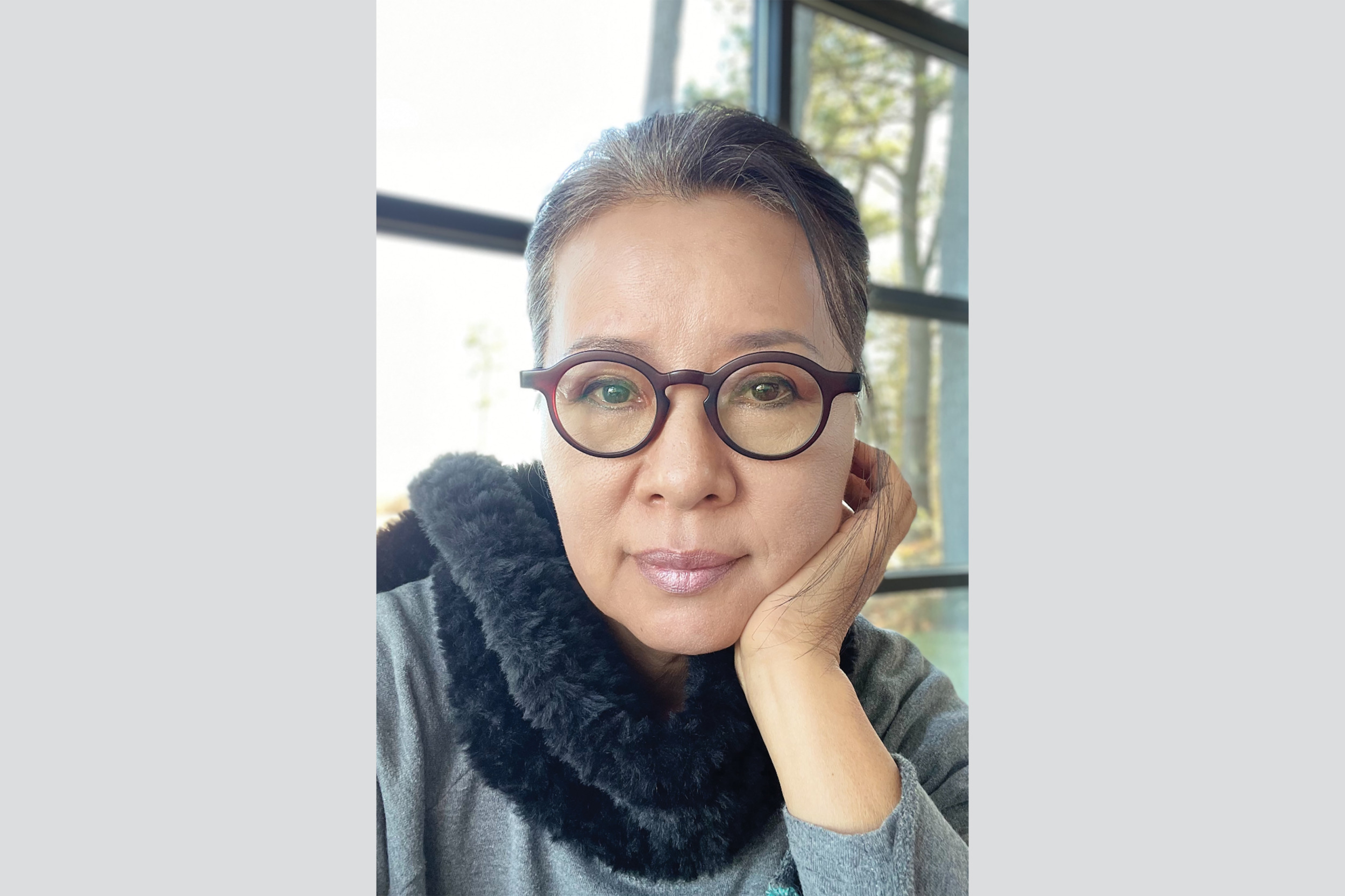
The artist pictured in her Maryland studio.

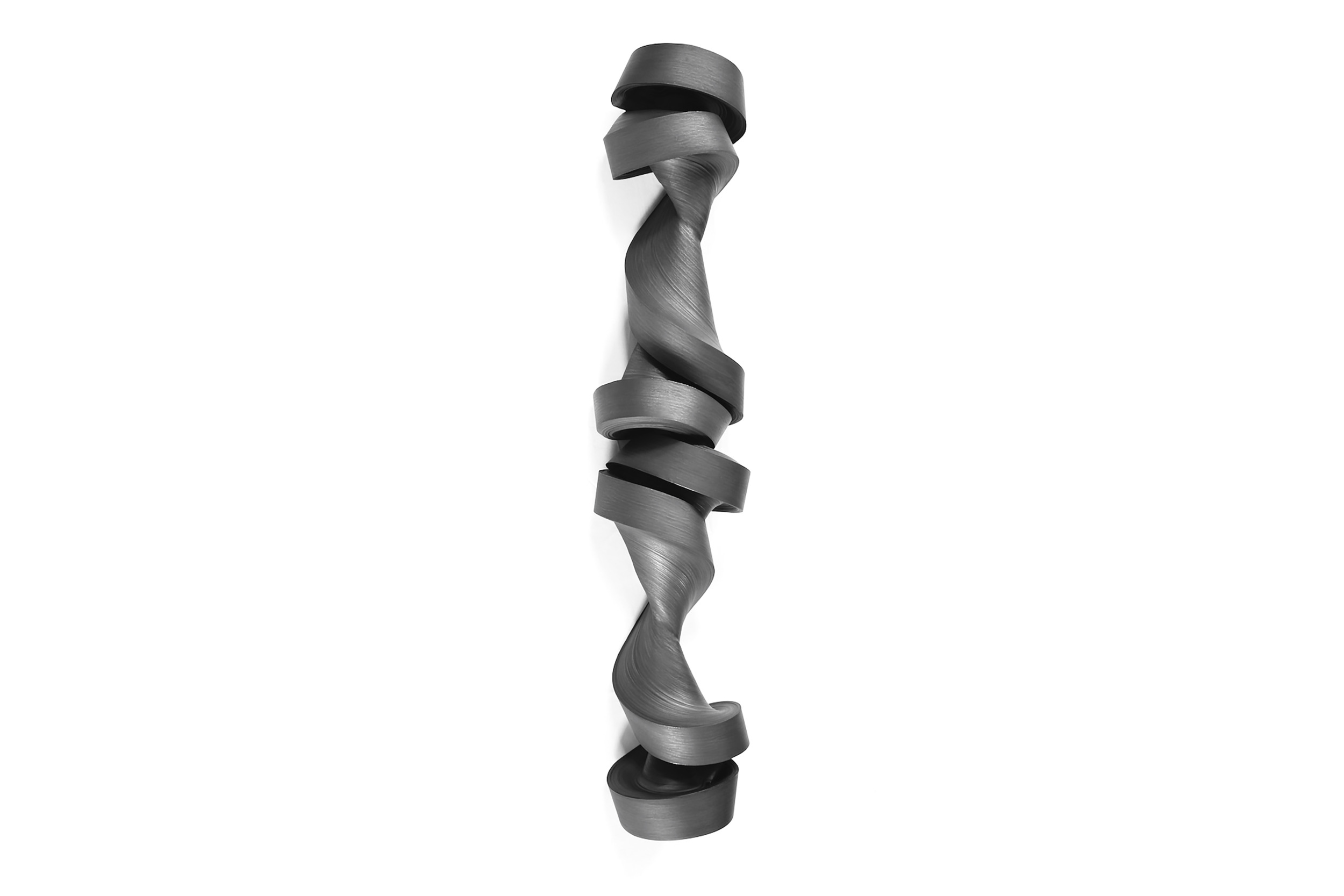
Early in her career, Jae Ko buried a roll of natural kraft paper in sand beside the ocean, just before high tide. By exposing the paper to crashing waves, she expected it to disintegrate. What the artist found surprised her: The paper had absorbed water and, slit down the center, opened like layers of flowers. Next, she bundled together stacks of paper and buried them beside a stream. After two months in the earth, trails of very fine lines appeared, left, she imagines, by insects. Ko also placed paper outdoors to see how it would react to sun and rain.
These experiments became preludes to the sculptor’s future art, exploring the elegant possibilities found in ordinary rolls of paper.
“Everything I did was just an idea,” says the artist, seated at her studio in southern Maryland on a scenic slip of land where the St. Marys and Potomac Rivers meet the Chesapeake Bay. Born and raised in Korea, she received a fine-arts degree from Wako University in Tokyo, then came to Washington, DC, to continue her studies. As a graduate student at the Maryland Institute College of Art in the 1990s, she recalls, “I was confused. I didn’t know what to do. I thought, ‘Something I did in Asia, I don’t want to do again. I have to develop something new.’ That’s how this started.”
Having worked with handmade rice paper in Japan, Ko turned to humbler materials. Kraft-paper rolls, used to wrap packages, came first. Then while searching for other raw materials—which she and her husband, acclaimed sculptor Jim Sanborn, like to do—she discovered adding-machine tape. “I am not interested in beautiful papers,” the artist says. “Quantity matters for me. I’m not using one individual piece of paper; I’m using hundreds of thousands of rolls, or tons of paper.” The artist also favors cash-register rolls, the kind that churn out receipts. Such everyday goods become extraordinary, and unrecognizable, in Ko’s hands.
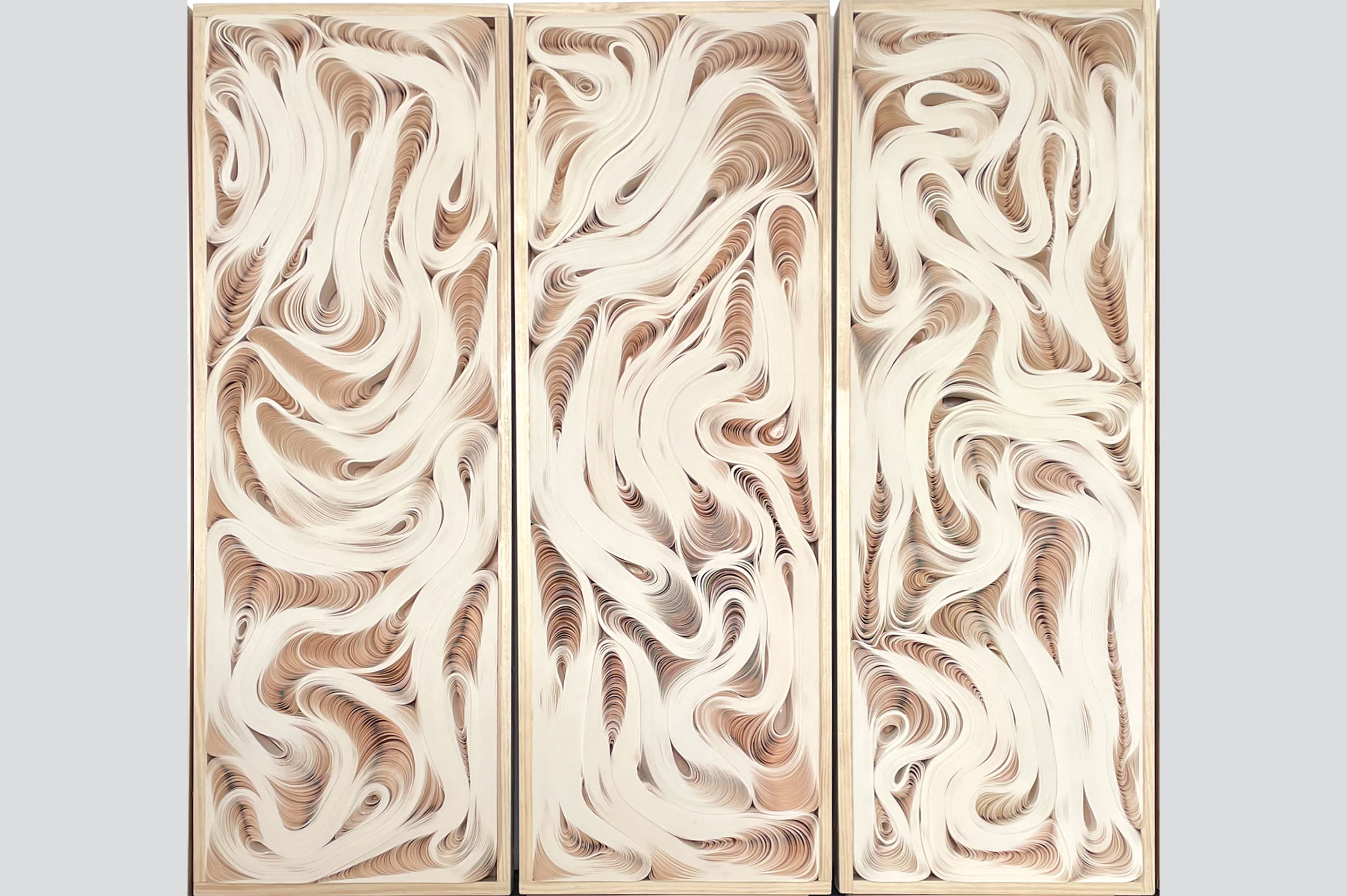
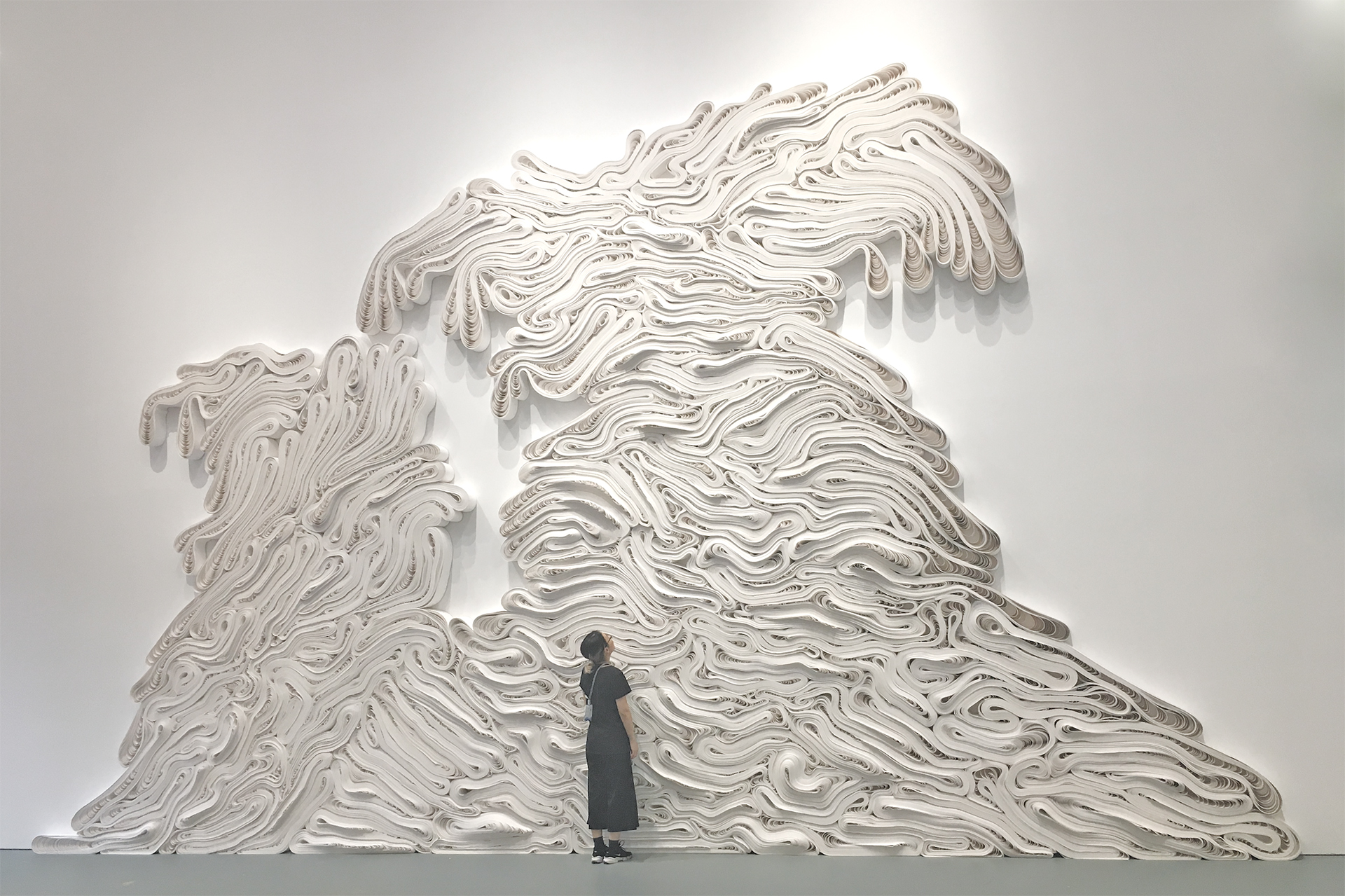
In one series, lazy rolls of ivory paper pile atop one another—fitted into corners, scaling walls, or in some cases, cascading on the floor like exuberant waves or tranquil ice floes. An installation at Contemporary Arts Museum Houston presented loose rolls of paper languidly resting on a high wall. “Each roll goes through my hands as I push or pull it into shape,” Ko explains. Her goal: to give dimension to layers of flat paper, and in the process reveal shadows and swirling contours that, she notes, “look like the lines of drawings.”
A 2015 installation at Grounds for Sculpture in Hamilton Township, New Jersey, amassed some 20,000 pounds of paper and required 10 assistants working 30 days to complete. A smaller version, employing the same technique, was displayed recently at Washington’s Kreeger Museum, part of its “Anonymous Was a Woman” exhibition.
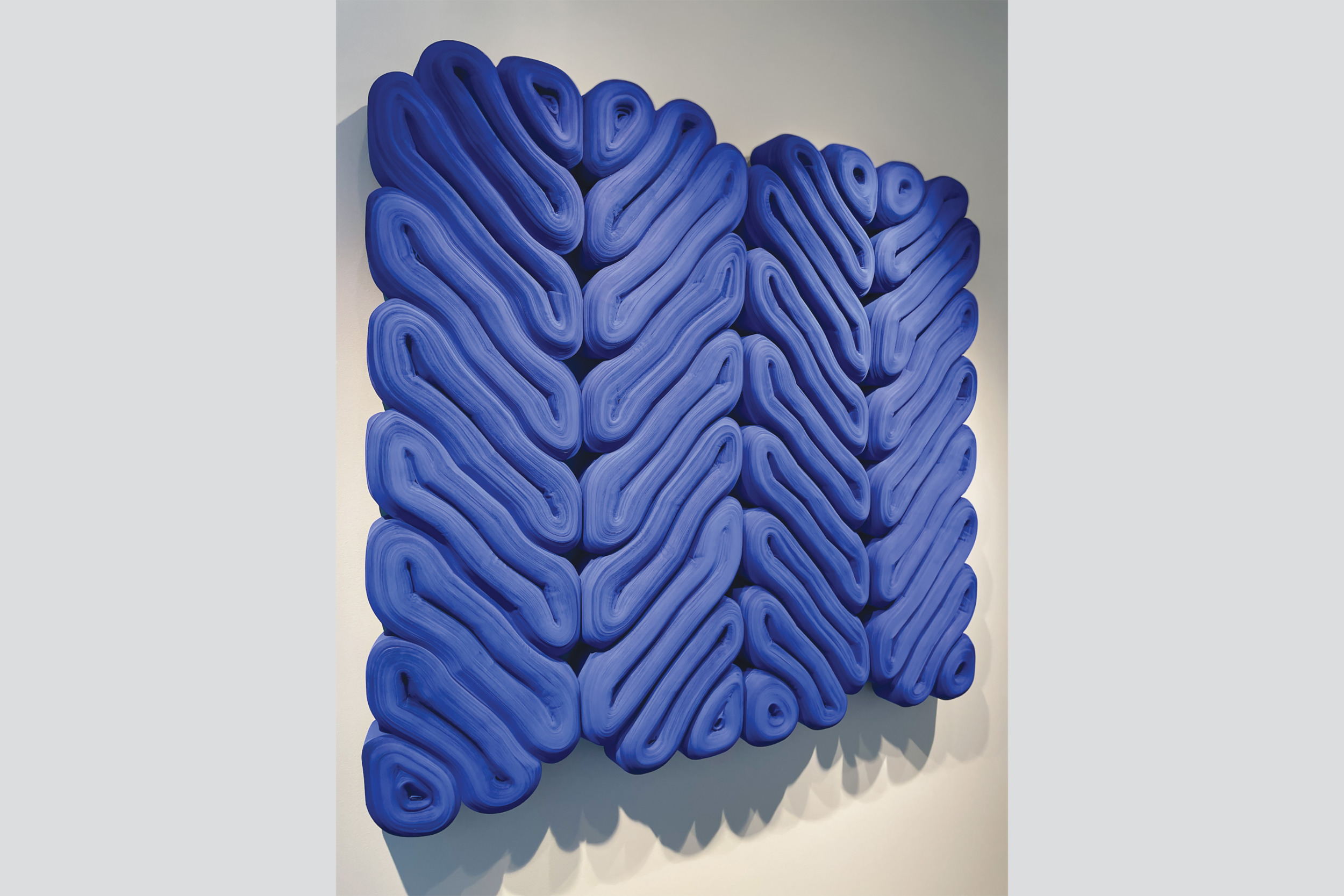
The sculptor exclusively uses recycled paper and works with mills to specify exactly what she wants. While natural paper is employed mainly for installations and smaller works, her colorful pieces generally involve soaking the paper in water mixed with sumi ink. That traditional ink, made of soot and animal glue, has been used for calligraphy over millennia. Admiring its rich, burnt-black shade that appears shiny under light, Ko for many years used sumi black as a finished surface. These days, the ink-bathed-and-dried paper generally serves as a base coat for brilliant colors of Korean pigmented ink, sprayed on in a very fine mist; a single piece may take up to 30 sprayings.
Ko’s color inspiration at first derived from her native Korea’s vivid hues—deep ultramarine, fiery red, yellow and pink. Additional influences arose from nature’s changing seasons and the forms and colors of the geological landscape. After travels west to California’s bristolcone pine forest, Ko began twisting rolls of paper into narrow upright forms, abstract interpretations of these ancient trees.
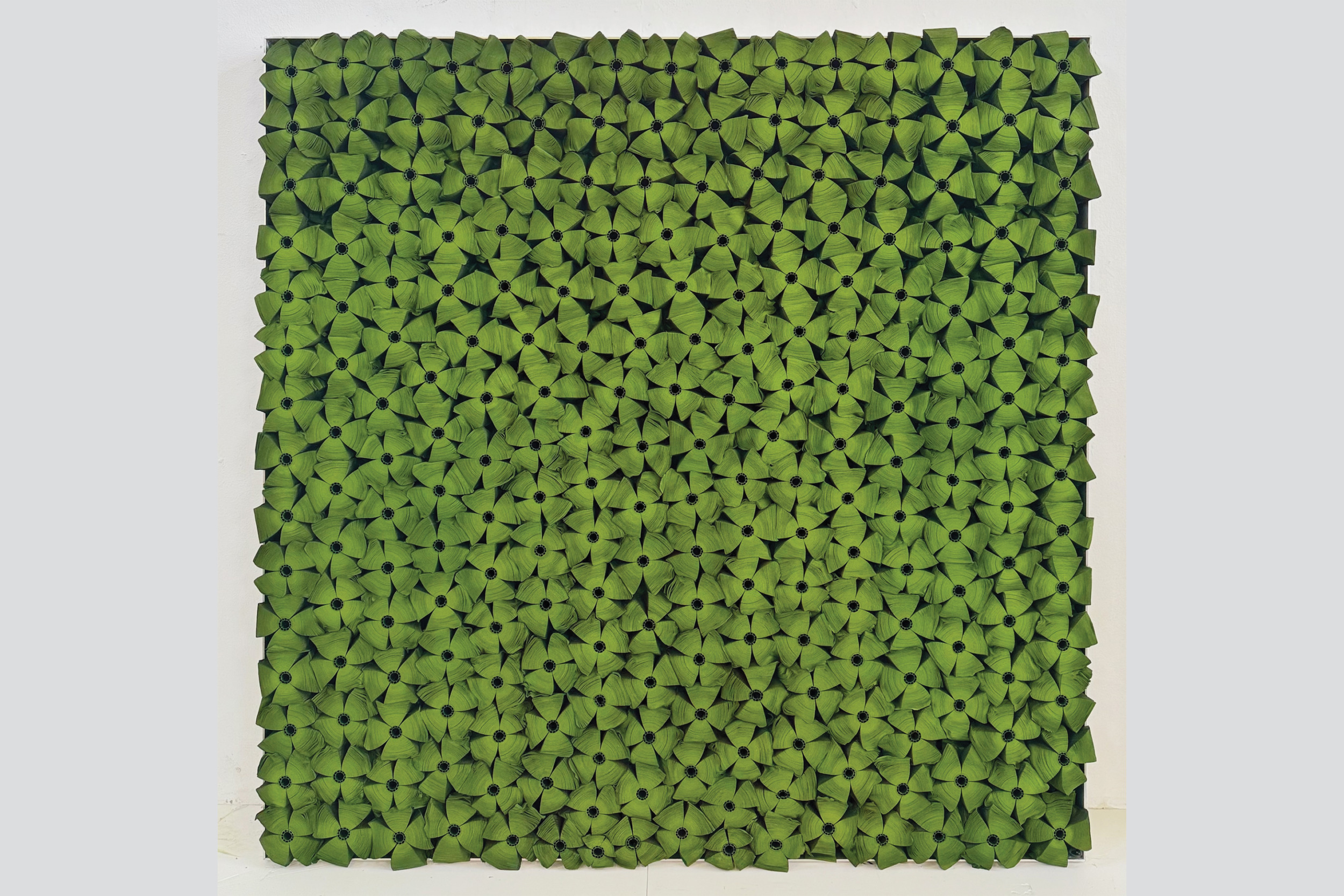
Her latest series revisits sketchbooks from graduate-school days. Starting with adding-machine tape as it arrives from paper mills, the sculptor uses a bandsaw to slice into the three-inch rolls. “How deep you cut gives a totally different shape,” Ko observes. After the paper is bathed and dried, she arranges individual rolls on 45-by-45-inch backings and glues them in place. Viewers often find that these rolls resemble flowers, clovers or feathers. “Whatever you see, that’s fine,” Ko comments. “But that’s not what I meant to make. What I meant is to find out the interesting way of cutting paper and how it reacts by soaking it in the water.”
Over a four-decade career, the sculptor has followed a path of ongoing experimentation, matched by astonishing ingenuity. “Everybody grew up with paper. It’s nothing special,” Ko reflects. “But I treat paper as a three-dimensional art material, shaping it in ways you don’t expect. It’s really intriguing. It’s fun. And it gives you endless opportunities.”
For more information, visit jae-ko.com.