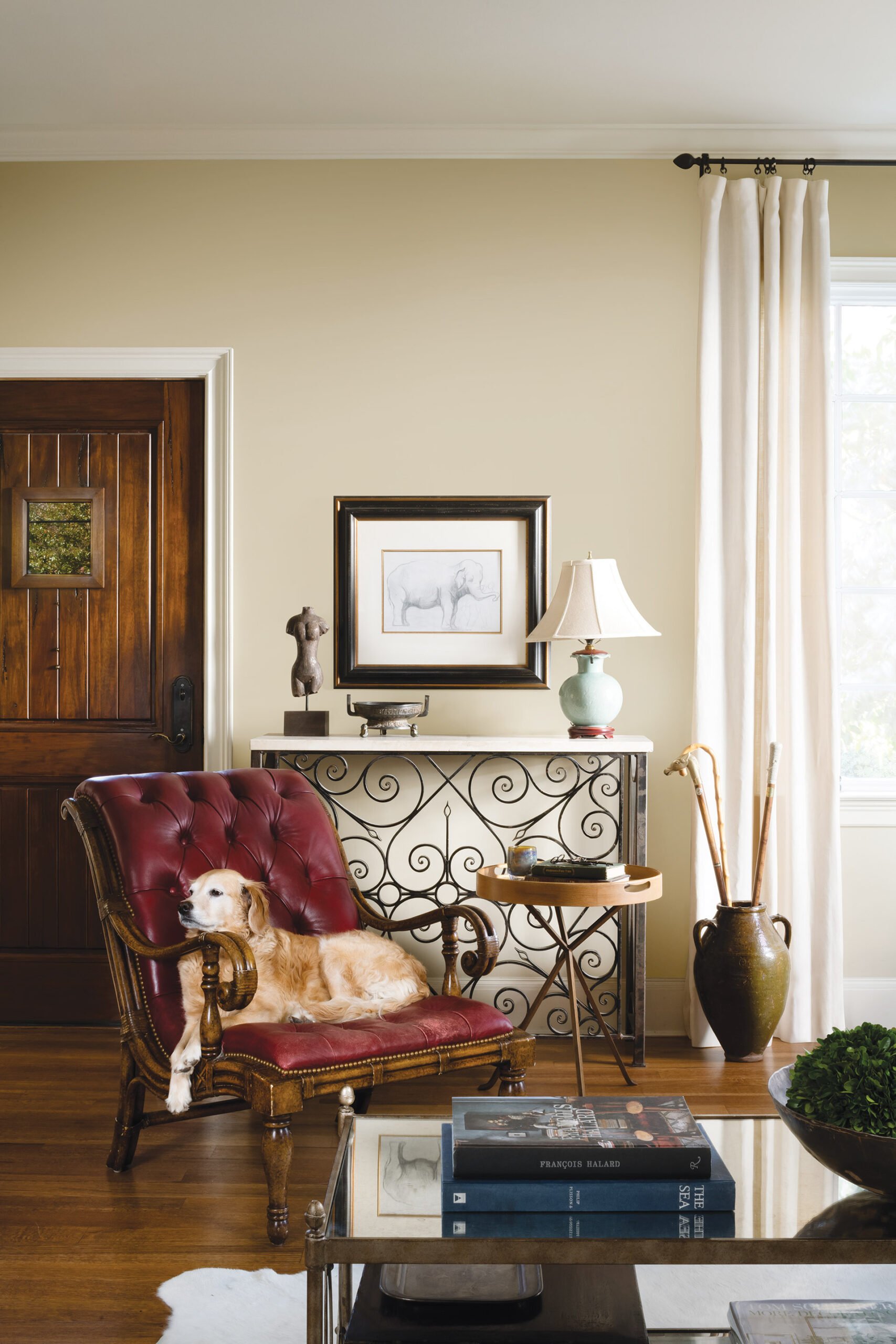
A console that incorporates an old banister railing sits by the front door.


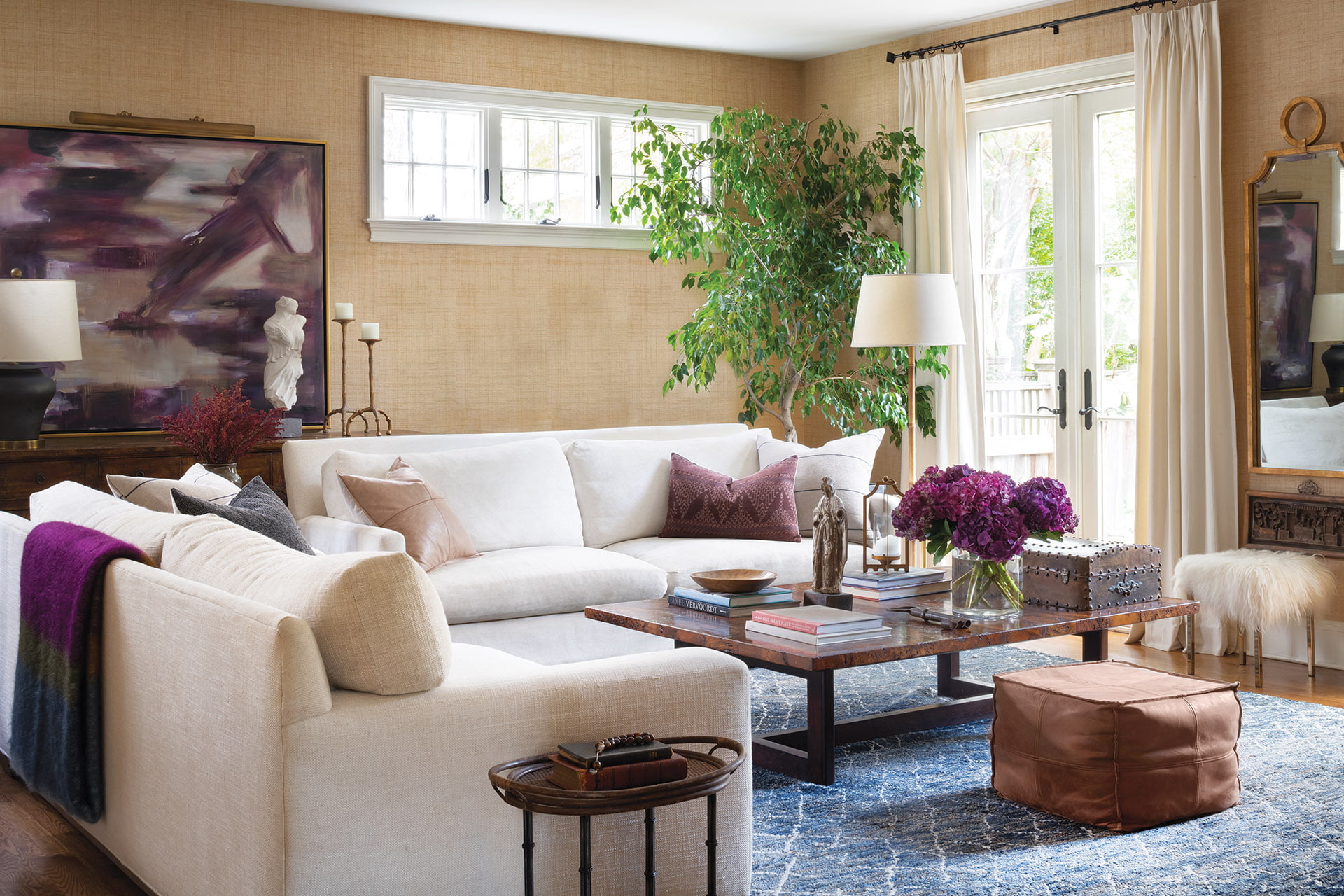
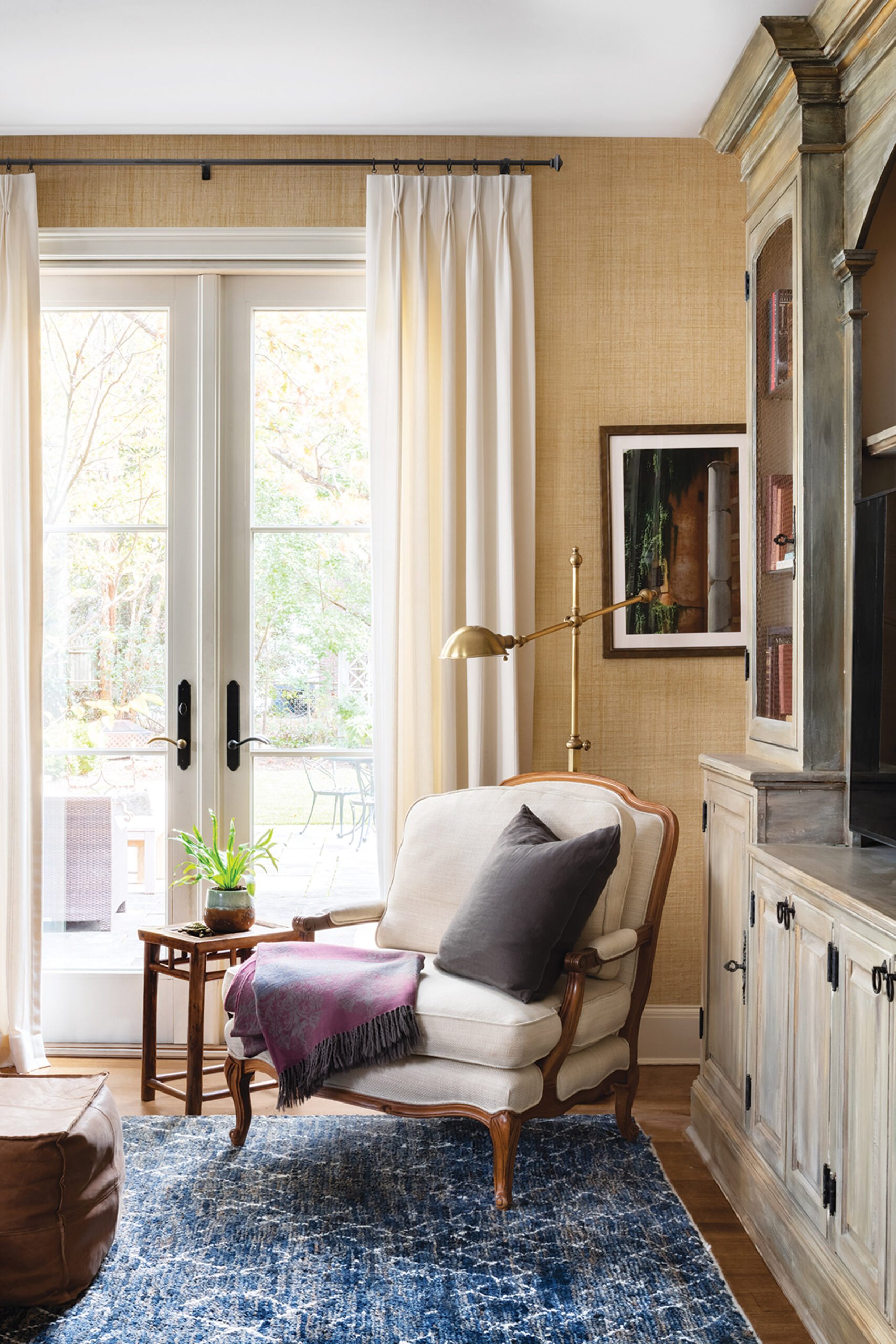
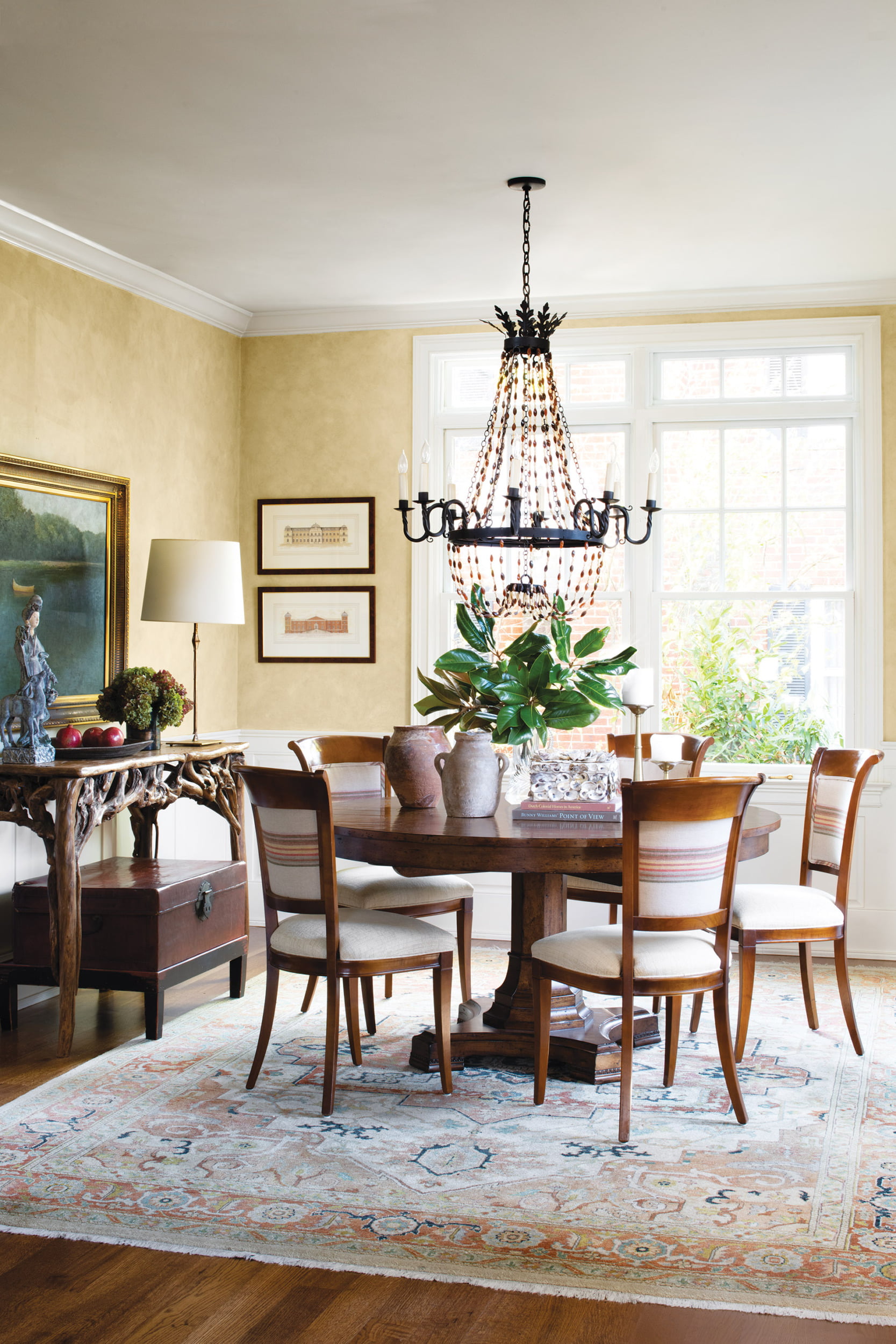
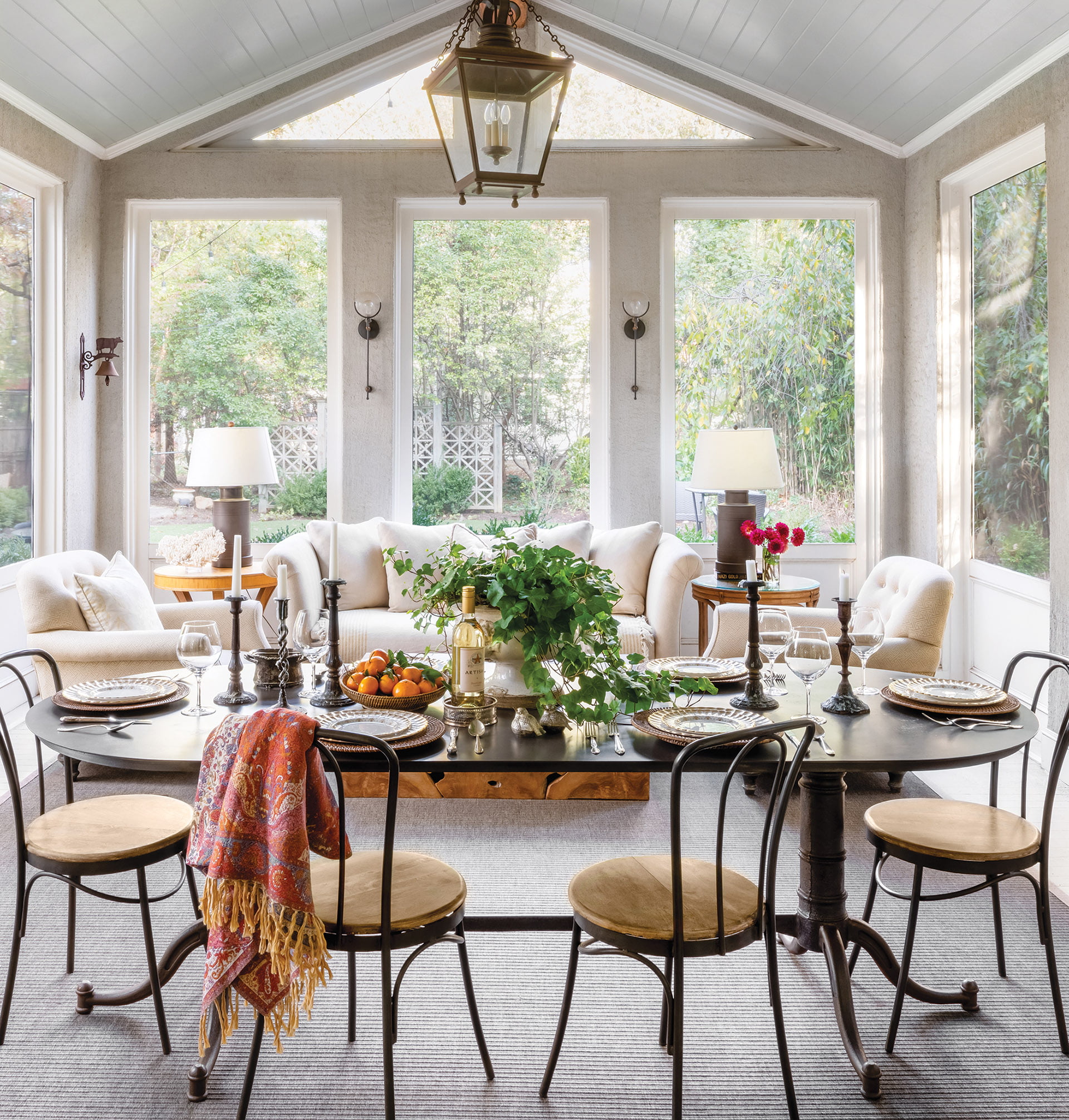
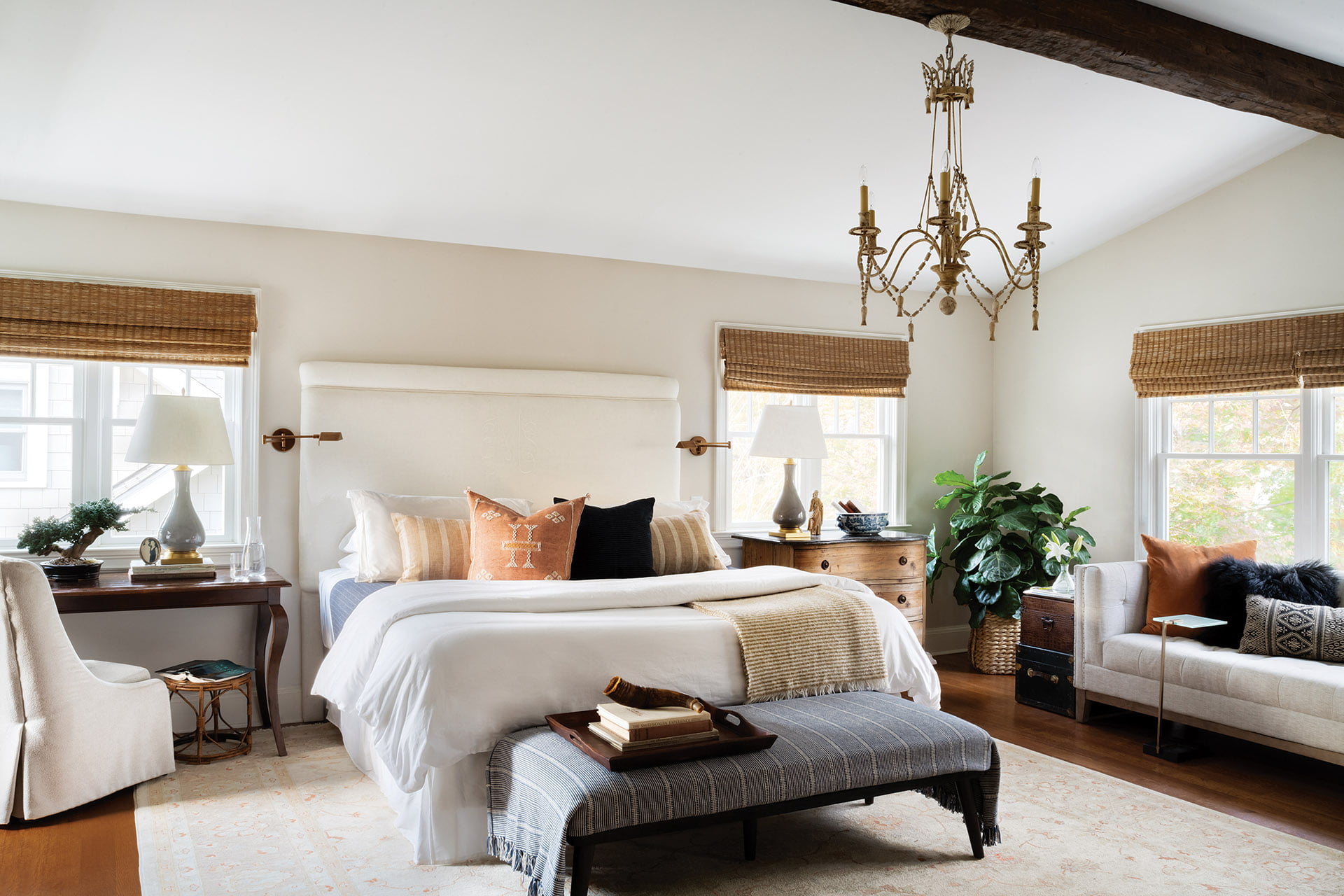
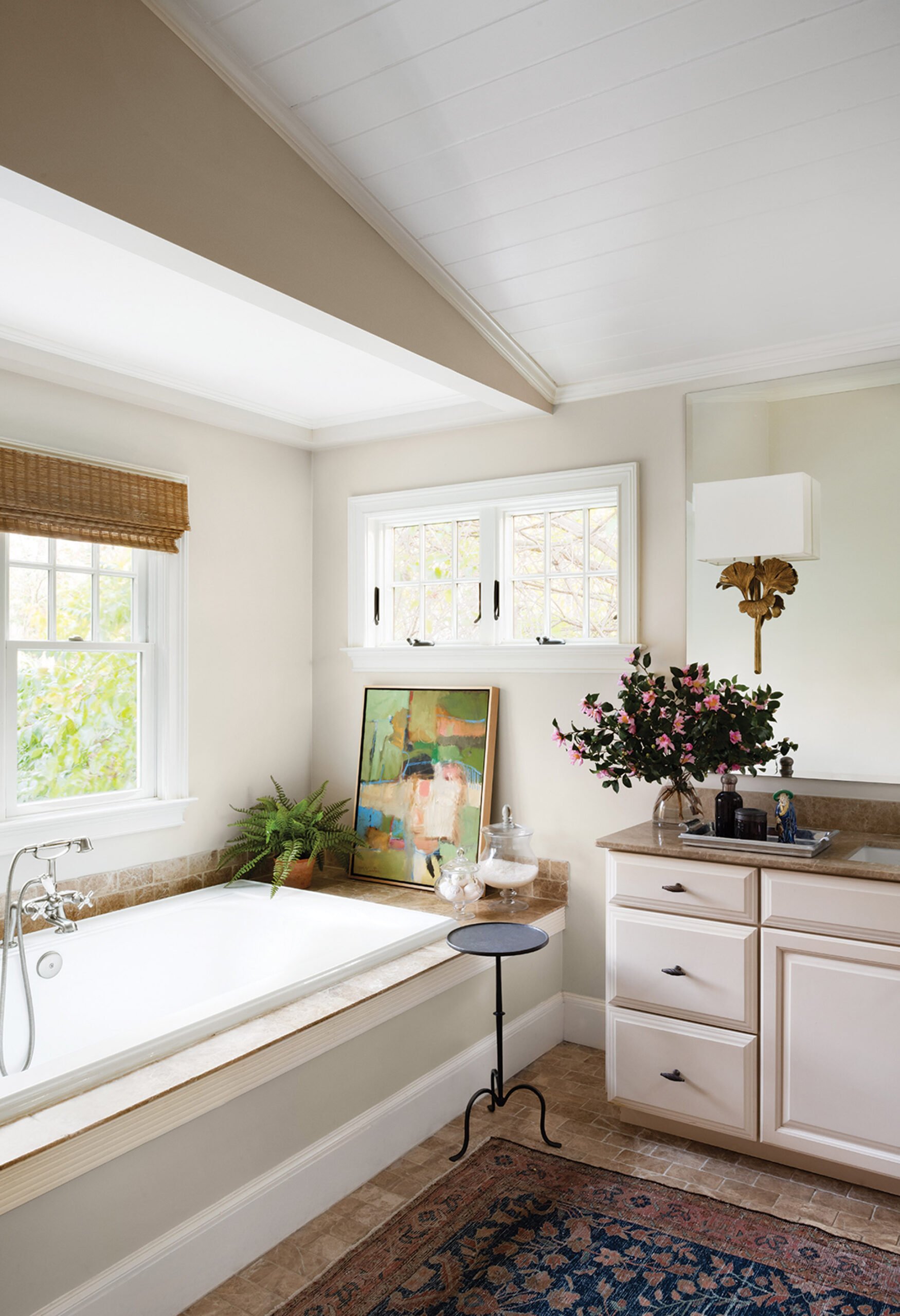
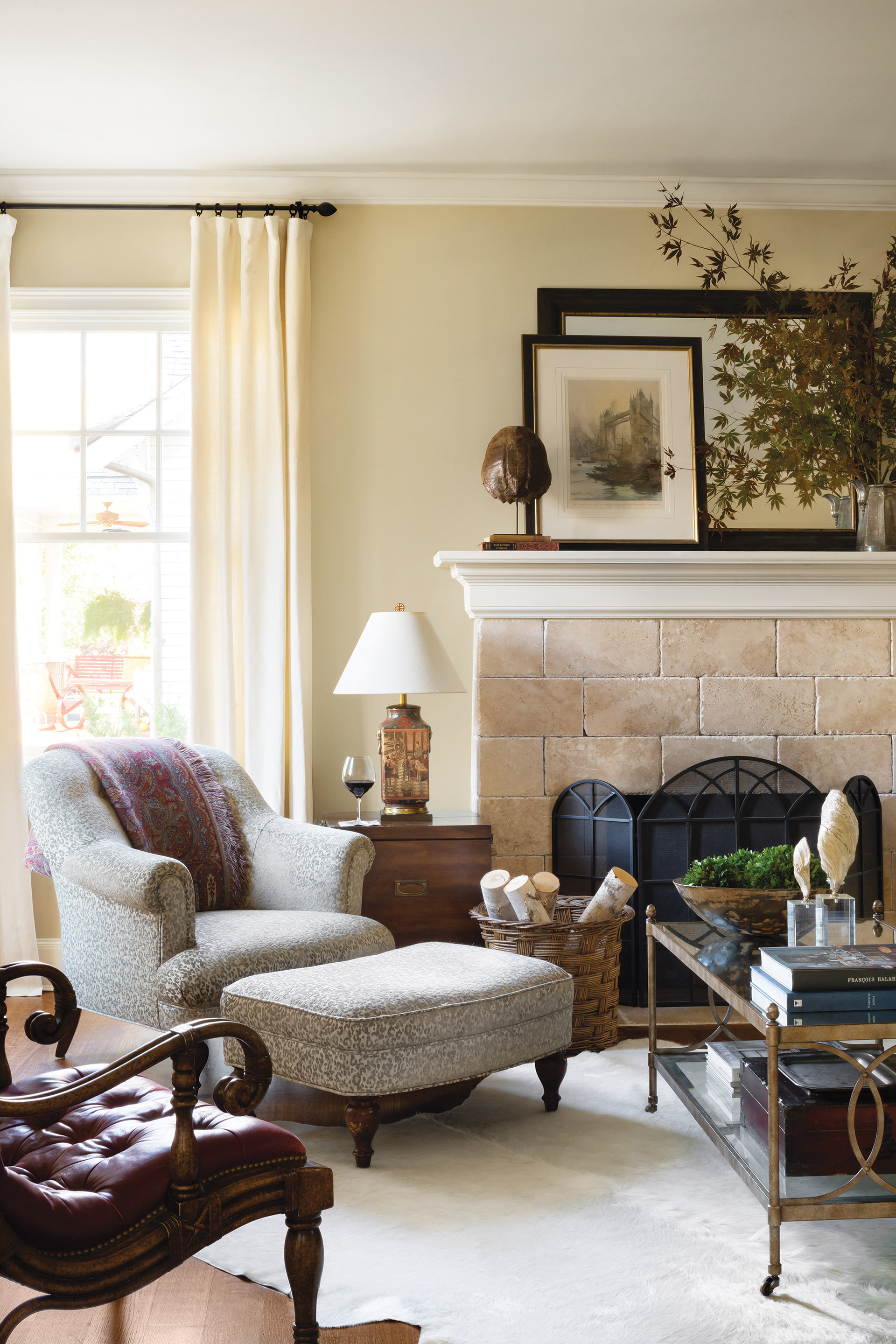
Brimming with cherished antiques, art and accessories, Liz Mearns’s 1924 abode in Arlington pays tribute to two late, beloved family members: her mother, who was a McLean interior designer; and her aunt, who owned a boutique in California selling European antiques.
The home is also a tribute to skill and determination. When Mearns and her husband Scott, an IT executive, purchased the property 16 years ago with two toddlers in tow, it was as long on problems as they were short on cash. “It was pretty much a gut job,” she recalls. “We remodeled the house ourselves over five years.”
Mearns, who launched her own design firm in 2005, brings an eye both honed and inherited to the four-bedroom, 4,400-square-foot abode, where heirlooms, quirky finds and her own abstract artwork create a mix that feels fresh. “I have so many treasures,” she observes. “Blending aesthetics is how I grew up.”
What did the renovation entail?
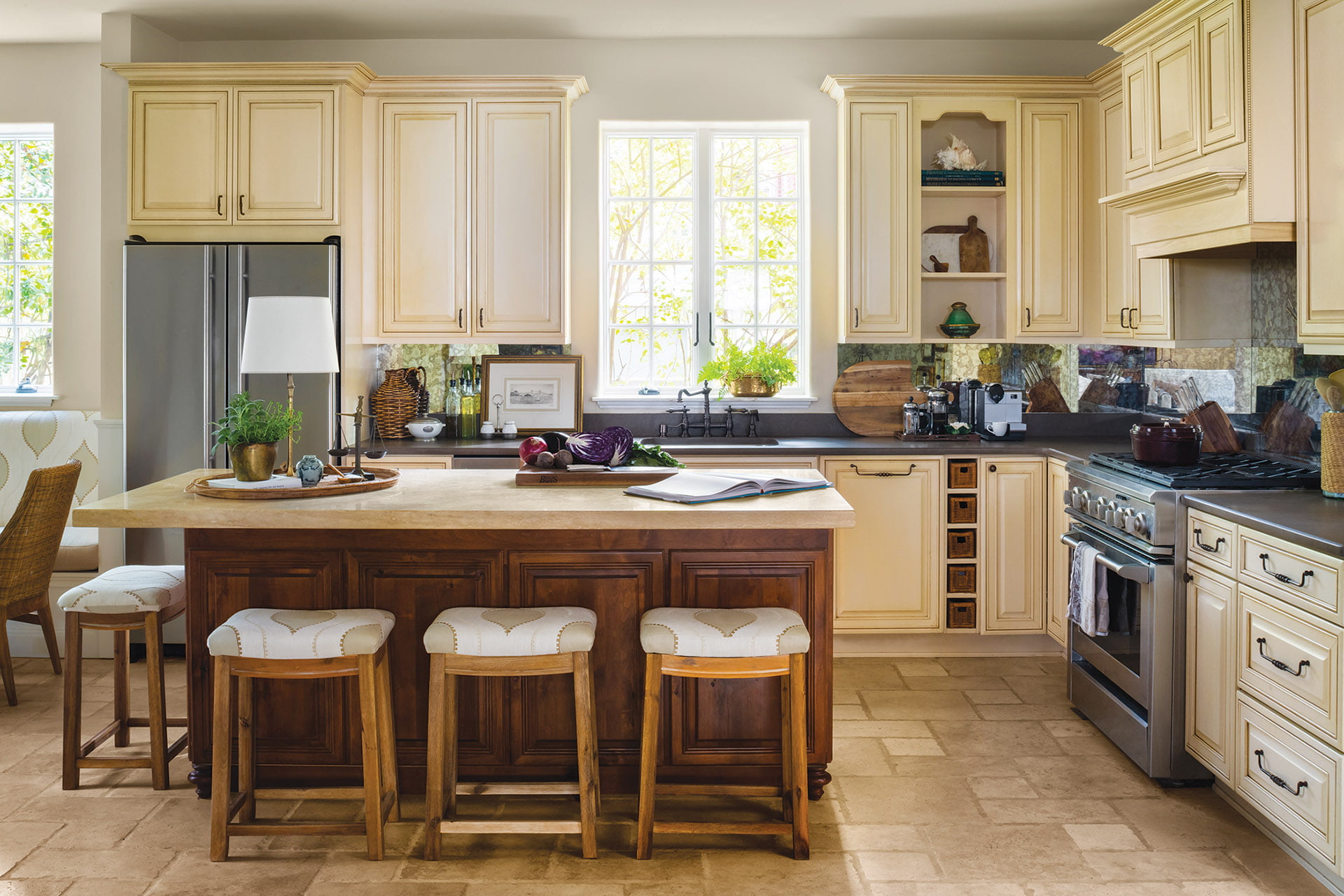
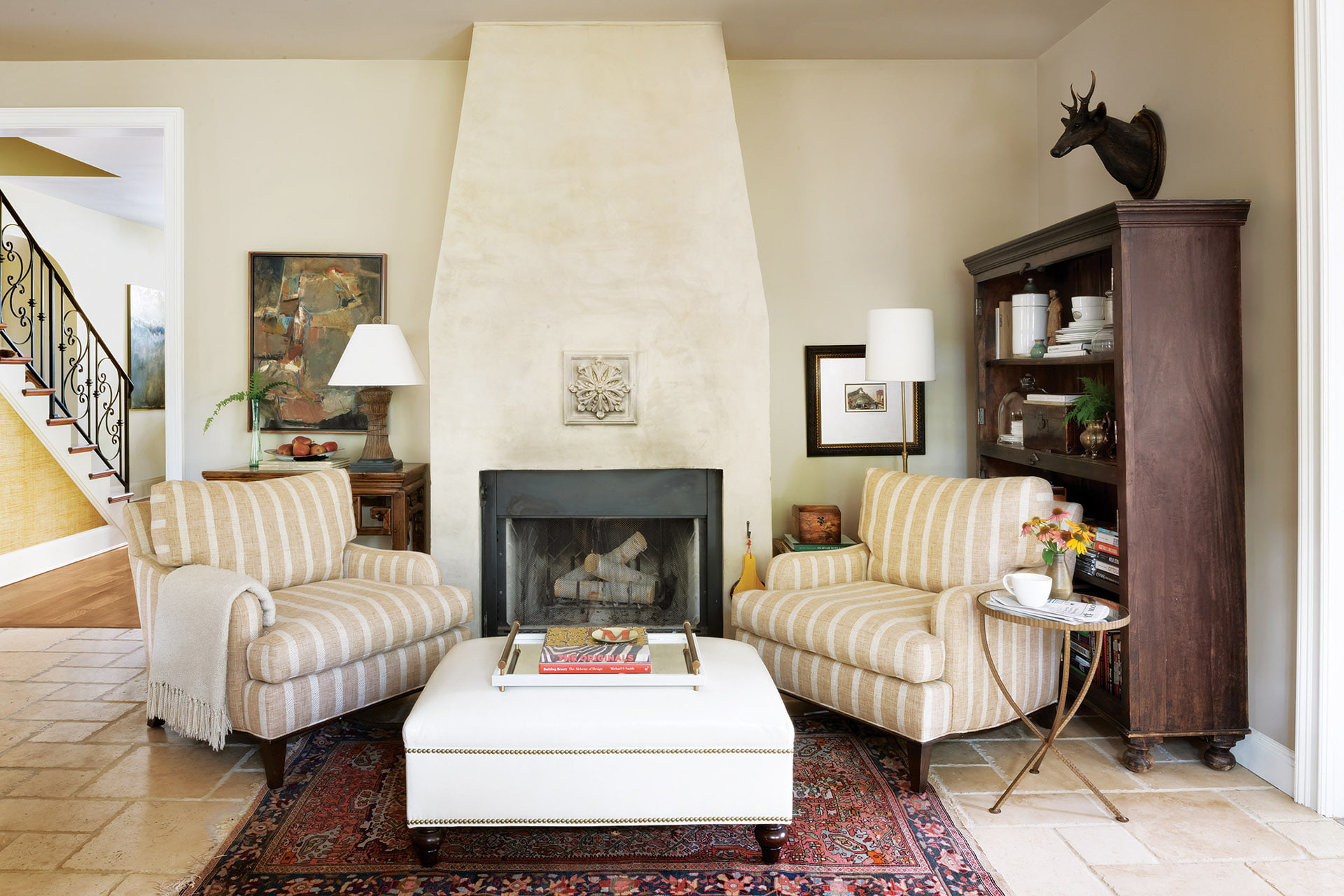
We put in a rear addition housing the kitchen, family room and upstairs primary suite. We gained living room space by shifting the staircase back into the addition. We also moved the powder room, raised the main floor ceiling height and clad the living room fireplace in limestone floor tiles from the kitchen—a poor man’s lipstick, but I still like it even now.
How did the home’s look evolve?
The original house was clapboard. We had to replace the roof, so I thought while we were at it, I’d like French stucco siding. It’s still traditional but with a hint of Provençale. Inside, we added deep arches between rooms on the main floor that continue that theme—but not everywhere. I like the contrast of sometimes having a square threshold. Mix it up, it doesn’t all have to be one thing.
Describe your mother’s influence.
There is a lot of my mom here. We moved all over the world when I was growing up and at one time she was a shopper in Hong Kong, locating items for clients. Every room has at least two or three pieces that were hers. There are a lot of Asian influences. And a lot of pieces also came from my aunt’s store.
Is there a story behind your abstract artwork?
I created it because I didn’t have the money to buy what I really liked. I would see something and be inspired to copy it or make something similar. I have an abstract oil painting in the living room that evolved because I fell in love with the frame. I didn’t like the artwork inside it so I painted over it.
What are the kitchen’s design highlights?
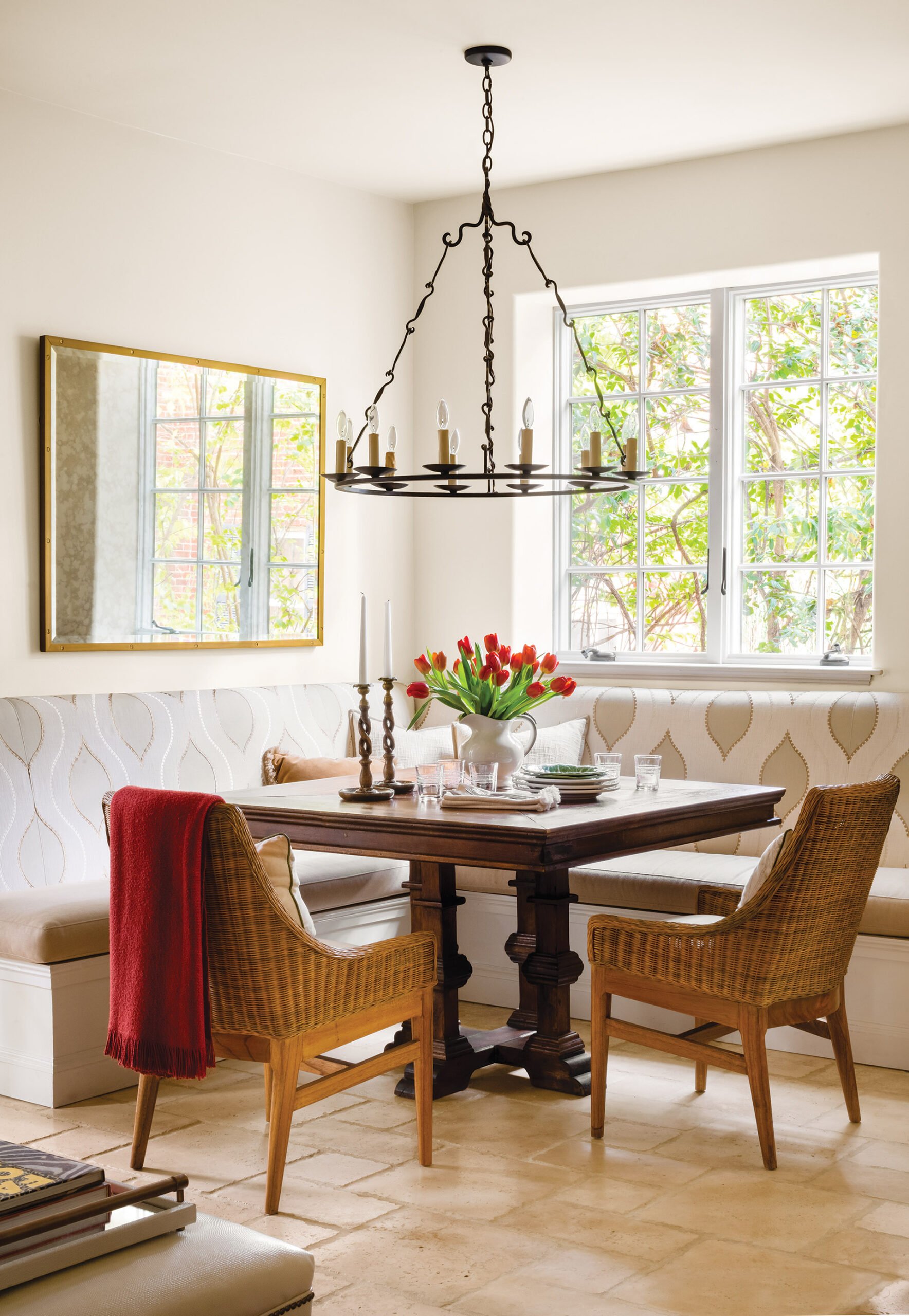
While we were stuccoing the exterior, we decided to do a fireplace in the kitchen in the same material. I wanted it to blend visually but be different texturally, so we painted it the wall color. We built a big corner banquette when we designed the house. We still love it—the space feels cozy yet we can host six to eight people around the table.
How would you characterize your design process?
I am not overly formulaic, but I do room boards, renderings and custom upholstery. When it comes to accessories and layering, we can paint the picture but they have to evolve organically, and there has to be trust. A home won’t look done till those things are allowed to happen.
What is the secret to layering accessories?
When layering, create vignettes rather than lining things up. Don’t overdo it. I am cleaner in my design work than in my house, where I’ve layered a lot because I have so many treasures and am comfortable with how that feels. I mix in greens for softness. And I mix high and low, which my clients appreciate. I say don’t take it too seriously, have fun with it.
How do you make heirlooms and antiques feel fresh?
You have to mix to keep things fresh. Add something modern or a little funky, or with a sense of humor. I love cozy and inviting, so my furniture is deep and comfortable. I don’t want to feel stuffy.
What's your go-to local source?
Domicile in McLean. The owner is a designer who is brilliant, a great source. I also have good relationships with The Kellogg Collection and Random Harvest. I love to be able to text a vendor and tell them what I need.
What's a design mistake to avoid?
Scale is important; people tend to go too small. This is true not only for furniture but for rugs and lighting.
Advice on wood flooring?
Don’t make your hardwood floors too light or too dark. Too dark shows everything and is not very inviting; very light can look artificial if it’s not done right. A mid-tone floor is the most forgiving and easiest to design around.
Is there a design element you love?
My favorite element is wallpaper. I think it can make a space special. Wallpaper and tile are good things to be brave with. When we’re brave, we never regret it.
With your home chock-full at this point, are you still able to be creative in it?
Yes. I have to really love something to buy it, but I enjoy playing with stuff and moving things around. Like any designer, my home is my petri dish.
Interior Design: Liz Mearns, Imagine Design, Arlington, Virginia. Landscape Architecture: Fyffe Landscape Architecture, Arlington, Virginia. Styling: Charlotte Safavi.